

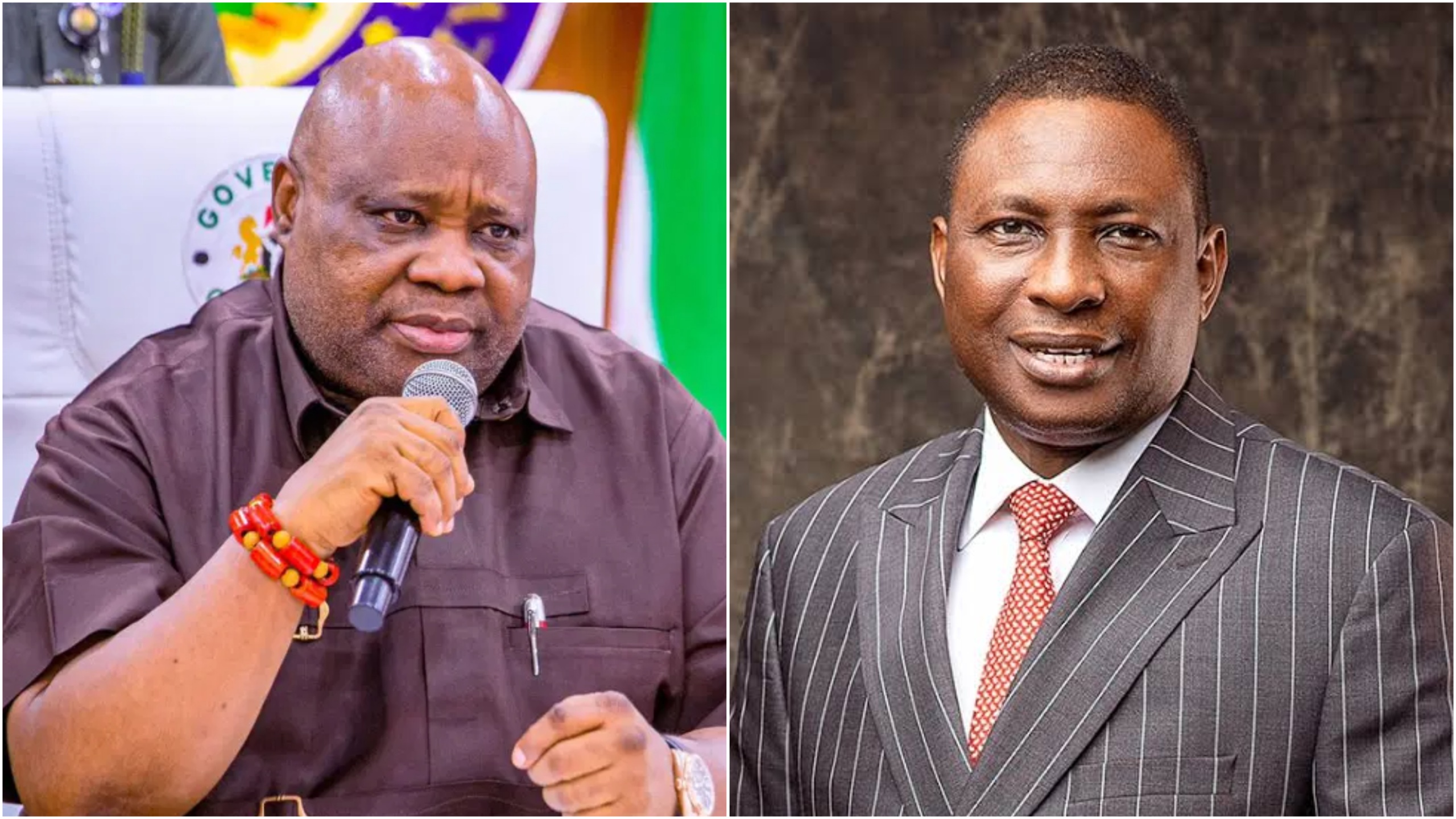
The Economic and Financial Crimes Commission (EFCC) has defended its decision to place a restriction on an Osun State Government bank account without first obtaining a court order, insisting that its action was backed by provisions of the EFCC Act and the Money Laundering (Prevention and Prohibition) Act.
The commission’s defence comes amid growing criticisms of EFCC’s action which came less than two weeks before the governorship election.
Some lawyers, including the president of the Nigerian Bar Association (NBA), Afam Osigwe, have argued that the EFCC lacked the power to order bank to restrict access to a government’s accounts, and if it must do so, it must be backed by a court order.
Rejecting the account restriction, the Osun State Government, has also read political motivation into the EFCC’s action.
With the state’s 15 August governorship election in which Governor Ademola Adeleke is participating as a candidate just nine days away, the state government described the account freezing as unlawful and politically motivated.

Speaking during an interview on Arise Television on Thursday, the EFCC’s Director of Public Affairs, Wilson Uwujaren, said the anti-graft agency acted after detecting what it described as suspicious movements of funds from the account.
According to him, the restriction was intended to preserve public funds while investigations continue.
“We observed in the past one week that activities on that account looked suspicious, and based on the mandate of the Commission, we took the step of placing a restriction on that account to preserve it,” Mr Uwujaren said.
He said the commission did not freeze all the accounts belonging to the Osun State Government but only imposed a restriction on one account under investigation.
“That restriction order does not mean that all the accounts of Osun State have been frozen. It is just a targeted restriction on one account of the Osun State Government,” he said.
The EFCC spokesperson said investigators observed multiple transfers from the account to several corporate entities within a short period, prompting the intervention.
He argued that failing to act would have amounted to neglect of the commission’s statutory responsibility to safeguard public funds.
“If we don’t take that step and funds are eventually looted, Nigerians will ask where the EFCC was when those funds were being moved,” he said.
EFCC cites legal provisions
Responding to criticism that the commission acted without judicial approval, Mr Uwujaren maintained that the EFCC possesses statutory powers to impose a temporary restriction on accounts suspected to be linked to financial crimes.
He cited Section 34 of the EFCC Act and Section 7(6) of the Money Laundering (Prevention and Prohibition) Act 2022 as empowering the commission to take such action.
According to him, the restriction can remain in place for up to 72 hours before the commission would be required to seek a court order if further restraint becomes necessary.
He also dismissed concerns that the restriction would cripple governance in Osun, noting that the state still has access to other accounts for its operations.
Running dispute with Osun government
PREMIUM TIMES earlier reported that the EFCC placed a “Post No Debit” restriction on an Osun State Government account domiciled with First Bank, an account the state government said is used for workers’ salary payments.
The commission later disclosed that it had been investigating the Osun State Government since March over the alleged fraudulent handling of about N11 billion in Ecology Funds, Intervention Funds and Federation Account Allocation Committee (FAAC) allocations.
It also said the state’s Accountant-General and other officials had already been questioned as part of the investigation.
The Osun State Government, however, rejected the allegations, describing them as an attempt to justify what it called an illegal freezing of the state’s account.
READ ALSO: EFCC recovers additional ₦42 million for businessman in ₦175.4 million cement fraud case
Governor Ademola Adeleke’s administration insisted there was no legal basis for the restriction and accused the EFCC of acting to disrupt government activities ahead of the governorship election.
The state’s Attorney-General and Commissioner for Justice, Oluwole Jimi-Bada, also argued that although the EFCC has powers to investigate financial crimes, it cannot freeze a state government’s account without first obtaining an order of the Federal High Court.
The state government has indicated that it is challenging the action before the Federal High Court in Osogbo, setting the stage for what could become a significant legal test of the commission’s powers over state government accounts.
Discover more from Premium Times Nigeria
Subscribe to get the latest posts sent to your email.
