

The world’s largest defence companies have invested a record amount into military start-ups this year as they try to adapt to the rapidly evolving face of modern warfare.
So-called defence primes, with longstanding ties to western governments and militaries including Lockheed Martin and BAE Systems, have participated in a record $4.1bn in venture capital rounds so far this year, according to data compiled by Dealroom.
“The recent conflicts have highlighted the need for a modern type of warfare whereby existing established platforms coexist alongside new disruptive technologies,” said Gwen Billon, a partner at advisory-focused investment bank PJT, who helps lead aerospace and defence coverage.
“New defence technologies are here to stay and defence primes want to make sure they have exposure to these technologies.”
That shift was on display at this year’s flagship industry event in Farnborough outside London, where a record half of the 1,636 exhibitors were from the defence sector, where traditionally civil aerospace dominated.
Defence technology start-ups, which used the event to showcase their latest offerings, were being courted by bankers and potential investors, among them the biggest names in military hardware.

Governments have stepped up military spending in the face of recent conflicts, in particular the war in Ukraine, which has underlined the need for weapons that are faster and cheaper to produce, from interceptor missiles to autonomous drones.
The total value of global defence-related deals, including mergers and acquisitions and fundraisings, has already topped $40bn this year, putting it on track to smash the previous full-year record of $59bn in 2019, according to data compiled by Dealogic.
The biggest arms manufacturers are increasingly having to compete with more nimble, technology-focused rivals looking to ride a wave of increased government spending and rapid transformation. The total raised by defence and security start-ups has reached $39.8bn so far this year, according to data compiled by Dealroom.
Having once been able to concentrate on their core markets of fighter aircraft, battleships and small arms, defence primes are instead having to adapt to think more like venture capital investors.
French defence technology group Thales plans to buy Paris-listed Exail Technologies in a deal valuing the maritime robotics and navigation company at €3.9bn. Thales beat fellow French group Safran to clinch the deal. That same day, Lockheed Martin outbid rivals including Thales to buy naval technology group Ultra Maritime from private equity firm Advent for $3.45bn.

These bidding wars show increased appetite for large defence conglomerates to bolster their defence tech portfolios through M&A as well as investments in large fundraisings.
The high level of activity was also reflected by record attendance at Farnborough from the financial sector, with more than 650 people, including investors, bankers and funds from 350 organisations, according to event organisers.
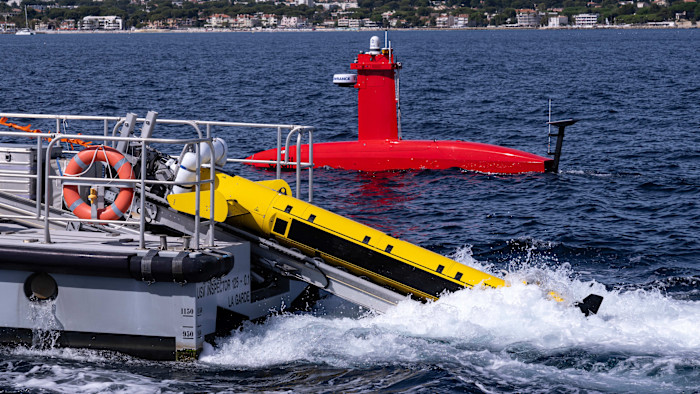
Earlier this month, German drone maker Quantum Systems raised $1.2bn in fresh funds at a valuation of about $8bn, backed by investors including Airbus. British maritime defence company Kraken Technology on July 9 announced a fundraising of $175mn at the so-called unicorn valuation of $1bn, backed by investors including Rheinmetall.
One executive from a top European defence company and an aerospace adviser said investors were mostly quizzing companies about their defence tech and the future of warfare based on lessons from Russia’s ongoing invasion of Ukraine and the US battle with Iran, where aerial and naval drones and countermeasures have played a growing role.
The defence primes have increased investments into research and development activities, as well as into venture capital funds to gain early-stage exposure to potentially lucrative technologies. Thirteen of the world’s biggest arms makers, excluding Airbus and Boeing due to their large civil operations, are estimated to have increased their internal R&D spending by more than 25 per cent to $11.6bn from 2021 to 2026, according to analysis by Vertical Research Partners.

Britain’s BAE recently committed €50mn towards two funds headed by Lakestar and Expeditions, two of Europe’s best-known backers of defence start-ups.
Similarly, Lockheed, the world’s largest arms maker by revenue, said last week it would invest at least $100mn in UK and European defence technology start-ups. The move followed plans to boost its start-up investment arm from $400mn to $1bn.
Frank St John, chief operating officer at Lockheed, told the FT that the company saw an “untapped capability here in Europe” in terms of defence tech, adding that Lockheed wanted to “water that garden and see what comes up”.
As part of the fund, the US group pairs start-up companies with its engineers working on new projects to see how it can “get their technology to fit into our offerings”, he said.
Airbus’s German-based defence and space business said last week it had become the anchor investor in a new fund targeting technologies for both civil and military use. The E2D fund, with a target size of €500mn, will target investments in air, maritime and space.

The European aerospace and defence group has formed partnerships with several defence tech start-ups, including Ukraine’s SkyFall and Estonian missile maker Frankenburg Technologies.
Andreas Reinecke, head of sales for defence digital and cyber at Airbus Defence and Space, said recent conflicts, including Ukraine, had underlined the pace of technological change in modern warfare.
For Airbus, he said, it was therefore “essential” to have a “viable partner system” with smaller, more agile players, to be able to keep up with the rapid changes.
