

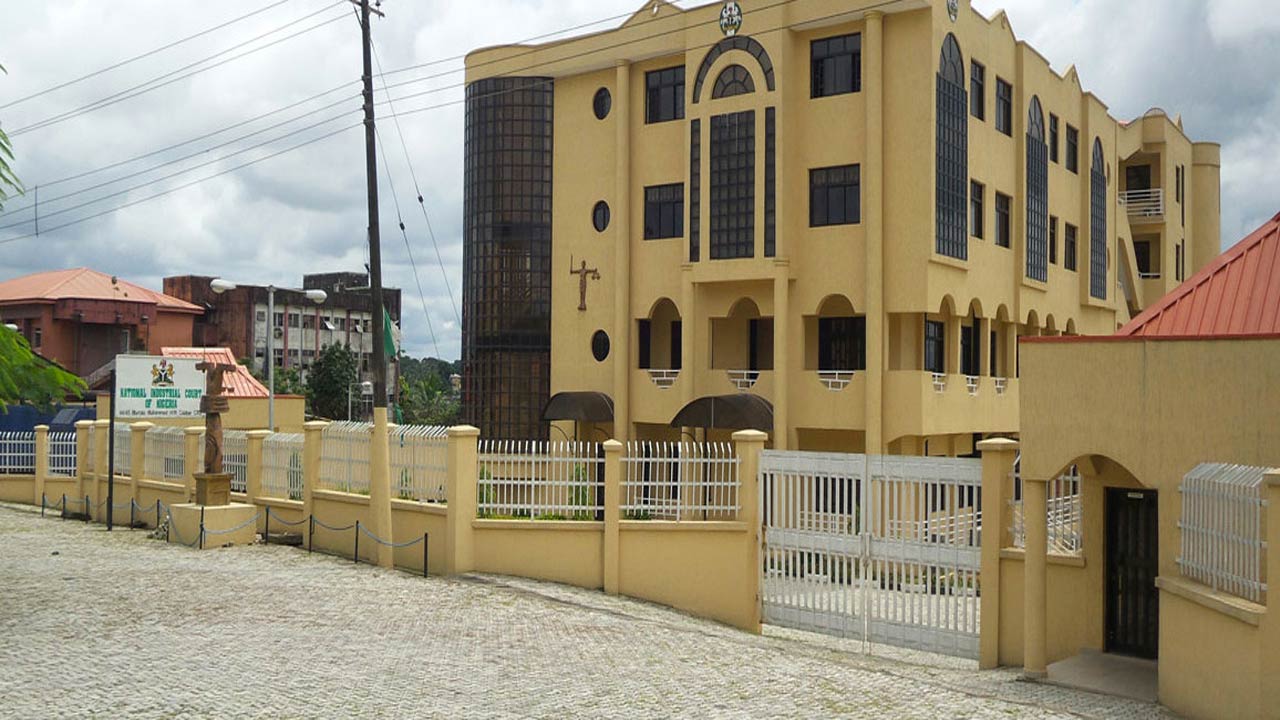
The National Industrial Court in Yola has ordered the Taraba State Government and other defendants to pay ₦108.5 million to 18 former employees of the Taraba Publishing Company Limited over unpaid entitlements and discrimination based on their states of origin.
James Fishim, Presiding Judge of the Yola Judicial Division, delivered the judgement on 24 June in Suit No. NICN/JOS/12/2021.
The copy of the judgement was just made public.
The court held that the workers, including journalists, were unlawfully excluded from absorption into the Taraba State Civil Service because they were not indigenes of the state.
The suit was filed by Hosea Yunana and 17 others against the Governor of Taraba State and four other defendants.

The court awarded the claimants ₦73,257,715.40 in outstanding salaries and other entitlements covering September 2014 to January 2021.
It also awarded ₦30 million in damages for the mental torture, trauma and hardship suffered by the claimants, as well as ₦5.25 million as costs of the action.
The court further ordered the defendants to pay 10 per cent annual interest on the judgement sum until it is fully liquidated.
The claimants were employees of Taraba Publishing Company and included journalists who said their appointments had been confirmed after they completed their probation periods.
They told the court that they continued working until September 2014, when payment of their salaries stopped.
Their appointments, they said, were never formally terminated and they were not issued letters of disengagement.
The claimants alleged that after the publishing company stopped operating some of its offices, the Taraba State Government absorbed some former employees into the state civil service but excluded them because they were non-indigenes.
The defendants denied the allegations, arguing that Taraba Publishing Company had been wound up and was a separate legal entity from the state government.
They also argued that the claimants had no contractual relationship with the government and therefore could not hold it responsible for their salaries and other employment benefits.
But Justice Agbadu-Fishim rejected the defence.
The judge said documentary evidence before the court, including a Corporate Affairs Commission status report, contradicted the claim that the publishing company had been wound up.
The court found that the Taraba State Government had promoted and incorporated the company for publishing and commercial purposes, controlled its affairs and appointed its managing consultant and chief executive officer.
Mr Agbadu-Fishim held that the government could not establish a company, employ workers through it, stop funding or operating the company, fail to formally terminate their employment and then rely on the company’s separate legal personality to avoid its employment obligations.
Court condemns discrimination
The court specifically declared the exclusion of the 18 claimants from redeployment into the Taraba State Civil Service on the basis of their states of origin unconstitutional and discriminatory.
Mr Agbadu-Fishim held that the action violated the claimants’ constitutional right to freedom from discrimination.
The judge said employees of a state-owned incorporated company could, in exceptional circumstances, be regarded as being in the public service of the state for constitutional purposes where the government holds controlling shares or interests in the company.
READ ALSO: Police commissioner tasks journalists on effective crime, court reporting
The court, however, clarified that such employees remain subject to the company’s regulations, conditions of service and employment contracts, unless the Public Service Rules have been expressly or impliedly incorporated into their employment.
The court also ordered the defendants to issue the 18 workers formal letters of disengagement, assess and pay their terminal benefits and other entitlements.
The claimants were represented by M.M. Mailafiya, while Ali Sambo, a principal state counsel with the Taraba State Ministry of Justice, represented the first to fourth defendants.
Discover more from Premium Times Nigeria
Subscribe to get the latest posts sent to your email.
