
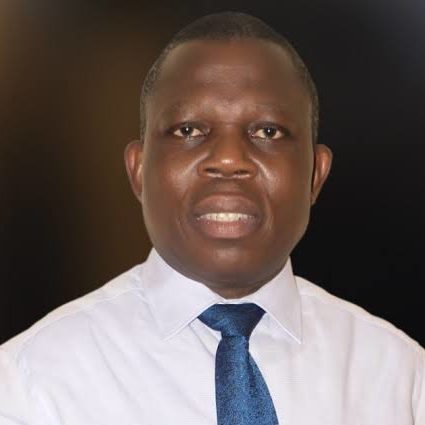
Tim Akano
As I write this, missiles are falling on Kyiv. Ukrainian drones are now reaching deep into Russian territory, setting refineries ablaze in cities their grandparents never imagined would hear air-raid sirens again. In the Gulf, a fragile American-brokered truce with Iran is being tested daily at the Strait of Hormuz. In Lebanon, a ceasefire exists mostly on paper — the shelling has slowed, not stopped. In Gaza, families bury children under a truce that keeps breaking every few days.
Somewhere tonight, a mother in Kherson, a fisherman in Hormuz, a farmer in south Lebanon, and a child in Khan Younis will all go to sleep — if they sleep at all — not knowing whether they’ll wake up in the same country, the same house, or alive. Over one million lives have already been consumed by the Russia-Ukraine war alone. And still, somewhere, a general is drawing up the next offensive, a president is calculating the next provocation, certain that this time, force will finally deliver what diplomacy could not.
It never does. History has already returned the verdict. We are simply too busy watching the bombs fall to read it.
This article is a wake-up call — for nations currently at war, and for nations arrogant or careless enough to let their internal fractures snowball into one.
A warning closer home: Nigeria, 2027
Nigeria has a date with her destiny in 2027. The informal, undemocratic, but functional power-sharing understanding between North and South has been the superglue holding this country of over 230 million together since 1999. It is not written in the constitution. It is written in restraint, in memory, in the quiet agreement that no single region seizes everything. If that thread is carelessly cut — by rigging, by zoning betrayed, by a miscalculated power grab — Nigeria will not simply have a disputed election. Nigeria may go the way of Sudan.
The world should not sit with its hands folded and watch that happen. A collapsed Nigeria will not stay inside Nigeria’s borders. The refugees pouring out of a nation of 230 million would overwhelm West Africa and reach European shores within a season. Every diplomat currently distracted by Ukraine, Gaza, and Iran should be watching Abuja just as closely. 2027 is not just Nigeria’s test. It is the world’s early warning system, and the alarm is already ringing.
Now, the evidence — written not in opinion, but in GDP charts
In 1978, Deng Xiaoping made a decision that changed history. He opened China to the world and banned war as a tool of ambition. Peaceful rising, he called it.
What followed is the fastest wealth creation in human history. China’s economy grew 37 times over in less than 50 years. 800 million people escaped poverty.
In that same 47 years, America fought in a dozen wars — Panama, Iraq, Afghanistan, Libya, Syria, Yemen, and now Iran. The “War on Terror” alone cost $8 trillion — more than the Marshall Plan, the New Deal, and Apollo combined.
America still grew. But only 12 times over. A third of China’s rate. One nation invested in factories. The other invested in firepower. Look at the scoreboard.
Now look at Russia. Since 1945, Moscow has barely gone a decade without a war — Hungary, Czechoslovakia, Afghanistan, two wars in Chechnya, Georgia, Ukraine since 2014, full invasion in 2022. Japan has fought no war since 1945; its constitution forbids it. Today Japan’s economy — $4 trillion — is bigger than Russia’s $2.17 trillion. Despite Russia having more land, more oil, more gas, more people. A country with almost nothing chose peace and outgrew a country with almost everything.
Now look at Korea. Until the mid-1970s, North and South Korea had almost the same income per person. Same war. Same devastation. Same starting line. North Korea chose the gun, building the world’s largest army per capita while starving its people to fund nuclear weapons. South Korea chose the factory — Samsung, Hyundai, LG. Today, South Korea’s income per person is 25 times North Korea’s. Same peninsula. Same starting point in 1953. Two different choices, two different destinies.
Now the most brutal comparison of all. Afghanistan has been at war almost continuously since 1978 — Soviet invasion, civil war, Taliban, American occupation, collapse. Qatar — a tiny Gulf state with similar oil and gas wealth — chose diplomacy, investment, and mediation instead. Afghanistan’s income per person today: $378. Qatar’s: over $72,000. Nearly 200 times the difference. Not because of oil. Because of the choice one made and the other refused to.
Four comparisons. Four eras. Four continents. One identical verdict, every single time: war-making nations get poorer. Peace-making nations get richer. This is not ideology. It is arithmetic that has already been run, on real nations, in full view of the world, for eighty years.
A word China must hear before it is too late
Which brings me to a warning I offer not as an adversary of China, but as an admirer of what Deng Xiaoping built. Beijing must resist the temptation to invade Taiwan.
Deng’s peaceful rising was not a slogan of convenience — it was the single decision that turned a poor, isolated nation into the second-largest economy on Earth. To abandon it now, at the very peak of that achievement, over Taiwan, would be the most expensive act of self-sabotage in modern economic history. A war over Taiwan would not just risk Chinese and Taiwanese lives — it would trigger the kind of global sanctions, supply-chain severance, and military entanglement with the United States that could unwind five decades of accumulated prosperity in a matter of months. Ukraine has shown the world how fast a modern, well-armed nation can be reduced to a economy running on emergency aid. China has too much to lose and nothing to gain that trade, patience, and the passage of time will not deliver more cheaply and more permanently. Taiwan is not worth the civilization Deng built. No island is worth that trade.
Now, the architecture that keeps failing us
And still the United Nations — built in 1945 to prevent exactly this kind of catastrophe — sits paralyzed. Five countries hold a veto that lets any one of them freeze the will of nearly 200 others. Britain and France, granted that veto as wartime victors 80 years ago, are today mid-sized economies — smaller than India, Japan, Germany, and South Korea, none of whom hold a seat at that table. The world has moved. The Security Council has not.
We need a New World Protocol. One state, one vote — paired with real responsibility for those who fund peace and carry its burden. Not perfect. But not this paralysis either.
The conclusion — and the question that should not let you sleep tonight
The stakes have changed beyond anything in recorded history. We are entering an age of artificial intelligence, autonomous weapons, and nuclear arsenals in more hands than at any point since 1945. There will be no rebuilding after the next great-power war the way Germany and Japan rebuilt after 1945. There will be no next chapter to write — for the loser, or for the winner.
So ask yourself this, and ask it honestly: if war has never once, in eight decades and dozens of conflicts, delivered what it promised — not to Vietnam, not to Iraq, not to Afghanistan, not to Russia, not to Yemen — then what exactly do the leaders lighting new fires today believe they know that eighty years of evidence does not?
They know nothing new. They are simply gambling with lives that are not theirs to spend, on a bet that history has already told us, in painstaking detail, is a loss.
The nations that understood this — that put ambition into the factory floor instead of the battlefield — inherited the twenty-first century. The data doesn’t argue. It just sits there, waiting for the world’s five permanent veto-holders, and every leader currently flirting with the unthinkable, to finally read it.
Before the next war is the last one.
Share this. Every leader who reads it and still chooses the gun over the ledger is choosing to bet his people’s future on a wager that history has already proven is a loss.
*Tim Akano is a Public Intellectual, Geopolitical Risks Analyst, and Founder of the Almajiri-to-Tech Foundation, One Africa Initiatives Academy & Tim Akano Foundation. He writes from Lagos.
www.timakano.com
timakano1@gmail.com
