

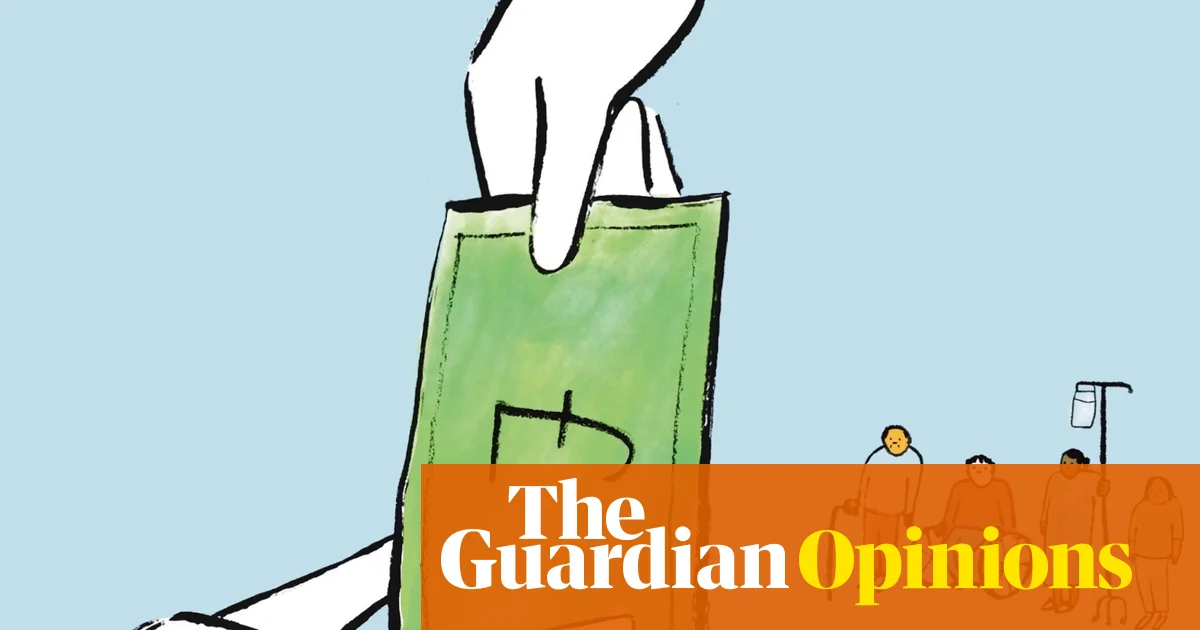
“Broken Britain” has become the favourite narrative of the right in recent months. The playbook goes like this: politicians and pundits alike exploit genuine concerns about squeezed services and living standards to propagate a sense of division and despair. Meanwhile, the parts of the state that actually need radical change are then either ignored or misrepresented, if only because their worst impact tends to be felt by the very marginalised communities the hard right scapegoats.
Few areas demonstrate this more than the disability benefits system. Reading the damning Timms report – the government’s landmark review into the personal independence payment (Pip) in England and Wales – last week, I was struck by the gulf between reality and rhetoric. The disability benefits system is “not fit for purpose” and “dehumanising” for claimants, the report found, yet scroll through a news site or switch on talk radio and there’s tumbleweed when it comes to substantive ideas to reform it, especially from figures typically eager to declare the nation’s institutions at risk of imminent collapse.
If there is a call to change the benefits system, it is only through the lens of bringing down the so-called bloated bill – not for making the system fairer for disabled people or even for it to work properly to get value for taxpayer money (assessments are so inaccurate that nearly two-thirds of appeals over Pip decisions are successful at tribunal).
Just look at the Conservatives who, keen to outflank a distracted Reform UK, are currently in the middle of a review of the disability benefits system with the express purpose of finding cuts. As shadow work and pensions secretary Helen Whately recently put it: “Disability benefits have become tantalisingly low-hanging fruit for those seeking easy cash from our benefits system.” Nastiness aside, that’s a remarkable lack of intellectual curiosity from the official opposition.
The surge in illness and disability in England and Wales over the past six years and subsequent pressure on services is the biggest public health crisis of our time, and yet you wonder whether half the people in charge of solving it understand the brief or even have much interest in doing so.
Stephen Timms, the disability minister, hasn’t yet made his recommendations for how to “overhaul” Pip (a full report is expected in the autumn), nor do we know what Andy Burnham has planned for his impending government. As we wait, progressives – many of whom have been campaigning for years to end the harm caused by the system – would do well to seize the rare opportunity to lobby for an ambitious new safety net fit for 2026 and beyond.
What might a leftwing alternative to the Pip system look like? Well, let’s start with scrapping point-based assessments. The Timms review rightly highlights that the points system – in which claimants are asked a series of questions on everyday tasks and given a score out of 12 – is ill equipped to deal with the changing nature of disability, particularly the growth in mental health and fluctuating conditions. But the problem runs much deeper: it has never made sense to put more weight on a “tickbox” exercise conducted by an (often unqualified) assessor than on medical evidence provided by someone’s own doctor. We should go back to how Pip’s predecessor, disability living allowance (DLA), was assessed: a detailed claim form and evidence from a disabled person’s medical team.
This would stop disabled people being put through pointlessly degrading questions, such as “How do you put your bra on?”, or why they haven’t killed themselves yet. The purpose of such interrogations has never been to determine whether someone needs social security, but to make them reluctant to apply for it.
Abolishing the points-based assessment would also cut out the costly reliance on the private companies that are paid vast sums of public money to carry them out. Between 2012 and 2024, private firms were handed almost £1.8bn to administer Pip tests even as their reports were frequently littered with factual errors and misrepresentation. Funnily enough, you don’t hear much about this from those lamenting the “bloated benefits bill”.
This figure doesn’t even include the hundreds of millions spent over the past decade on the appeals system every year, which is only necessary at the current rate because of the widespread inaccuracy of the assessments. The money that would be saved from all this could be used to invest in the services that prevent more people needing disability benefits, from mental health support and preventive NHS care to grants to help with the cost of living.
Finally, we should bring back indefinite awards for people with permanent conditions. When Pip was introduced in 2013, the Conservatives scrapped the “lifetime awards” that came with DLA as part of their narrative that people were being “allowed to fester” on benefits. In practice, all it’s achieved is using public money to put disabled people through frequent unnecessary retesting. Research by the anti-poverty charity Z2K shows there were more than half a million “pointless reassessments” last year of people with conditions such as cerebral palsy, learning disabilities and amputations – presumably to check someone’s leg hadn’t grown back.
after newsletter promotion
That’s the irony of hysteria around “woke” and “wasteful” welfare programmes. It is not leftwing ideology that has broken the benefits system – it’s the right. Whether it’s George Osborne’s austerity that saw Pip introduced in the first place, Margaret Thatcher’s free-market individualism or the Sun’s recent campaign for readersto “shop a benefit cheat”, the rightwing model of botched cost cutting, privatisation and punishment has had every chance to offer reform over the past 40 years – and failed repeatedly.
When Burnham enters Downing Street, any push to fix this mess that’s vaguely decent to benefit claimants will predictably be called risky and soft. But the real risk is carrying on as we are: disabled people who ask the state for help are pushed to food banks, physical and mental decline and in extreme cases death, all while costs rise and the wider public becomes increasingly resentful.
It has become the norm for disabled people applying for benefits to be made to feel shame. The only ones who should be ashamed are the politicians who have the power to fix the broken system and refuse to.
