


Dexter Loko has crafted an Afro-inspired work that is as intellectually engaging as it is entertaining, inviting readers to reflect on themes of identity, courage, and the burdens of power. If you enjoyed Nnedi Okorafor’s dynamic characters in “Akata Witch” and “The Nsibidi Scripts” series, or Tomi Adeyemi’s vivid imagery in “Children of Blood and Bone” and the “Legacy of Orisha” trilogy, or if you’re simply looking for more African-inspired fantasy, then this is a book well worth picking up.
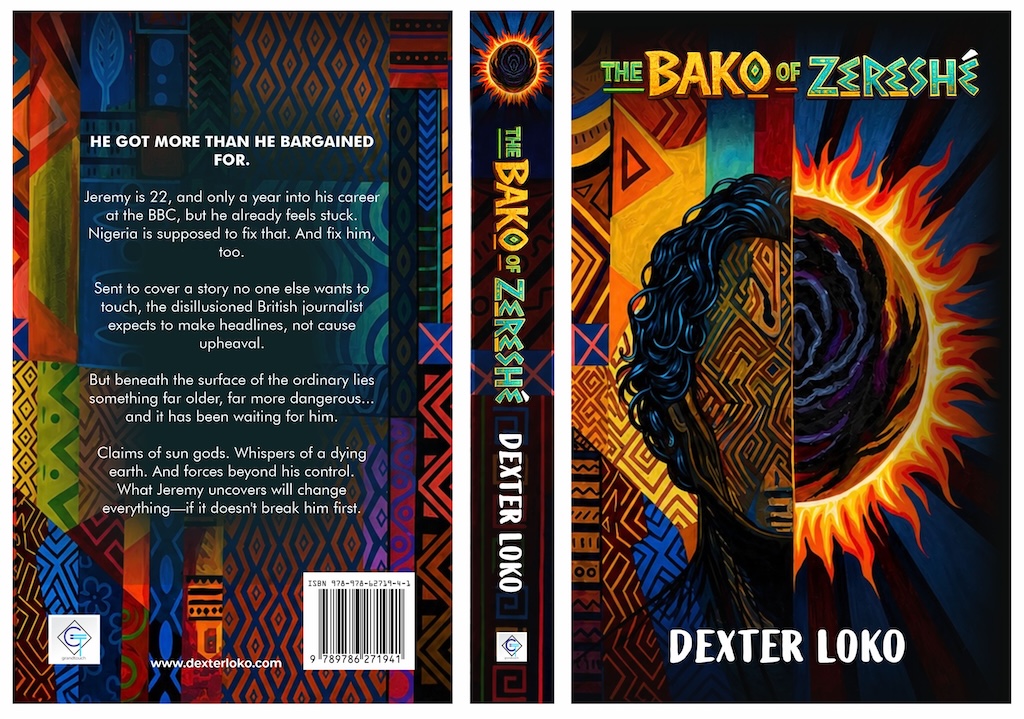
Book Title: The Bako of Zereshé
Author: Dexter Loko
Publisher: GrandTouch Press
Year of Publication: 2026
The Bako of Zereshé is the second novel by Nigerian-Irish author, Dexter Loko. It follows the story of Jeremy Fletcher, a disillusioned 22-year-old BBC reporter of British descent who finds himself displaced in the enchanted land of Zereshé, Nigeria’s secret thirty-seventh state. There, he befriends Asha, the Prime Minister’s daughter; Shani, Asha’s wary best friend; and Chudi, a kind-hearted outcast shunned for his lack of magical abilities. As Jeremy is plunged deeper into Zereshé’s magical world, where he is an unwelcome foreigner, he becomes entangled in an age-old battle between good and evil. Amidst political tensions, intrigue, and fragile loyalties, Jeremy must not only confront the external forces of corruption and destruction, but also his own personal demons of cynicism, grief, self-doubt, and a suppressed capacity for faith. Together with his newly found friends, where alliances are tried and tested, they must attempt to avert an impending disaster that threatens not only Zereshé but the world at large. Will they succeed in changing the course of fate, or will Zereshé’s dreaded fear finally come to pass?
The story is narrated from a third-person limited point of view, closely following the experiences of the protagonist, Jeremy Fletcher.
“Chudi didn’t answer. He just smiled. Then Jeremy saw it. Shells. Enormous shells floating on the river. Not just shells. They were turtles. Giant turtles. Each one was roughly the size of a small ferry.”

From the quotation above, if one aspect of the novel deserves particular praise, it is its world-building, a feat that truly earns Loko his well-deserved accolades. From grandiose landscapes featuring towering mountains, shimmering lakes, and lush greenery to the fictional creatures (Kitas and Grocupines) that inhabit them, such elements continually remind the reader that they have stepped into a world beyond the ordinary. Complementing this immersive setting is the distinctive technology employed by the Zereshéan civilisation, further enriching the novel’s imaginative landscape.
Additionally, Loko’s handling of contrasting themes is especially noteworthy. By weaving together recurring literary oppositions — good and evil, tradition and modernity, theism and atheism, native and foreigner, purist and reformist, strong and weak, powerful and powerless among others — he creates thematic depth and invites readers to engage with complex and often competing worldviews.
Having praised the novel’s many strengths, it is only fair to acknowledge that it is not without its flaws. While the characters are engaging and enjoyable, they rarely develop beyond their initial archetypes, limiting the depth of their characterisation.
Another aspect that momentarily disrupts the reader’s immersion is the novel’s inconsistent use of real-world pop culture references. Consider the following excerpt:
“…Mudiaga told him the words in Avani. They translate loosely to the English words – Watermelon Sugar High”.
At one point, Asha’s household password, ‘Watermelon Sugar High’, appears to reference the well-known Harry Styles song, “Watermelon Sugar”, suggesting that elements of contemporary pop culture exist within the novel’s universe. Yet, elsewhere, this occurs:
“Jeremy perked up, ‘The cuffs are like kryptonite and Superman!’ …’Who is Superman?’ Chudi asked”.
Jeremy’s friends are unfamiliar with Superman, one of the most recognisable figures in global pop culture. While this discrepancy may have an in-universe explanation, the novel offers none, making the contrast feel somewhat jarring. As a result, this inconsistency, though minor, risks pulling readers out of the fictional world, however briefly, by raising questions about the boundaries of the novel’s shared cultural landscape. This is not to suggest that the novel is riddled with logical inconsistencies; this is the only such occurrence in the book.
Overall, The Bako of Zereshé is a novel that succeeds far more than it stumbles. Dexter Loko has crafted an Afro-inspired work that is as intellectually engaging as it is entertaining, inviting readers to reflect on themes of identity, courage, and the burdens of power. If you enjoyed Nnedi Okorafor’s dynamic characters in Akata Witch and The Nsibidi Scripts series, or Tomi Adeyemi’s vivid imagery in Children of Blood and Bone and the Legacy of Orisha trilogy, or if you’re simply looking for more African-inspired fantasy, then this is a book well worth picking up.
Glory Folami writes from Lagos.
Discover more from Premium Times Nigeria
Subscribe to get the latest posts sent to your email.
