

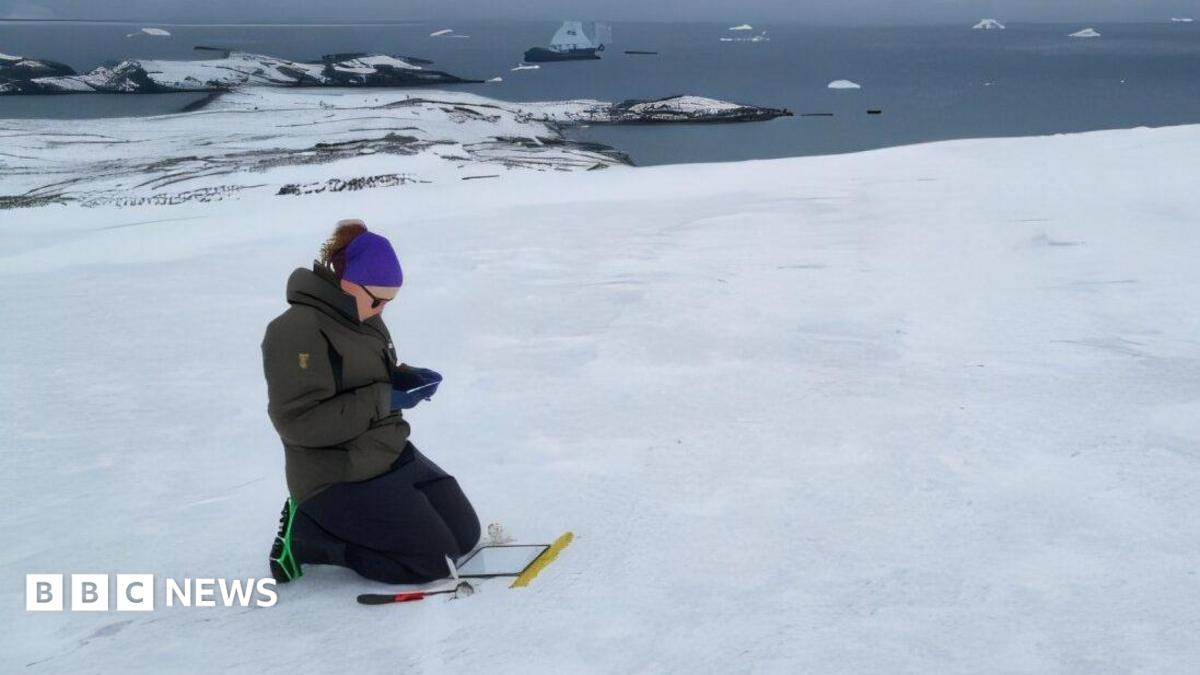
Broadwell brought back algae samples to a lab at the University of Bristol’s Cabot Institute for the Environment, for detailed analysis of its DNA alongside other samples from the Arctic and the Alps.
“These landscapes are changing fast, and arctic and alpine glaciers might be some of the first habitats lost completely to climate change,” she said.
“The research uncovered a surprisingly rich and habitat-specific diversity of both snow and glacier algal species.
“Notably, we found red snow algae dominating the ice cap, where Ancylonema glacier algae would normally be expected to prevail.”
While these algal blooms absorb carbon dioxide from the atmosphere through photosynthesis, they also pose a major threat to the region’s delicate balance.
The expansion of plant life darkens the snow and ice, reducing its reflectivity and causing the surrounding area to warm up, triggering ice and snow melt.
