

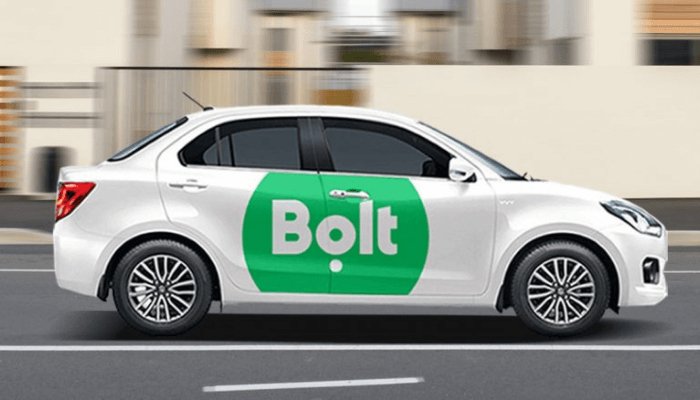
Bolt has been cleared to resume operations at airports managed by the Federal Airports Authority of Nigeria (FAAN), following an intervention by the Minister of Aviation and Aerospace Development, Festus Keyamo.
Mr Keyamo, in a statement on Thursday, said he had directed FAAN to urgently address concerns over what passengers described as exorbitant increases in airport taxi fares following the disruption of e-hailing services.
After the minister’s intervention, FAAN announced that it had reached an “agreeable operational framework” with Bolt, clearing the company to resume its services at FAAN-managed airports immediately.
The development followed days of controversy over the operation of e-hailing platforms at Nigerian airports, with passengers complaining about higher transportation costs after they were unable to access services they had previously relied on.
FAAN also apologised to passengers for the inconvenience caused by the temporary interruption of e-hailing services.

How the dispute started
The controversy followed FAAN’s efforts to establish a new operational framework for commercial and e-hailing vehicles operating within airport premises.
An internal FAAN memo dated 30 July directed airport managers to ensure that Bolt and Uber ceased commercial operations at FAAN-managed airports pending the finalisation of licence agreements with the e-hailing companies.
However, on 20 August, FAAN said it had not imposed a blanket ban on Uber, Bolt or other e-hailing platforms, but said discussions were ongoing with operators to establish a workable framework for their operations.
The clarification followed reports of restrictions affecting e-hailing services at some FAAN-managed airports, including the Murtala Muhammed International Airport, Lagos, and the Nnamdi Azikiwe International Airport, Abuja.
FAAN said its concern was not to limit passengers’ transportation choices but to ensure that commercial transport services operating within airport premises complied with safety, security and accountability requirements.
The authority said airports were highly regulated environments and that it needed adequate visibility of vehicles, drivers and operators working within them.
FAAN said it had been dealing with problems associated with commercial and e-hailing vehicles at airports for nearly a decade, including passenger solicitation, touting, unregulated operations and random pick-ups.
It said the challenges had made it necessary to strengthen the management of commercial transportation within airport premises.
Fare controversy
The dispute became more contentious after passengers began raising concerns about the cost of airport taxis.
A recent video by travel content creator Chris Joondeph, popularly known as Authentic Travelling, showed an airport taxi operator quoting N30,000 for a journey from the Lagos airport to Ikeja.
The fare generated widespread criticism, particularly after comparisons showed significantly lower prices on e-hailing platforms for the same journey. Bolt listed the trip at about N6,900, while Uber quoted N4,200 for UberX and N5,800 for its Priority option.
The controversy heightened concerns among passengers who had become accustomed to using e-hailing platforms for relatively cheaper airport transportation.
FAAN, however, said the fares that attracted public criticism were not newly imposed by the authority or introduced through its Airport Car Hire Rank Management System (ACHRAMS).
According to the authority, the rates existed before ACHRAMS and were not substantially different from those previously applicable.
FAAN said ACHRAMS only brought greater visibility to the prevailing airport taxi rates.
ACHRAMS, which stands for Airport Car Hire Rank Management System, was introduced by FAAN as a system for managing airport car-hire ranks and authorised transportation operations.
The authority stressed that ACHRAMS was not an e-hailing application and was not created to compete with Bolt, Uber or other mobility platforms.
Keyamo orders urgent action
Amid the controversy over fares and the disruption of e-hailing services, Keyamo directed FAAN to urgently resolve the issue.
The minister’s intervention came as complaints from passengers continued to draw attention to the difficulties faced by travellers seeking affordable transportation from airports.
Following the directive, FAAN said it had engaged Bolt and reached an operational agreement that would allow the platform to resume services immediately.
The authority said the agreement showed that airport regulation and security could coexist with passengers’ access to e-hailing services.
“The resolution demonstrates that it is possible to protect the integrity and security of the airport environment while preserving the convenience and freedom of choice that e-hailing services provide to passengers,” FAAN said.
FAAN also apologised for the disruption.
“We sincerely apologise for the difficulties this caused our passengers,” the authority said.
The authority acknowledged that although its actions were driven by regulatory, safety and security considerations, the immediate impact on passengers had been significant.
Bolt resumes, others still in talks
With the agreement reached, Bolt has been cleared to resume operations at all FAAN-managed airports.
FAAN said it was also engaging other e-hailing operators and expected the outstanding discussions to be concluded in the coming days.
READ ALSO: Keyamo directs airlines, unions to agree repayment plans over TSC debt
However, the authority did not give details of the specific operational terms agreed with Bolt.
It said passengers remained free to choose from available transportation options that best met their needs, provided the services were authorised to operate within the airport environment.
The authority noted that its responsibility was to ensure that whichever transportation service passengers chose operated in a safe, secure, orderly and accountable manner.
The resolution comes after FAAN had initially maintained that its engagement with e-hailing operators was aimed at establishing an appropriate framework rather than eliminating the services.
The latest development restores Bolt as an option for passengers using FAAN-managed airports, while the authority continues discussions with other operators.
For passengers, the immediate significance is the return of a familiar alternative to airport taxi services at a time when transportation costs have become a major part of the airport travel experience.
Discover more from Premium Times Nigeria
Subscribe to get the latest posts sent to your email.
