

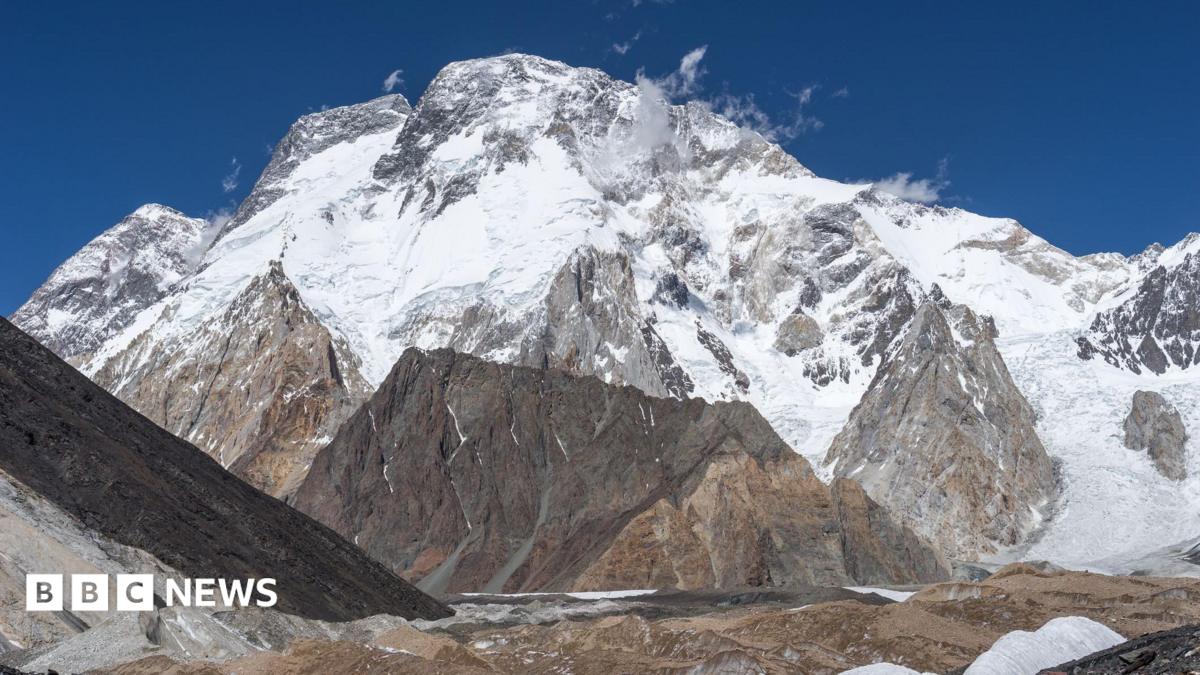
The remains of US climber Mallory Geis have been found by rescuers following an avalanche on one of the world’s highest mountains, a local government body says.
Geis was part of a 10-person expedition that was on Pakistan’s Broad Peak, on the border with China, when the avalanche happened on Thursday.
According to US media, Geis was 39 and from the Texas city of San Antonio.
Two other bodies – of Nadhira Ahmed Abdullah Al Harthy from Oman and Pur Bahadur Gurun from Nepal – have also been identified.
All have been taken to a hospital by helicopter for “legal formalities regarding identification”, according to the Information Department of Gilgit Baltistan, the local region.
The Alpine Club of Pakistan initially said four bodies had been located on Pakistan’s Broad Peak, before clarifying they had in fact found two bodies and a body part.
Several others were spotted by aerial drones, it said, though their condition would not become clear until rescue efforts resume on Saturday and a search group can reach the area, which could take several hours. Bad weather has been hampering them.
The Alpine Club of Pakistan added that the location of one climber remains unknown.
The announcement that Geis’ remains had been found came later on Friday.
A search and rescue operation for the team began after reports an avalanche on Thursday on the 8,047-metre (26,400ft) peak in the Karakoram range.
The multinational climbing group was being led by renowned Nepal-born climber Nirmal Purja, the Alpine Club of Pakistan said.
He is known for climbing all 14 of the world’s 8,000-metre-plus mountains in just over six months in 2019.
The Alpine Club of Pakistan told the BBC it had seen movement from the GPS trackers of three members of the expedition, including Purja, but that a helicopter was unable to see anything at those locations.
Rescuers later found one of the trackers smashed, leading them to believe that the movement they had seen may have been a glitch.
The Alpine Club of Pakistan’s communications lead Naila Kiani said the chances of survival in such harsh conditions after more than 24 hours were “very slim”, but added that “miracles do happen”.
Earlier on Friday, the Alpine Club confirmed that two rescue helicopters had been sent by the Pakistan army, carrying rescue personnel and additional specialised equipment to support the rescue operation.
“The club prays for the safety and successful rescue of all the climbers and stands in solidarity with their families and the international mountaineering community during this difficult time,” it said.
