

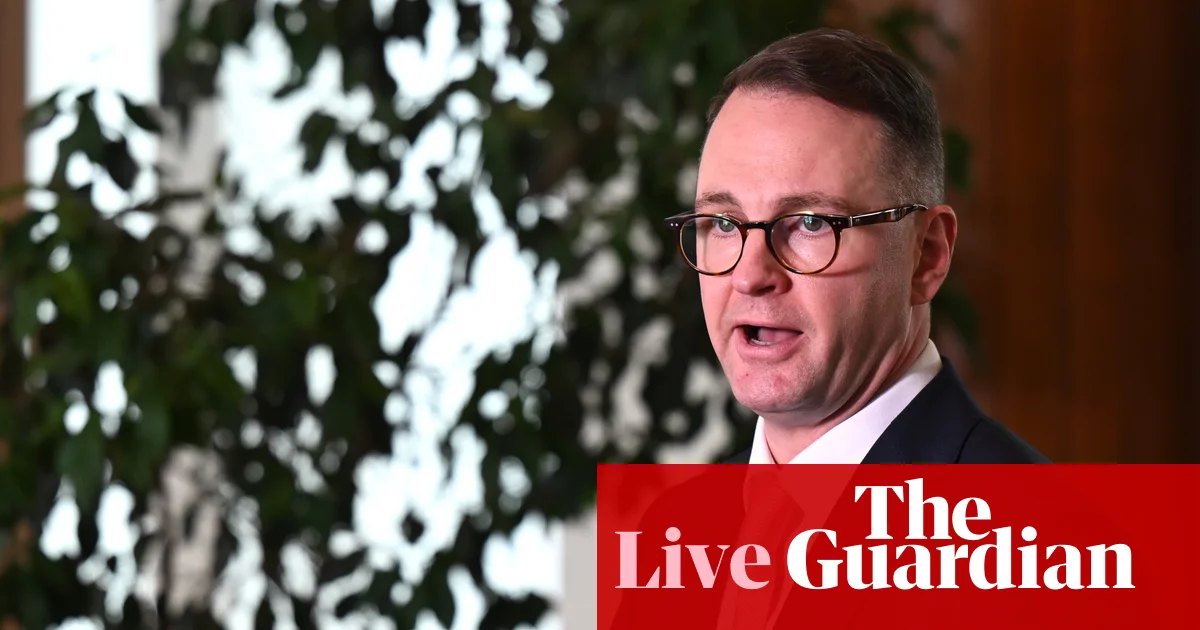
Australians should accept substandard housing, Bragg says
Yesterday Andrew Bragg announced he would strip the 2,000 page national housing code down to just 80 pages, removing most standards outside health, fire safety and essential structural requirements.
It caused a furore among some including the Australian Council of Social Service (Acoss), who said it would lock renters into skyrocketing power bills to keep their homes inhabitable.
RN Breakfast host Sally Sara asks Bragg if his policy means low-income earners should just accept that they will live in substandard housing. “Yes, definitely”, he replies.
There are trade-offs here and I’ve been counselled not to use the term Maslow’s hierarchy* because perhaps some people don’t know what that means. But I mean, it’s more important to have a house than to not have a house. And so, given the affordability crisis we have in the housing system, we need to just build more houses.
Bragg then takes aim at Acoss because he says they’re campaigning for “a super guarantee of 30%” and that they need to “get out and talk to more people”.
Speaking of superannuation, he’s then asked why he hates it so much. He says it’s because “it hasn’t worked”.
It’s one of the biggest public policy failures since federation, in the sense that it hasn’t helped the budget and it has not really helped many people get off the pension … You saw at the Labor party conference now you’re going to have super for under 18s and soon you’ll have super for cats and dogs.
* Maslow’s “hierarchy of needs” is the 1943 theory of American psychologist Abraham Maslow, who ranked human needs in a pyramid with things like breathable air, food and sleep as the broad base, and rarefied things like creativity and morality at the tip.
Key events
Lisa Cox
Some more on Tasmania’s first confirmed case of H5 bird flu.
Tasmania’s environment minister Guy Barnett said the community “must be prepared for the risk of a mass mortality event”.
He said Tasmania had worked closely with the federal government to develop protection plans for the most at-risk species including the critically endangered orange-bellied parrot, the Tasmanian devil, the shy albatross, the short-tailed shearwater, the Furneaux white-fronted tern, the fairy and little tern, Australian and long-nosed fur seal, and the Australasian gannet.
Barnett said as soon as the state received approval it would begin vaccinating up to 350 captive orange-bellied parrots:
We’ve been working with the Commonwealth to get approval to vaccinate our orange-bellied parrots, and I’m very pleased that we’re now very close to being able to commence that work ahead of our scheduled release of birds to the wild.
He said the captive facility at Five Mile Beech was central to the national breeding program and already operated under strict biosecurity arrangements.
Additional protective measures, including specialised shade cloth infrastructure, are being implemented to reduce the risk of disease transmission from wild birds to captive parrots.

Benita Kolovos
Victorian premier’s message to students ahead of walkout protesting against Pauline Hanson: ‘Stay in school’
At the end of his press conference, Victorian premier Ben Carroll was asked about the national student protests against One Nation and Pauline Hanson.
Thousands of school students will attend protests around the country today, including in Melbourne, Sydney, Perth, Canberra, Adelaide, Brisbane, Newcastle and Wollongong.
Carroll said:
First and foremost, my message to every student is: if you want to change the world, stay at school, focus on what your learning is in the classroom. I understand they’re angry with the sentiment and the policies of One Nation, but the best way to change your future in the world is to get an education and to stay in school.
‘We should learn from the mistakes from the past’: Albanese
Anthony Albanese says the bailout comes back to jobs and sovereign capability, hammering in the point of Australia not being at the end of supply chains.
This is pretty front of mind at the moment, with the world having experienced multiple supply chain crunches due to global conflict in recent years.
He brings up the death of the car manufacturing industry and the closure of oil refineries in Australia as mistakes from the past that governments should learn from.
The fact that oil refineries shut in this country under the former government that now we’re having to go out there and look at how do we become more sovereign. How do we become more resilient? And the idea that we would sit back and watch this facility just disappear is not in Australia’s national interest.
This will produce a return to Australia. This is connected up with an increasing clean energy, which will drive this change through. It’s connected up with not just the jobs that are created directly here, but their indirect jobs that will flow through the manufacturing sector right throughout this country.
David McBride to leave prison after parole granted

Tom McIlroy
David McBride is being released from prison in Canberra this morning.
He has served his full non-parole period of 27 months.
In May 2024, the former army lawyer was sentenced to a maximum five years and eight months in jail for his role in stealing secret defence documents about the Afghanistan war and leaking them to the media.
McBride pleaded guilty to three charges in November after the court upheld a commonwealth intervention to withhold key evidence the government argued had the potential to jeopardise “the security and defence of Australia”. The charges included stealing commonwealth information and passing that on to journalists at the ABC.
The attorney general, Michelle Rowland, approved McBride’s parole request this morning.
A spokesperson for Rowland confirmed his release to Guardian Australia.
Mr McBride’s parole was considered and granted.
The government does not provide specific commentary or details about individual parole matters.
Albanese on Tomago smelter bailout: ‘We cannot afford to be at the end of supply chains’
Anthony Albanese and a huge entourage have arrived on site at the Tomago smelter to announce the $2.5bn bailout.
The prime minister tells the media that the bailout is vital to keep the industry alive and that the deal will deliver manufacturing jobs and “deliver additional clean energy for New South Wales and for Australia”.
The idea that we sit and allow this facility to just disappear would have had consequences. We cannot afford to be at the end of supply chains. We need to be a country that makes things and there is nowhere better in Australia that has a history of making things than the Newcastle and Hunter regions.

Lisa Cox
No evidence of H5 outbreak in Tasmania, minister says
Jumping back to Tasmania’s announcement that it has confirmed its first case of H5 bird flu after a dead brown skua was discovered on the state’s coast.
The government said the migratory seabird was found at Burgess Cove at Rocky Cape in the state’s north-west by parks and wildlife staff conducting coastal surveillance.
Minister for primary industries and water, Gavin Pearce, said Tasmania had been preparing for the arrival of the deadly virus for some time and was ready to respond.
Although we’ve had a positive detection, I want to be clear that there is no evidence of an outbreak and there is no detection in commercial poultry at this time.
We’ve been working closely with industry, wildlife and biosecurity experts to strengthen surveillance, preparedness and response arrangements across the state.
Pearce said the state had worked with the poultry sector on biosecurity preparedness and with local governments on awareness, reporting and carcass disposal.
We have … invested in decontamination units, remote piloted aircraft, mobile truck wash facilities, and a range of other important infrastructure assets to aid our response.
He said Tasmanians who see a sick or dead bird should avoid contact with the animal, record its location and report it to the emergency hotline on 1800 675 888.
Wells introduces news bargaining incentive legislation to the lower house
The communications minister, Anika Wells, has introduced the news bargaining incentive bill to the house, after making several 11th hour changes and reaching an agreement with the Coalition.
The NBI is designed to force tech giants like Facebook and TikTok to pay media outlets for the value they derive from news on their platforms.
Labor has amended the bill to require tech giants to make a minimum of eight deals with news publishers – up from six. The design of the scheme will also mean big tech platforms can only offset a maximum of 25% of their exposure to the levy with each deal, to incentivise deals being made with more outlets.
Wells tells the house that the commercial broadcaster’s share of Australian advertising expenditure fell from 43% to 17% between 2006 and 2022, and the latest deal will help keep the sector afloat.
That decline, threatens Australia’s access to quality public interest journalism. That is why the government is creating a statutory solution to support public interest journalism and the journalists who produce it.
The scheme is not about providing payments without obligations. It is about supporting journalists to remain in the jobs that are vital to the production of public interest journalism.
First case of H5 bird flu detected in Tasmania
The Tasmanian government has announced it has tested its first bird flu case.
The minister for primary industries and water, Gavin Pearce, says a brown skua was collected by biosecurity officers in the north-west cape of Tasmania and tested for bird flu.
Following overnight testing it has been confirmed that the skua has the H5 bird flu. Whilst the federal government is coordinating a response for H5 bird flu I want to reassure Tasmanians that we are prepared to respond.
Pearce gives the same message as the feds have in recent days, telling people to be vigilant, report suspected cases and not touch any suspected infected birds.
‘A lot of healthy gambling happens in this country’, says Nationals frontbencher
Nationals MP Kevin Hogan and Greens senator David Shoebridge have had quite the sparring match on TV this morning, debating gambling advertising.
Shoebridge has rebuked the government for working with the Coalition, claiming both are beholden to the gambling lobby – with both parties receiving donations from the lobby.
For example, the Australian Labor party, not including any individual state branches, received $71,500 from Sportsbet, while the Liberal party of Australia received $60,000 during the 2024-25 financial year. (This obviously isn’t an exhaustive list of donations from gambling companies!)
Shoebridge said:
If they want [Labor] to legislate for the public interest, not their gambling donors, if they want to protect families from seeing their family home spent on the profits of probably one of the most extractive ‘Dracula’ industries floating around, they can come and work with us, or they can work with the Coalition, who are also taking donations from the gambling industry, who have a long history of wanting to give the gambling industry what they want.
Hogan says that gambling is safer than decriminalising the “personal use of ice” and other drugs. The Greens platform states that the individual use of illegal drugs should be decriminalised. Hogan says:
Let’s decriminalise those things for personal use, that’s OK – but let’s, gee, let’s not have a gambling that come across your phone or your TV. The complete hypocrisy of the Greens. A lot of healthy gambling happens in this country. We do want people who have problems to be able to protect themselves from it.
Shoebridge scoffs at the use of “healthy gambling”.
Victorian premier announces changes to allow protective service officers to patrol shopping strips
Benita Kolovos
The Victorian premier, Ben Carroll, the police minister, Paul Edbrooke, and chief commissioner of police, Mike Bush, are holding a press conference to announce a change in regulations to allow protective service officers (PSOs) to patrol shopping strips.
The government will also expand Operation Pulse – allowing police and PSOs to patrol more major shopping centres – until the end of next year, and recruit an additional 150 PSOs.
It follows the death of Van Viet Truong, a grocery store owner who died in hospital after he was allegedly attacked when he rushed to the aid of a fellow retail worker trying to stop a group of teenagers stealing clothes at Sunshine mall.
Carroll said:
Victorians deserve to feel safe where they shop, where they work, and where they live … We know Operation Pulse is working really successfully in our shopping centres, we’re also going to ensure that our PSOs can be in crime hotspots, in shopping strips as well. This is more PSOs in more places more often, really increasing that police presence in local communities.
Edbrooke said:
Last week I became the police minister, and the first action I took was to go out to Sunshine and meet with traders, family, and friends of a very beloved community member that lost their life. We listened, we heard what that community was saying, and today we’re acting on that.
‘Sad’ the government has to run around and bail out smelters, Paterson says
Jumping back to James Paterson’s interview on News24 earlier, the shadow defence minister said it was good that the Tomago smelter in the NSW Hunter region wasn’t shutting down, but blamed the Labor government for pushing up electricity prices.
Rio Tinto warned the government late last year that Tomago could close at the end of its current electricity supply contract due to unsustainable energy costs.
As part of the government’s bailout, it’s put forward cash to get Tomago using more renewable energy over the next decade.
Paterson says the government is “taking from taxpayers” to keep the industry afloat.
This bailout is only necessary because electricity prices have become completely unaffordable under Labor, not just for households and small businesses, but for large industrial users like Tomago … I’m glad it’s not closing, but it’s sad that we now need to be running around bailing out every industrial facility in this country apparently.
They’re just going to take from taxpayers, ultimately taxes that you and I and everyone else pays, to bail out these facilities, otherwise we’ll lose them. And I think that’s just a recipe for an inefficient sclerotic economy that can’t compete on the international stage and Australians will be poorer as a result.
Australia’s gay community is ‘politically diverse’, Nationals MP says
Nationals MP Bridget McKenzie says Australia’s gay community is politically diverse, after her former colleague turned One Nation MP Barnaby Joyce called his party “one of the gayest parties in Australia”.
That claim yesterday came after comments surfaced by a failed One Nation candidate who described same-sex attraction as a mental illness.
On the Today show earlier, McKenzie rejected the comments from that failed One Nation candidate, and claimed gay voters were flocking to the Coalition.
The gay community is politically diverse. As anyone in my home state of Victoria, many are joining the National party and the Liberal party because they’re sick of very, very bad Labor government.
Australians should accept substandard housing, Bragg says
Yesterday Andrew Bragg announced he would strip the 2,000 page national housing code down to just 80 pages, removing most standards outside health, fire safety and essential structural requirements.
It caused a furore among some including the Australian Council of Social Service (Acoss), who said it would lock renters into skyrocketing power bills to keep their homes inhabitable.
RN Breakfast host Sally Sara asks Bragg if his policy means low-income earners should just accept that they will live in substandard housing. “Yes, definitely”, he replies.
There are trade-offs here and I’ve been counselled not to use the term Maslow’s hierarchy* because perhaps some people don’t know what that means. But I mean, it’s more important to have a house than to not have a house. And so, given the affordability crisis we have in the housing system, we need to just build more houses.
Bragg then takes aim at Acoss because he says they’re campaigning for “a super guarantee of 30%” and that they need to “get out and talk to more people”.
Speaking of superannuation, he’s then asked why he hates it so much. He says it’s because “it hasn’t worked”.
It’s one of the biggest public policy failures since federation, in the sense that it hasn’t helped the budget and it has not really helped many people get off the pension … You saw at the Labor party conference now you’re going to have super for under 18s and soon you’ll have super for cats and dogs.
* Maslow’s “hierarchy of needs” is the 1943 theory of American psychologist Abraham Maslow, who ranked human needs in a pyramid with things like breathable air, food and sleep as the broad base, and rarefied things like creativity and morality at the tip.
Bragg digs in on migration speech, won’t confirm if Taylor had oversight
While some in the Coalition have distanced themselves from Andrew Bragg’s migration announcement yesterday, that the party would reduce net migration to 180,000, the shadow housing minister has today doubled down.
Joining RN Breakfast, Bragg defends the speech and says he wanted to provide a detailed speech on housing addressing the “national malaise” and that he outlined the “general direction of travel”.
He also brushes off reports of criticism by unnamed colleague and, asked whether he showed Angus Taylor the whole speech before delivery, he won’t exactly say.
These are not opinions, these are just the facts around the gaps that we have. I think Angus has done a very important piece of work here by putting this migration and housing nexus clearly at the centre of our housing agenda.
If you go back and look at the speech, I was making it clear that this is the general direction of travel. These are just that you need to find a way to operationalise it and you’d need to obviously consult with industry, with the community and also with colleagues. That’s clear. But I just think we’ve got to try and be clearer about where we’re trying to get here as a nation.
Asked if his announcement that the Coalition would strip the national housing code from 2,000 pages to 80 was endorsed by his leader and colleagues, Bragg says, “of course”.
