

• Nigeria needs credible safety nets and immediate relief—not another inadequately costed petrol subsidy
By Gloria Fraser
Any presidential candidate promising to restore petrol subsidy without publishing its cost, funding source and safeguards is not presenting an economic policy. He is selling an illusion to a distressed electorate.
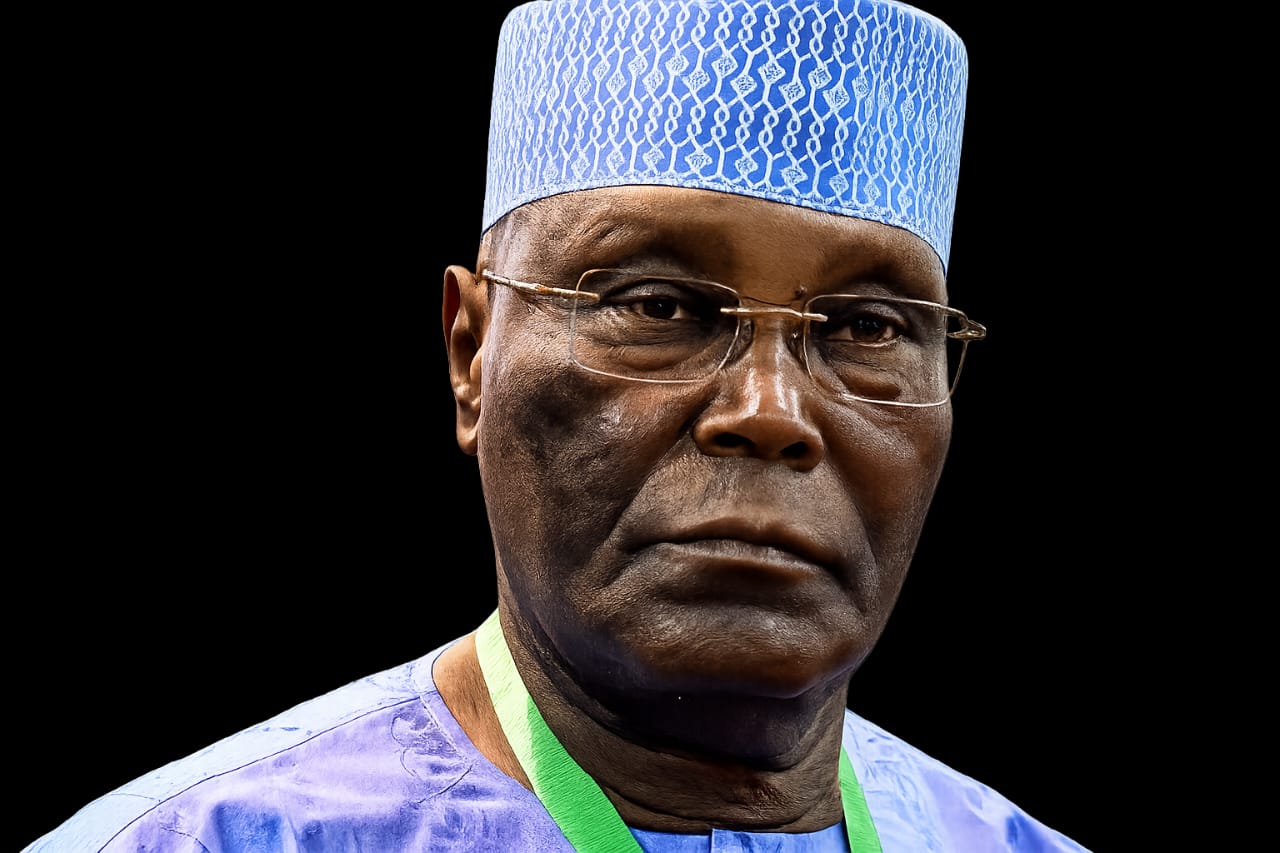
Professor Farooq Kperogi’s defence of Atiku Abubakar’s proposed subsidy arrangement is eloquent and politically entertaining, but its central argument remains economically unconvincing.
Kperogi appears delighted that President Bola Ahmed Tinubu and his supporters are supposedly “squirming in discomfort like cats stranded on a hot zinc roof.” That is colourful imagery, but public policy is not judged by how uncomfortable it makes an opponent. It is judged by its cost, sustainability, beneficiaries, safeguards and consequences.
Atiku may have identified an emotionally powerful campaign issue. He has not yet presented a fully costed alternative.
PERSONAL ATTACKS PRODUCED LITTLE VALUE
Kperogi correctly acknowledges that Atiku’s prolonged attacks concerning Chicago State University and Tinubu’s past in the United States produced little political value.
Chicago State University confirmed Tinubu’s attendance and graduation in 1979. Its registrar testified that the university issued him a diploma. The BBC Global Disinformation Team found no evidence that the certificate submitted to the Independent National Electoral Commission was forged.
Atiku’s American expedition therefore failed to establish the electoral disqualification his supporters anticipated. Nigerians are understandably more concerned about food, transportation, electricity, employment and survival than endless arguments over American records.
However, moving from unsuccessful personal attacks to an economic slogan does not mean Atiku has suddenly produced a credible programme.
Kperogi interprets Tinubu’s response as evidence that Atiku “struck a raw nerve.” That is speculation. A president may respond strongly because he considers an opponent’s proposal financially dangerous or politically opportunistic. Irritation does not prove that the proposal is sound, just as presidential silence over previous allegations did not prove they were true.
“THE SUBSIDY WILL FOLLOW THE BARREL”
Atiku proposes that qualifying Nigerian refineries should receive crude oil at preferential prices, subject to production, efficiency, transparency and domestic-supply conditions. He promises a predetermined annual ceiling and a system for tracing every subsidised barrel.
These principles are more detailed than a simple promise to restore the former subsidy, but they remain incomplete.
What will the preferential crude price be? How far below the international benchmark will crude be sold? How many barrels will qualify? What is the annual ceiling? Which expenditure will be reduced to finance it? What petrol price will participating refineries be required to maintain?
If crude worth $70 per barrel is sold to a refinery for $50, the government sacrifices $20 in potential revenue. That difference is a subsidy, whether it appears as a cash payment, discount or foregone export income.
Nigeria would still pay.
A spending ceiling is meaningful only when the amount is disclosed. Calling a programme “capped” without revealing the cap is not fiscal responsibility.
Tracing discounted crude to a refinery also does not prove that the financial benefit reaches motorists. A refinery receiving cheaper crude can still declare high processing, financing and distribution costs. Marketers and retailers will add their margins, while prices may vary across the country.
Without an enforceable pricing formula, transparent refinery accounts and independent retail-price verification, government could subsidise refinery operators without delivering proportionate relief at filling stations.
Tracing the barrel is not the same as tracing the benefit.
NOT EVERY SUBSIDY IS WISE
Kperogi argues that every functional society subsidises something. That is true but incomplete.
Governments subsidise education, healthcare, agriculture, housing and transportation. The existence of subsidies elsewhere does not prove that every subsidy is affordable, equitable or appropriate.
The question is whether petrol subsidy represents the best use of Nigeria’s limited revenue.
The National Assembly approved approximately N4 trillion for petrol subsidy in 2022. The former arrangement disproportionately benefited wealthier households with several vehicles, businesses dependent on large generators, middlemen and cross-border smugglers. Poorer households, which consumed relatively little petrol directly, received a much smaller share.
Nigeria was effectively borrowing to subsidise consumption while hospitals, schools, infrastructure and social protection remained underfunded. It was an expensive, regressive and corruption-prone system disguised as assistance to the poor.
Atiku’s proposed refinery-based arrangement differs from the former import subsidy, but preferential crude pricing could reproduce similar weaknesses unless its costs and consumer benefits are independently verified.
PETROL’S IMPORTANCE DOES NOT VALIDATE ATIKU’S REMEDY
Kperogi is correct that petrol occupies an unusually important position in Nigeria. It powers transportation, generators, farms and small businesses. A petrol-price increase travels through the economy, raising food, transportation and production costs.
That diagnosis is accurate. The proposed remedy remains questionable.
Because transportation is expensive, government should invest in affordable mass transit. Because electricity is unreliable, it should improve generation, transmission and decentralised energy. Because food prices are high, it should support agricultural production, storage and transportation.
Using a petrol subsidy to compensate for failures across electricity, transportation, agriculture and social protection is an extremely expensive and imprecise solution. It treats several structural diseases with one fiscally dangerous painkiller.
THE HARDSHIP IS REAL
Kperogi is justified in condemning the suffering that followed subsidy removal and currency depreciation. Nigerians experienced a severe cost-of-living shock. Businesses struggled, food and transportation prices increased, and household purchasing power collapsed.
The Tinubu administration correctly recognised that the former subsidy was unsustainable, but its greatest shortcoming was removing it before establishing broad and functional safety nets to protect vulnerable Nigerians.
Cash transfers were delayed. The social register faced credibility questions. Mass-transportation initiatives were insufficient. Wage adjustments and food-security interventions did not initially match the hardship.
Government cannot answer every complaint with promises of future gains. Nigerians need measurable relief now.
However, implementation failure does not make reversal economically sound. The correct response is to repair the protection mechanism—not recreate another subsidy whose cost and beneficiaries remain uncertain.
COMPARATIVE EXPERIENCE SHOWS REFORM CAN WORK
Other countries demonstrate that fuel-subsidy reform can succeed when relief precedes or accompanies price increases.
Indonesia combined fuel-price reforms with targeted transfers and increased support for education, healthcare and vulnerable households. Egypt pursued gradual energy-price adjustments while expanding programmes such as Takaful and Karama for poorer families.
Neither model was perfect, but both recognised a principle Nigeria did not sufficiently apply: citizens must be protected during reform, not promised assistance after hardship has taken hold.
The lesson is not to restore an indiscriminate petrol subsidy but to combine reform with credible, adequately funded and immediately operational safety nets.
National Patriots does not recommend relying primarily on cash transfers in Nigeria. Weak beneficiary registers, corruption and diversion create a serious risk that funds will not reach the intended households.
A more credible option is an independently administered Infrastructure and Social Relief Fund, supervised by a non-partisan board, subjected to continuous independent auditing and reporting directly to the President.
At least half of the Federal Government’s additional fiscal gains from subsidy removal and foreign-exchange reform should be committed to this fund. It should finance visible and verifiable mass transportation, healthcare, food security, electricity and community infrastructure.
THE REFORMS HAVE NOT PRODUCED ONLY MISERY
Kperogi’s account suggests that the reforms delivered nothing except poverty and better-funded governors. That is inaccurate.
Nigeria’s real gross domestic product grew by 3.89 per cent year-on-year in the first quarter of 2026, compared with 3.13 per cent in the corresponding period of 2025.
Minister of State for Finance Taiwo Oyedele has said that subsidy-related reforms mobilised approximately N15.8 trillion for the federation between June 2023 and December 2025. He explained that the gains were reflected in higher distributable revenue rather than accumulated in a separate “subsidy savings” account.
This does not mean that N15.8 trillion is sitting in a special account waiting to be spent. The gains appeared as greater distributable revenue and were absorbed by wages, debt servicing, infrastructure, electricity support and other obligations.
The World Bank has acknowledged improvements in government revenue, macroeconomic stability and resilience to external shocks. It has also warned that these gains have not translated sufficiently into better living conditions.
Both conclusions can be true. The reforms may have prevented a deeper fiscal crisis while imposing excessive hardship through poor sequencing and inadequate protection.
MORE MONEY FOR GOVERNORS IS NOT ENOUGH
Citizens are entitled to demand independently verifiable accounts of how the Federal Government, 36 states and 774 local governments used their increased allocations.
Unfortunately, higher allocations have not produced sufficient relief for ordinary Nigerians, contributing to public agitation across the country. Some governors have failed to convert additional revenue into visible improvements, while many local governments still lack effective control over their resources.
President Tinubu should establish the proposed Infrastructure and Social Relief Fund now, using the federal share and any constitutionally agreed contributions, to ensure that reform revenues deliver measurable benefits directly to citizens.
Misuse of public revenue is an argument for stronger accountability—not for consuming that revenue through another general petrol subsidy.
ATIKU’S CONVERSION REQUIRES SCRUTINY
Kperogi concedes that Atiku previously advocated subsidy removal. Atiku may legitimately change his position, but he must explain what evidence changed his mind and how his proposed arrangement will avoid the failures of the former system.
That responsibility is especially important because Atiku played a central role in the market-oriented privatisation programme of the Obasanjo administration. He cannot credibly reinvent himself as the defender of subsidised fuel without publishing rigorous calculations.
He must disclose the volume of crude involved, proposed discount, annual fiscal ceiling, funding source, refinery-selection criteria, consumer-pricing formula and enforcement mechanism.
Until then, his proposal remains an appealing but uncosted campaign promise.
RELIEF, NOT REVERSAL
Kperogi is right that the 2027 election should be fought in Nigerian kitchens, markets, factories and motor parks—not in American archives. Hunger represents a greater political threat to Tinubu than allegations concerning his past.
But hunger does not validate every proposal advertised as relief.
Tinubu must urgently accelerate mass transportation, food-security interventions, electricity improvements, affordable healthcare and support for productive businesses. Reform must become visible in the daily lives of citizens.
Nigeria does not have to choose between indefinite hardship and an expensive return to subsidised petrol. The responsible path is to retain necessary fiscal reforms, correct their implementation failures and protect vulnerable Nigerians through transparent and verifiable interventions.
Kperogi has identified a powerful political argument. He has not demonstrated that Atiku has produced a sustainable economic answer.
Political excitement may draw electoral blood, but it cannot balance Nigeria’s books.
•Princess Gloria Adebajo-Fraser, MFR
President, The National Patriots,
Former Special Adviser to President Goodluck Jonathan.
Vice-Chairman, Strategic Communications Committee, Buhari Presidential Campaign Council, 2019.
