

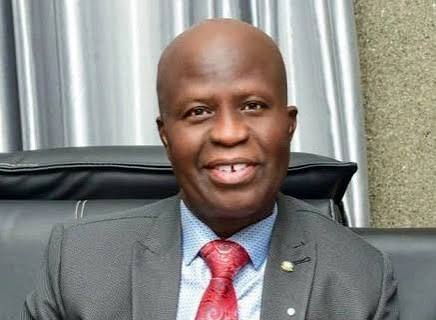
A routine ambassadorial confirmation turned into a dramatic Senate showdown recently as lawmakers fiercely debated constitutional rights, pending court cases and public perception before ultimately approving Professor Abayomi Fasina’s nomination. Sunday Aborisade reports.
For close to an hour last Thursday, Nigeria’s Senate chamber ceased to be the orderly arena of legislative routine. Instead, it became the stage for one of the most gripping and emotionally charged debates witnessed in recent months, as senators locked horns over a question that pitched constitutional law against public perception, due process against public outrage, and parliamentary procedure against the demands of advocacy groups.
At the centre of the storm was the nomination of former Vice-Chancellor of the Federal University, Oye-Ekiti (FUOYE), Professor Abayomi Sunday Fasina, as a Non-Career Ambassador and High Commissioner of the Federal Republic of Nigeria.
By the time the dust settled, the Senate had overwhelmingly confirmed the nominee. But the journey to that decision unfolded in dramatic fashion, exposing rare disagreements among senior lawmakers and revealing the intensity with which the chamber grappled with allegations that remain the subject of ongoing court proceedings.
The tension had been building long before senators assembled for plenary.
Only two days earlier, women’s rights organisations and civil society groups had protested at the National Assembly, urging lawmakers to suspend Fasina’s confirmation pending the determination of legal actions arising from allegations of sexual misconduct, abuse of office and victimisation allegedly made by former female staff members of FUOYE.
That atmosphere inevitably followed senators into the chamber.
The proceedings began calmly enough.
Presenting the report of the Senate Committee on Foreign Affairs, Senator Simon Lalong, standing in for Committee Chairman Senator Mohammed Sani Bello, informed the Senate that the committee had thoroughly examined the nomination and carefully considered petitions submitted both against and in support of Fasina.
Lalong told the chamber that the committee’s findings showed that the allegations had previously been examined by relevant authorities.
According to him, the University’s Governing Council, the Nigeria Police Force and the Department of State Services had all cleared the nominee, while the committee found no basis to withhold its recommendation.
Lalong, therefore, urged the Senate to approve the nomination.
His recommendation had barely landed on the Order Paper before the atmosphere changed.
Former Edo State Governor and Senator representing Edo North, Adams Oshiomhole, slowly rose from his seat. The usually animated chamber fell noticeably quieter.
Speaking deliberately, Oshiomhole made it clear that he was not asking the Senate to pronounce Fasina guilty. Far from it, he acknowledged the constitutional presumption of innocence. But, he argued, public office also demanded public sensitivity. He reminded colleagues that women’s groups had openly challenged the nomination and that the allegations remained before the courts. For him, prudence required patience. Confirming the nominee before judicial determination, he warned, could send wrong signal to Nigerian women.
His remarks immediately shifted the debate from routine confirmation proceedings to a broader conversation about justice, perception and institutional responsibility.
Before the chamber could fully absorb Oshiomhole’s intervention, another unexpected voice emerged.
Senator Cyril Fasuyi, representing Ekiti North, the constituency where FUOYE is located, and a member of the same committee that recommended Fasina’s confirmation, rose to speak. His intervention stunned many senators. Breaking ranks with his committee, Fasuyi disclosed that the matter had generated significant public attention in his constituency. He said one of the women involved had personally spoken with him about her experience and maintained that she had not received justice. Fasuyi warned that confirming the nominee immediately would be poorly received in Ekiti North and suggested that the Senate invite the complainant for further investigation through the appropriate committee.
His comments instantly changed the tempo of the debate. Members exchanged observations across the chamber. Some nodded in agreement. Others shook their heads. The calm rhythm of legislative business had given way to visible tension.
Lalong was quick to respond. He reminded senators that committees could only act on evidence formally placed before them.
According to him, no court documents or relevant judicial processes had been presented during the screening. He insisted that allegations, however serious, could not become substitutes for proof. Without a court judgment, he argued, the Senate had no legal basis to pronounce anyone guilty or deny constitutional rights.
The constitutional argument was then reinforced by Senate Chief Whip, Mohammed Monguno. Invoking Section 36(5) of the Constitution, Monguno reminded the chamber that every citizen enjoys the presumption of innocence until proven guilty by a competent court. The Senate, he argued, could not abandon that constitutional safeguard simply because allegations existed. To do otherwise, he warned, would amount to violating the very Constitution lawmakers had sworn to uphold.
Throughout the exchanges, Senate President, Godswill Akpabio carefully moderated proceedings, repeatedly cautioning senators against straying into matters already before the courts or beyond the mandate of the screening committee.
Responding directly to Fasuyi, Akpabio acknowledged that the senator claimed personal knowledge of one of the complainants but questioned why such information had not been formally presented during the committee’s work.
The Senate President stressed that committees exist precisely to investigate nominees on behalf of the chamber and that lawmakers must rely on their findings.
He observed that the complainant did not appear before the committee despite the opportunity to do so. What remained before the Senate, he said, was a report recommending confirmation after detailing the nominee’s qualifications and security clearances. Akpabio equally rejected suggestions that pending court cases should automatically suspend parliamentary action.
He maintained that adopting such an approach would contradict the constitutional presumption of innocence.
As the exchanges intensified, veteran lawmaker, Senator Abdul Ningi appealed for restraint. He urged colleagues not to allow emotions to overshadow parliamentary rules.
According to him, Senate committees are constitutionally empowered to examine a nominee’s qualifications, competence and whether any legal disqualification exists.
They are not investigative tribunals expected to determine unresolved allegations outside their mandate. He warned against allowing unproven accusations to permanently damage reputations, insisting that anyone dissatisfied retained the constitutional right to seek judicial remedies.
Ningi’s intervention also introduced another dramatic twist. Turning to Fasuyi, he reminded him that he had appended his signature to the committee’s report recommending confirmation. If he possessed additional information, Ningi wondered aloud, why had it not been brought before the committee or why had the complainant not appeared during the screening? The question appeared to place Fasuyi in an uncomfortable position.
Akpabio followed with a similar observation, reminding senators that the report before the chamber stated that the University’s Governing Council and the police had previously investigated the allegations and reached findings reflected in the committee’s recommendations. He repeatedly emphasised the importance of preserving the integrity of the committee system upon which legislative work depends.
As the debate dragged on, the atmosphere gradually softened.
Yet another moment during the debate briefly drew attention inside the chamber.
In the course of responding to concerns raised during the discussion, Akpabio made a passing reference to a previously circulated social media video involving Senator Oshiomhole aboard an aircraft.
The Senate President remarked that the chamber had not treated such online material as the basis for any parliamentary action.
The comment prompted reactions in the chamber but did not alter the substance of the debate, which ultimately remained focused on the constitutional issues surrounding Fasina’s confirmation.
Faced with the constitutional arguments advanced by several senior colleagues and acknowledging that no senator from the nominee’s home state had opposed the nomination, Fasuyi eventually withdrew his objection.
With that, the chamber moved into the Committee of the Whole to consider the report clause by clause.
Moments later, proceedings returned to plenary. Then came the decisive moment.
Akpabio put the recommendation to a voice vote. His question echoed across the chamber.
Would the Senate approve the nomination of Professor Fasina as Non-Career Ambassador and High Commissioner of the Federal Republic of Nigeria? The response came swiftly. A resounding chorus of “Ayes” filled the chamber. There was little doubt about the outcome.
The Senate President announced that the nomination had been confirmed.
By the close of proceedings, the Senate had made its institutional position unmistakably clear.
For the majority of lawmakers, allegations that had not resulted in a judicial finding of guilt could not, on their own, override the constitutional presumption of innocence or disqualify a presidential nominee from public office.
The debate nevertheless illustrated the increasingly delicate balance lawmakers must strike between safeguarding constitutional rights and responding to public concerns in an era where allegations often attract intense public scrutiny long before the courts have spoken.
Long after senators dispersed from the chamber, last Thursday’s proceedings continued to resonate beyond the National Assembly, serving as a reminder that some of parliament’s most defining moments are not measured merely by the votes recorded, but by the searching questions they force a democracy to confront.
