

Jessica was at a spa with her friends of more than 20 years when she noticed one stare at her bikini, lock eyes with her and laugh, before asking: “Wait, have you …?” The game was up – eight months after she’d had a secret breast enhancement, she’d been rumbled. Fearing judgment from even her closest circle, she had only spoken to two people who’d had the procedure, for advice, and told a neighbour in case she was unwell after the surgery. “My family still don’t know – most people don’t,” the 42-year-old from London says, including her two children who live between her and her ex-husband. “I’m not alone; I’ve since learned winter is the most popular time for people to get things done, then they can just hide under jumpers while everything settles in, so no one notices.”
For years, celebrities have endured public speculation about their tweakments and surgeries – but as procedures become more commonplace, “civilian” patients are facing the same questions from family and friends. And many of them are choosing to go incognito; some surgeons estimate up to 70% of their clients aren’t telling others about their aesthetic procedures. But what are the practicalities of disguising everything from breast augmentation to filler to hair transplants from your closest circle? And why are so many people spending thousands of pounds to alter their appearance – only to hope that no one notices?
“I am definitely seeing more patients who prefer not to tell friends, family, or even colleagues that they’ve had aesthetic treatments,” says Allergan Aesthetics’ Dr Sophie Shotter. She has seen a “noticeable shift” from 10 or 15 years ago when procedures such as dramatic boob jobs or big lips were a status symbol intended to be seen. Things have changed. “Today, many patients tell me that the best compliment they can receive is not, ‘Have you had something done?’ but, ‘You look well’ or, ‘You look refreshed’,” she says.
It’s not just a case of wanting subtle work, or not broadcasting your business to the world; many are keeping enhancements even from the partners with whom they share homes, bank accounts and their deepest secrets. This is especially the case when the tweakment involves little recovery time, such as with Botox injections, often used to decrease visible facial lines. It has been estimated there are more than 900,000 Botox injections done a year in the UK, across 5,589 clinics. Despite its popularity, there still remains some stigma about the injections, which block the nerve signals that tell muscles to move. But, with costs starting from £150, if there’s no bruising or nerve damage, the injections can remain fairly undetectable both on the face and in the joint bank account.
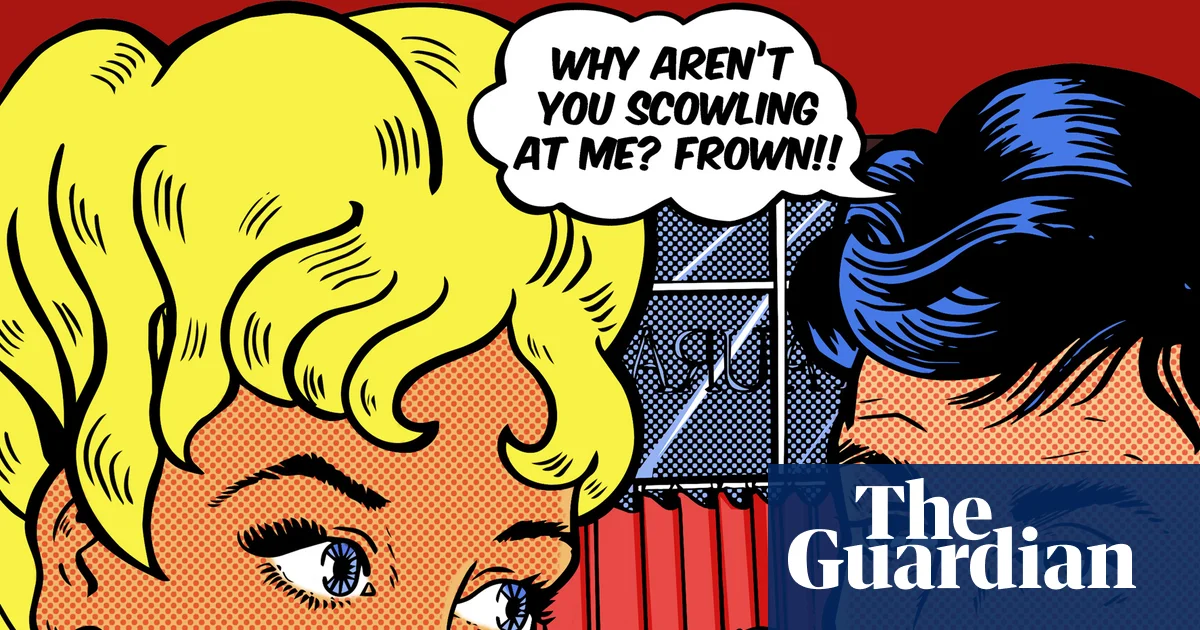
Laura had Botox twice a year for two years before her partner found out. “One day he was looking at me across the dinner table, and said: ‘Why aren’t you scowling?’ And I was like: ‘What?’ He said: ‘Why aren’t you scowling at me? Frown!’ And I tried to frown, and he was like: ‘No, you’ve had Botox.’”
It was the stigma that kept her quiet for so long. “He has always been adamant that he likes women who are really natural,” says Laura. “For years, he’s said: ‘Promise me you’ll never get any of that done because everyone looks so fake.’ Also it’s financial as well, because it feels like it’s a waste of money, with the kids.”
His objections did matter to her. “I definitely didn’t do it for a while when he said that,” she admits. “Then I started to look at myself in photos and just saw my 11 lines” – the vertical creases between your eyebrows that look like the number 11. “I’ve always hated them, and because of my job being very expressive, being a drama teacher, I think my lines are way worse. Everyone’s always said to me: ‘You’re scowling!’ I did hold off for a little while, but then thought, ‘Sod it. It’s not about what he wants, it’s about what’s going to make me happy.’ So I went for it, and I’ve never looked back.”
Her husband was upset about the deception. “He couldn’t believe I’d done that and lied about it. He was cross about me spending the money on it, and that I wasn’t ageing naturally. And then I showed him pictures of me with the scowl and without it. He looked at them and was like: ‘OK, I get why you want it done.’ I did appreciate why he was angry and apologised. But also, it’s my body. I’m going to do what I want.”
She jokes about the way her husband rarely notices when she has her hair done and that she had justified the cost of the Botox by not having facials, massages or manicures. Her behaviour chimes with an assertion by Dr Ahmed El Houssieny, a doctor with Allergan Aesthetics, who posits that fewer patients are telling loved ones about aesthetic treatments not “because they’re ashamed; it’s more that, for many people, it’s become part of their self-care routine, much like getting a facial or going to the gym. Many patients simply don’t feel the need to share it.”
Daniel, 42, from Kent works in corporate banking and has been having £280 worth of Botox, twice a year for four years without telling his partner of 19 years. He takes careful steps to avoid any bruising by “having it done at a reputable skin clinic and making sure they have digital visibility of any nerves in my face to avoid any potential calamities”. He adds: “I always make sure I get it done when he’s working in London and I’m working from home,” he adds.
“I’ve always been into skincare, so I think he assumes that all of the designer anti-ageing moisturisers actually work,” he says. “It doesn’t – it’s certainly nowhere near as effective as Botox.” He’s not shy about anyone else knowing he’s having injections, just his partner. “If anyone compliments my appearance or says that I look younger than my years I literally just go, ‘Botox.’ It takes all the credit,” he says.
Daniel says he hasn’t told his partner because they disapprove of the whole aesthetics industry. “He has a complete misconception about what Botox actually is and gets it confused with filler,” says Daniel. Whereas Botox is a solution that relaxes muscle, fillers involves inserting a gel-like substance under the skin to plump up areas. “People don’t seem to realise that you can have the two things done independently and that they aren’t remotely the same thing.”
Daniel maintains he doesn’t feel guilty about keeping the secret. “Really, it bears no real relevance to our relationship. It’s a bit like: ‘What he doesn’t know, can’t hurt.’” He thinks eventually his partner will find out. “Probably when he moans about someone looking like they have a trout pout. He’ll say: ‘Look at her with all that Botox,’ and my guard will be down and I’ll defend the needle and educate him.”
Daniel doesn’t think it will be relationship-ruining when that moment comes. “What can he say? I think he’ll be a bit sulky for a very short time and then realise nothing’s actually changed and just move on. He will definitely ask where I’m getting it done, to validate that it’s being done professionally and not in the back of a car or something.”
Still, though, Daniel admits it does sometimes niggle that he’s never noticed. “But I do think I get more compliments from him about six weeks after I’ve had it done,” he adds. “Just at the point where you have the smoothness but a little bit of flex and more expression without all the wrinkles.”
The idea of “so-subtle-you-can’t-tell” is taking over the industry, with the art of “undetectable treatments” being marketed more than ever. “I often say that the best aesthetic treatment is one nobody notices,” says El Houssieny, begging the question: if a tree falls in the forest and no one is around to see it … then what’s the point of the Botox anyway?
“People might ask if you’ve been on holiday, rather than asking if you’ve had something done,” he says. “I think there’s been a real shift away from transformation and towards maintenance. Patients want to look like themselves on a really good day.” Aesthetics, then, is no longer about ugly ducklings being transformed. It’s about swans, looking effortlessly unchanged above the water and desperately kicking to maintain that appearance below.
For those not indulging, it can feel like a betrayal of trust knowing friends have not revealed their aesthetic procedures. “It sometimes feels like people are trying to catch you out,” said Rebecca, 41. “I’ve had friends say: ‘I wanted to see if you noticed!’ when they have had tweakments, and it’s hard to know what they want the response to be. It’s a strange feeling – some of these women, we’ve shared every intimate detail of our lives and bodies since we were teenagers and now there are things they’re actively hiding.”
Claire, 42, agrees: “Although many of my friends have clearly had Botox and filler, they don’t own up to it. I often feel a bit left behind, like a bit of a mug. I panic it’s too late, before worrying about the cost and then parking the idea. The envy has never been enough to push me into it. I actually don’t have that many lines yet, but then I wish I had that glossy perfect skin that everyone seems to have.”
Becca, a project manager from Manchester, finally told her husband of seven years about having Botox six weeks after her treatment. “He wasn’t like: ‘Why didn’t you tell me?’ It was just more: ‘What have you done that for? You don’t need it.’” She says she didn’t feel it was a betrayal. “I think it’s something quite personal and you’re doing a test in some way by not telling people. You want to know: is it obvious? Is it not?”
after newsletter promotion
It is a complex issue for Becca, who admits that after having a microneedling facial, she was nervous her primary-school-aged daughter would see the redness on her face. “I really didn’t want my daughter to pick up on that,” she says. “I didn’t want her knowing I was having needles poked into my face to make my skin better. So I spoke to my husband and said, ‘If she comments, I’m going to say: It’s this cream. And I’ve had a funny reaction to it.’ I didn’t want that to be in her head, that you mess around with your face.”
Keeping things from your family can backfire, of course. “I had fillers done in my lips about three years ago and genuinely thought I’d be able to get away with it without anyone noticing,” says Victoria. “I didn’t tell anyone as I guess I was a bit embarrassed to admit to it as I was approaching my 40s and saw it as a tweakment rather than a drastic blowing up of the lips.
“Everything was fine immediately afterwards, but about 24 hours later my lips blew up. Obviously, my partner clocked immediately and I had to fess up, but my mum was due to visit. I did everything I could to bring the swelling down. But as soon as she saw me, she told me I looked like Katie Price.
“The swelling went down after a few days and I was happy with the overall result, but haven’t plucked up the courage to get it done again,” she says. “Lesson learned – it’s best to be open and honest when it comes to certain treatments, as it’s pretty impossible to get away with.”
Shane lives in New York and shaved his head before he underwent a hair transplant. He also paid a premium to have it close to home rather than travelling to Turkey, to avoid raising any suspicion. “NYC came at a price, almost $13,000 [£9,600] for 1,500 grafts,” he says. “He’s a well-regarded doctor who gives natural results, and that was what I wanted. I’m 47 and wanted to look 47, not 27. If I had an unnatural result, I’d look ridiculous.”
Shane had battled thinning hair since he was 24 and had tried every medication available before opting to get grafts, mostly filling in his temples and the top front hairline. From the beginning, he worked to keep things under wraps from everyone but his wife and young kids (although his parents later noticed and brought it up with him). “I can wear hats at work, so I pre-emptively wore one for about six months before my procedure, so that no one would be surprised when I wore one afterwards,” he explained. “It took about a week of recovery at home with noticeable blood and redness. Then I looked like I just had a short haircut done. No one could see the grafts on the top of my head. The worst part was that because I have Irish heritage and pale skin, the donor area [at the back of my head] was red for at least six months. Six long months.” A slight irritation in his donor area caused pimples, too, he adds.
“I don’t tell friends, co-workers or strangers about other medical surgeries, so I didn’t see the point in broadcasting this one. Once I took off the hat, it was almost two years since they had seen me without it. I assume people forgot what my hair looked like. If anyone asks me if I did something to my hair, I just say that it was hair meds. For some reason, that’s easier to explain and less taboo than a transplant.
“This new hairline makes me feel less self-conscious in photos,” he adds. “My wife loves it. It’s a bit vain, but I want to enjoy the next 10 years looking better.”
Shane has found himself posting on Reddit boards where men ask for reassurance about whether they can keep their transplants unnoticed by friends and family. His advice? “Don’t tell people if you don’t want to; tell people if you do. If you wouldn’t share your other medical history with others, why this?”
Jessica thought about all of this before getting her £7k breast enhancement, which took her from a B/C cup to a D cup, choosing to have the implants under the muscle where the placement looks more natural. She planned ahead for months, choosing a week to take annual leave when she wouldn’t have her children.
For her, it’s the case that, “I’ve just always wanted bigger boobs, but I didn’t want to do anything that would impact breastfeeding – then after two kids they didn’t look great,” she says. “I knew more people who’d had it done and it felt more mainstream, but I needed the money to do it. So when my divorce and house sale came through, it was my present to myself.”
Outside the few people she told, it remained her secret for months. “I didn’t tell my family as I think boobs are kind of a sexual thing, so it draws attention to that,” she says. “It’s not like a nose job; it’s personal. With my friends, I think I worried about the judgment. Some people do think: ‘Why have you done that? You were fine the way you were.’ With my good friends it felt like everyone had lots going on, and it’s hard to throw into conversation. It just doesn’t come up, then time passes. Now I’ve got friends who’ve commented: ‘Have you got a new bra?’ and I think I’m too far down the line and it’s awkward to go back on it.”
She’s glad now, after months of worry, that her close friends found out at that spa. “We just laughed about it and then spent all weekend talking about them,” she says. “It felt so nice to realise they weren’t going to judge me – mostly it was good not to have to hide things and to watch what I was saying.”
Despite the welcome surprise of her friends’ reaction, she doesn’t think she’ll tell more people, and is resolute she’ll continue to keep the truth from her children. “I’ve done everything I can to avoid them knowing.” She even told them she’d hurt her back to explain the brace she wore during recovery. “I didn’t want to tell my daughter as I didn’t want her to feel like she needs to do anything like that. Her body is perfect the way it is.”
