

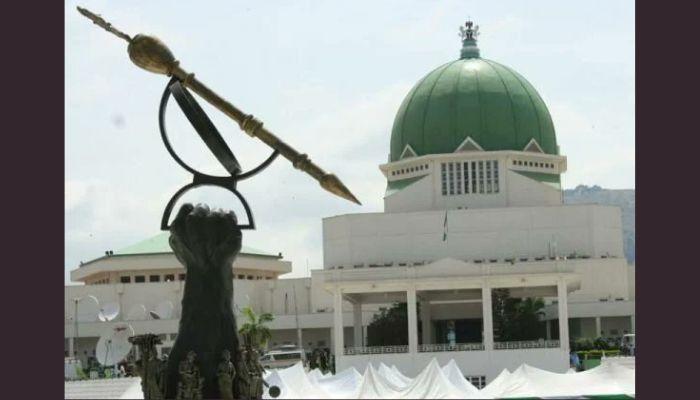
Now that the political campaign has started towards next year’s elections, we know serious governance, especially legislation, is in recess.
There is very little to celebrate in a legislative system where public investigations can consume enormous public funds, generate sensational headlines, expose alleged financial wrongdoing and then disappear without a clear conclusion. If this is what Nigeria has come to accept as legislative oversight, then the time has come to ask a difficult question – what exactly is the National Assembly investigating for?
Nigeria’s National Assembly has constitutional powers to investigate corruption, inefficiency and waste in the administration of public funds.
Section 88 of the 1999 Constitution empowers both chambers to investigate matters within their legislative competence and the conduct of ministries, departments and authorities responsible for administering public funds. The corresponding Sections 128 and 129 give state Houses of Assembly similar investigative powers.
The problem, therefore, is not a lack of constitutional authority but an apparent absence of a sufficiently strong mechanism to ensure that an investigation produces an outcome.
The growing list of unfinished probes is disturbing. Investigations into crude-oil theft, alleged discrepancies running into hundreds of trillions of naira in NNPCL’s accounts, petroleum-sector controversies and the alleged Presidential Foreign Investment Promotion Council have all generated considerable public interest, and recently, a further revelation of fake MDAs. Yet Nigerians are repeatedly left waiting for final reports, identification of culpable individuals, recovery of funds, prosecution or concrete institutional reforms. To be fair, we say this is not oversight at its best.
A legislative investigation should not be judged by how dramatic the hearing room becomes, how many officials are summoned, how many threats of arrest are issued or how many newspaper headlines are generated. Its real test should be what changes after the committee finishes its work.
If billions of naira are spent investigating alleged losses and, years later, the money remains unrecovered, nobody is prosecuted and the same institutional weakness continues, Nigerians have every right to ask whether the exercise achieved anything.
The sad thing becomes even greater when the same legislators who complain about waste in government appear comfortable with spending public money on investigations whose outcomes are uncertain. Sitting allowances, logistics, hearings, committee activities and other expenses are ultimately borne by taxpayers. In an economy where millions of Nigerians struggle with food, transport, housing and energy costs, every naira spent by the government must produce measurable value.
The National Assembly cannot demand accountability from the executive while tolerating weak accountability within its own oversight operations.
The situation also exposes a wider problem with Nigeria’s political culture. Legislative energy sometimes appears to become particularly intense when members’ personal or constituency interests are involved, while issues that directly affect the general population are subjected to endless deliberation.
There is something fundamentally wrong when lawmakers can fight vigorously over constituency projects, allowances and budgetary allocations but struggle to produce definitive conclusions on allegations involving billions or trillions of naira belonging to the Nigerian people, which is unacceptable.
Nigeria needs to move from investigation as an event to investigation as a process with measurable consequences.
There are lessons from other democracies. In the United Kingdom, parliamentary committees do not simply publish reports and walk away. The Public Accounts Committee operates within a system in which government responses to committee reports are formally published, with the government undertaking to respond to most reports within two months. There are also subsequent progress reports tracking implementation.
The lesson is simple – an investigation must have a beginning, a finding, a government response and a mechanism for monitoring what happens afterwards.
The United States provides another useful example. Congressional oversight is reinforced by the Government Accountability Office, which provides independent analysis and recommendations. Congress can use hearings, legislation, appropriations and budgetary controls to pressure agencies to implement recommendations and can demand periodic progress updates.
South Africa similarly places oversight and accountability at the heart of parliamentary committee work. Its constitutional framework requires the National Assembly to ensure that executive organs are accountable and to maintain oversight of the national executive, while parliamentary committees use budgets, yearly reports and Auditor-General findings as important tools of scrutiny. Nigeria can develop its own version of these safeguards.
Every legislative investigation should have a statutory completion deadline. A committee should not be able to investigate indefinitely. Where an extension is necessary, it should be publicly justified and approved by the chamber.
Also, every probe should have a mandatory final report. No committee should be allowed to disappear at the end of a legislative session without formally accounting for the assignment given to it.
Likewise, there should be an independent Legislative Oversight and Implementation Office serving the National Assembly and state assemblies. Its responsibility should be to track every recommendation, determine whether government agencies have complied and publish periodic compliance reports.
Similarly, recommendations involving suspected criminal conduct should be automatically transmitted to the EFCC, ICPC, police or another competent authority within a specified period. Where recovery is recommended, the relevant agency should be required to report progress.
Equally, lawmakers themselves must be accountable. Committee attendance, investigative expenditure, completed reports and implementation rates should be publicly disclosed. A legislator who repeatedly fails to attend committee proceedings should not enjoy the same privileges as one who performs the assigned duty.
Besides, Nigeria should review the constitutional and statutory framework governing legislative oversight to strengthen the consequences for unjustified non-compliance with lawful parliamentary requests, while preserving judicial safeguards and due process. The objective should not be to turn legislators into prosecutors or judges. Their role should remain oversight and lawmaking, while competent investigative and prosecutorial institutions handle criminal enforcement.
The reform must extend to state Houses of Assembly. It is not enough to reform Abuja while leaving state legislatures operating under the same culture of weak oversight. Sections 128 and 129 already provide state assemblies with investigative powers over matters within their competence and the administration of appropriated funds.
Above all, Nigeria needs to change the political mentality that treats legislative probes as spectacles.
The National Assembly and state assemblies are funded by Nigerians. Their primary obligation is therefore to Nigerians, not to political parties, ministries, agencies, contractors or individual interests.
This is why the cry of “All hail Nigeria’s National Assembly!” should be understood as irony, not applause. A mature democracy should not be comfortable with a legislature that repeatedly exposes problems without solving them.


