

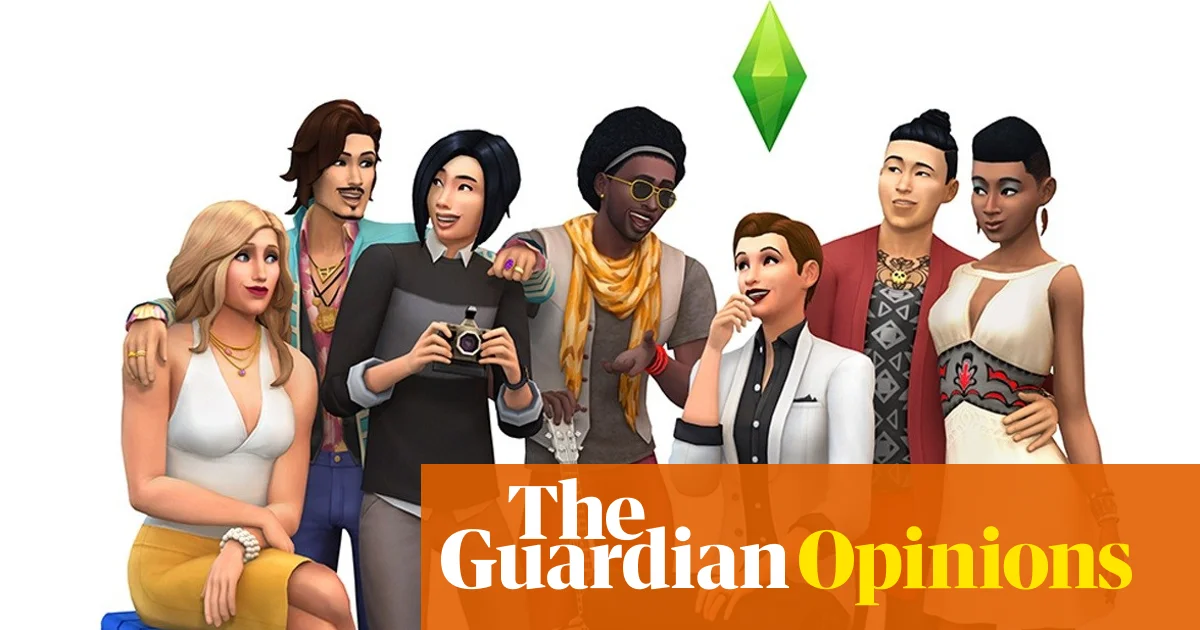
Sometimes it feels as though horrific world events and the malicious entities behind them are reaching into every aspect of our lives, from heatwaves that keep me shut away indoors, to generative AI that makes it increasingly difficult to trust what I read online. I can no longer even retreat into my favourite video game without funding human rights abuses across the world.
I’ve been playing The Sims series of life-simulation games since its first release at the turn of the millennium, when I sat with my sister in the corner of the sitting room using money cheats to build mansions for our digital dolls. Over the years, these games have helped me make friends: from the schoolmate who taught me to play more efficiently with hot keys, to the local fan who watched me stream The Sims 4 online and now meets me for lunch every week. In the last quarter of a century I’ve sunk thousands of hours into these games.
But all of that stopped, with the sudden snap of a clean break, when it was revealed last year that a group of private investors planned to acquire Electronic Arts (EA), the publisher of some of the world’s most popular video game series: FC (previously Fifa), Battlefield, Dragon Age, and many more – including my beloved The Sims. There are several reasons why I – and many others – object to this deal, which was completed after regulatory approval this month, but it mostly comes down to the who, why and how.
The purchasers taking EA out of public trading are: the Saudi Public Investment Fund (chaired by the country’s de facto ruler, Crown Prince Mohammed bin Salman), Silver Lake (which has invested hundreds of millions of dollars into AI infrastructure in the US) and Affinity Partners (owned by Donald Trump’s son-in-law Jared Kushner).
Kushner, of course, is on his father-in-law’s so-called Board of Peace, planning to rebuild Gaza (first step: a new military base) after the atrocities ordered by his family friend, Israel’s prime minister, Benjamin Netanyahu. Saudi Arabia is known for bombing Yemeni civilians (with weapons from the UK), allegedly assassinating journalist Jamal Khashoggi, abusing migrant workers and generally violating human rights.
It is enough not to want to line these particular pockets. But hypothesise the motivations behind this deal: the people leading these companies understand the soft power of video games. Those around Trump capitalised on the men swept up in the hate campaign known as “Gamergate”, and have recently used video game memes to promote the Immigration and Customs Enforcement agency (ICE). Saudi Arabia has been accused of “sportswashing”, spending on popular sports to distract from its more objectionable behaviour, and seems to be attempting the same with video games.
This is particularly noxious because The Sims has long been known for welcoming people of all races, gender identities and sexualities; its developers have often responded to player feedback with free updates that add requested content to the game: more diverse hairstyles, sexual orientation, pronouns. Whether its new conservative owners use the platform’s existing popularity to lure in unwary fans or whether they assert creative control to insert their own propaganda, we – the players – lose.
Even if that all feels irrelevant or – depressingly – unavoidable to you, consider the method. This historic $55bn (£41bn) deal is a leveraged buyout, meaning a large portion of the cost was paid for with debt (in this case $22bn from leading fossil fuel financier JP Morgan) that EA now owes. How will it make that extra money? Soulless generative AI? Predatory microtransactions? More life-ruining layoffs?
These concerns are shared by popular Sims content creators such as lilsimsie (real name Kayla Sims), who is one of several now seeking to divest themselves from the game. She even worked with her local representative, Congressman Maxwell Frost, to inform players on how they might try to block the sale. “It’s all about cutting corners to rip off consumers instead of making games,” she said in a short video posted after the deal was finalised, while Frost promised to use congressional oversight to demand answers from EA and protect workers and players.
after newsletter promotion
It’s good to know there are people in power who realise the potential consequences of this deal and are willing to act against them however they can. But unless The Sims is sold off to a less objectionable owner, I no longer feel comfortable playing my lifelong favourite game. Maybe I’ll pin my hopes on new competitor Paralives, or dig out my old (already paid for, offline only) physical copies of the original The Sims. In the meantime, at least there are plenty of other interesting games to play instead.
-
Jordan Erica Webber is a freelance writer and presenter specialising in video games and digital culture
-
Do you have an opinion on the issues raised in this article? If you would like to submit a response of up to 300 words by email to be considered for publication in our letters section, please click here.
