

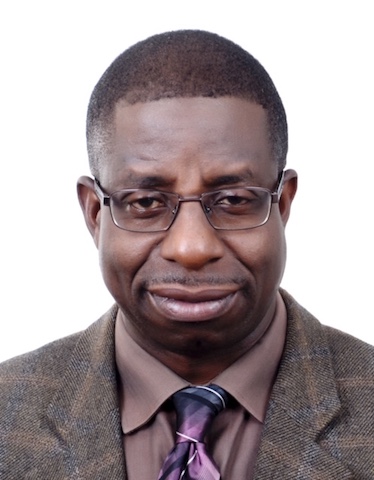
Everyone who encountered Rockson knew how passionate he was about intellectual property rights and entertainment law. Long before these emergent areas of law became familiar, even to lawyers here in Nigeria, he had gone to the University of Westminster in the United Kingdom and obtained a Master’s in the field. His zeal was almost missionary and soon we were talking about how to popularise IPR beyond the courtroom. He had, in fact, gone as far as conceiving a non-governmental organisation for the purpose. He was the moving spirit behind Friends of the Creator (Artistic) Foundation, the first (and, to my knowledge, only) Nigerian NGO to be accredited by the World Intellectual Property Organisation (WIPO), with him as founding Executive Director and I as chairman, board of trustees.

Friday, morning, 21 August. As soon as I switched my phone back on, it began to ring. It was a call from a childhood friend of Rockson’s, bearing the worst news of the year, guaranteed to be an instance of the worst news I will ever hear in my life, however long God grants that I remain on earth. “Rockson is dead!” he said, barely holding back tears, apologising for being a bearer of bad news. The caller whom I know very well and his tears, which he could no longer stop, did not permit the false hope of “You’re joking, not so?” or “Tell me it is not true.” I brought the phone from my ear, as if to distance the tragic news from me, stared at the screen, and wished I hadn’t powered it back on.
As a rule, I switch off when going to bed. Nothing is ever so urgent it cannot wait a few hours till dawn. There was life before the invention of the telephone, before the tyranny of mobile cell phones. In short, for a moment, I wished the telephone had not been invented, and while my caller sobbed and spoke his grief, mine welled up slowly, looking for something that might arrest its progress. Finding none, it drifted to a poem I last read over twenty years ago. I saw now the morbid dread the late English poet, Ted Hughes, expressed so feverishly in his poem, “Do Not Pick Up the Telephone.” Even in those by-gone days of bell telephones crouched like crabs on the table or wall, fixed to a point, Hughes claimed that “Death invented the phone,” that it looked ‘like the altar of death,” with the “cosmetic breath of the gravestone.” After a long list of the evils that the telephone does, he ended on the note of strict admonition with which he began: “Do not pick up the detonator of the telephone/A flame from the last day will come lashing out of the telephone/A dead body will fall out of the telephone.” That Friday morning, there was nothing quite as apocalyptic, straight from a horror movie, but I had gone to Hughes for something on which to hang this tragedy.
“Rockson dead? How? I spoke with him four days ago. I’m expecting his follow-up call with respect to our conversation, the meeting in Port Harcourt he proposed…” I got the details of his death, in his bedroom, apparently from a heart attack, as he seemed to have risen to either plug his phone — the telephone! — to charge or to unplug it, the power cord still in his hand. But however death had surprised him, it didn’t really matter now. My caller apologised again for the news he had brought me and we hung up, to grieve separately or jointly with others we would call or who would call us; grief, as happiness, ever needing to be shared.
Rockson was like the younger brother I never had. And like a younger brother, he looked up to me, rebelled against me, then made peace with me. It couldn’t have been otherwise, for he was nothing if not strong-willed. The peculiar circumstances of growing up in a polygamous family large enough to found its own village, town in due course, had taught him very early on the necessity of standing up for oneself, of being heard, even if one would be damned. Even if it meant standing alone, so long as one had found the ground to stand on. To be against the crowd, to keep the company of one was, thus, an old suit in which he felt comfortable. He had worn it from childhood. I had to bear this and other attenuating circumstances in mind whenever we had our arguments, sibling rivalries, as it were. For that same trait made him a dependable ally. You couldn’t wish for someone to go to battle with more reliable than Rockson. Let me explain.
When an urgent family need required that I take leave of my teaching position in the United States and come home, and once back my village blood called for a full return, Rockson’s enthusiasm alone was enough to make it immediate. A year later when I did return, now with the intention of dipping my toe in the rather hot waters of politics, he was all in with me. He had been a local government councillor and speaker of its parliament. He was a card-carrying member of the Peoples Democratic Party, but was ready to openly work with me, newly registered in the All Progressives Congress, towards the goal of unseating the sixteen-year occupant of the Isoko Federal constituency seat, with little to show for all that time.

For him, electing the right representative of the people, a knowledgeable and competent legislator, one with a voice, was a matter that transcended partisan loyalties, especially for an oil-and-gas-producing ethnic minority gladly exploited but hardly acknowledged as part of the nation. He endorsed, whole-heartedly, my joining APC, certain that I would not come a thousand miles close to getting the PDP’s ticket. He became my adviser and campaign manager, even before the tricky race of party primaries began. And, predictably, accusations of disloyalty, of working against his own party, were rained on him. Still, he did not budge. He would, he said, recount the countless instances of anti-party activity, from top to bottom, to his accusers whenever he would be formally charged.

As it happened, we had been working together since 2015 in a loose legal partnership of him, a law faculty mate of his from the Oleh campus of Delta State University (now a magistrate in the Federal Capital Territory), a retired Assistant Inspector-General of Police who was like an uncle to both of us, a Lagos-based homeboy who combined practice with law reporting, and my good self. It began when we took on the case of Omenuwoma Okson Dovie, a musician professionally known as Baba 2010, for the enforcement of his copyright against MTN, which had without authorisation used four of his songs as caller or ring-back tunes.
Wish such courage and commitment had found just reward! I got my first lesson of politics or, I should say, of running for political office, at the party primary stage. An unknown opponent, surprisingly with money to spend, had appeared. And even though arrested by the Economic and Financial Crimes Commission a few days before the primary election, he managed to be released and escorted out of jail just in time. It was quite a spectacle watching his convoy enter the election venue, the absurdity notwithstanding. Needless to inform you, he beat me to the ticket. I returned to my teaching post in the United States, but shortly after received a call from the local leader of the party to please come back home as the winner of the primary election had disappeared into thin air! Knowing I had no money, the plot of my putative opponent in the general election had been simple: sponsor a puppet, fund him to snatch the ticket, after which he would disappear, for a virtually unchallenged fourth tenure. It was a scenario that Rockson had anticipated but which I had thought too obvious and ridiculous to succeed.
There was some consolation, however. A year-and-a-half after, I was appointed as the Delta State representative on the board of the Niger Delta Development Commission. Without hesitation, I named Rockson my special assistant. Although the board was, as all previous boards, sadly, dissolved before the end of its tenure, in this case, midway, I had the benefit of a close working relationship with him for two full years and saw him manifest, in varying circumstances, the qualities of forthrightness and public spiritedness that I already knew he possessed. The even more telling part was his total lack of desire for material acquisitions. We shared a common passion for a redress of the plight of the Niger Delta and any opportunity to work towards that end was not to be compromised. But in Nigeria, dreams die first and where they survive, are soon dampened. The untimely dissolution of the NDDC board soured him greatly on politics. He announced to me his decision to quit that terrain and focus entirely on legal practice henceforth.
As it happened, we had been working together since 2015 in a loose legal partnership of him, a law faculty mate of his from the Oleh campus of Delta State University (now a magistrate in the Federal Capital Territory), a retired Assistant Inspector-General of Police who was like an uncle to both of us, a Lagos-based homeboy who combined practice with law reporting, and my good self. It began when we took on the case of Omenuwoma Okson Dovie, a musician professionally known as Baba 2010, for the enforcement of his copyright against MTN, which had without authorisation used four of his songs as caller or ring-back tunes. The case was settled without trial but the “partnership” successfully instituted and won yet another copyright violation suit against MTN and a record label, the case going all the way to trial and judgement.
A suit against a publishing company for the unauthorised publication of a young playwright’s work and appropriation of his copyright was settled out of court. Another, against a television house for the unauthorised broadcast of a cooking show, was settled after trial was almost completed. One more suit, this time for the publication without permission by The Sun newspaper, of a young lady’s photograph as a Page 3 Girl, went to trial with the court finding for our client. Such a successful special area collaboration deserved a more formal platform, hence Remedium Law Partners was found.
Everyone who encountered Rockson knew how passionate he was about intellectual property rights and entertainment law. Long before these emergent areas of law became familiar, even to lawyers here in Nigeria, he had gone to the University of Westminster in the United Kingdom and obtained a Master’s in the field. His zeal was almost missionary and soon we were talking about how to popularise IPR beyond the courtroom. He had, in fact, gone as far as conceiving a non-governmental organisation for the purpose. He was the moving spirit behind Friends of the Creator (Artistic) Foundation, the first (and, to my knowledge, only) Nigerian NGO to be accredited by the World Intellectual Property Organisation (WIPO), with him as founding Executive Director and I as chairman, board of trustees.
When in January this year he secured judgement for Veno Marioghae-Mbanefo against the telecoms giants, Airtel, for infringement of copyright to her well-known song, “Nigeria Go Survive,” it was a fitting reward for his tenacity. I had played a nominal role in the case, mostly as a sounding board on aspects of it. I felt certain that the defendants would appeal, even if only on the ground of the quantum of damages. And he prayed they would, for IPR being a new and recondite field, there is a vexing paucity of appellate decisions to help clear a great deal of the muddle in the high courts by the binding power of precedent.
Having turned his back on politics, he was impatient to make his mark. But I had yet to resolve a few issues around my return from the United States, such as whether to go back, the fatherland proving rather hostile and where, if I didn’t, to pitch tent. With him mainly settled in Oleh, and Warri only a temporary address for me, I would have to choose between Lagos and Abuja for personal and professional reasons. While I pondered the issue, he wisely chose to develop a personal legal brand with the goal of name recognition in the IPR domain, deploying every available means to create awareness of IPR: talks, articles, online platforms, conferences.
When in January this year he secured judgement for Veno Marioghae-Mbanefo against the telecoms giants, Airtel, for infringement of copyright to her well-known song, “Nigeria Go Survive,” it was a fitting reward for his tenacity. I had played a nominal role in the case, mostly as a sounding board on aspects of it. I felt certain that the defendants would appeal, even if only on the ground of the quantum of damages. And he prayed they would, for IPR being a new and recondite field, there is a vexing paucity of appellate decisions to help clear a great deal of the muddle in the high courts by the binding power of precedent. The appeal was indeed filed, briefs of argument exchanged but, it seems, death has now cheated the most ardent advocate of IPR that I know in Nigeria, of the final fruits of his labours!
Space and occasion will not permit me to say more about this remarkable individual. Was Rockson flawless? Definitely not! Who is? But even in his less admirable ways, he proved his outstanding qualities. I bear witness. In 2015, he had been an indefatigable champion of my foray into politics. In 2022, however, he was the exact opposite when, at the strong urging of the party, I had accepted to run for the vacant seat of my constituency in the Delta State House of Assembly. For reasons I need not go into here, one of which was totally unfounded and another misconstrued, he stood vehemently against me, even going as far as joining ranks with a younger man who came into my orbit through him to campaign against me.
That other man later confessed the motive for his calumny to me but I didn’t even need that. I had forgiven them both even before the chance to ask why. I don’t bear grudges, have no need of the extra luggage of malice, in addition to life’s neck-twisting load. Let go of it before death, I say. With two exceptions: I know now that as a mortal, I am not allotted enough time to forgive false-star General Sani Abacha — God roast his soul, if he had any, or another false-star general for whom it is yet too early to extend that godly sentiment. Besides, it was easy to overlook my younger brother, for if we must value independence of mind, we must also accept that the mind will not be right all the time.
Yet, I have a regret. Shortly after the Marioghae-Mbanefo v Airtel judgement, Rockson came to Abuja, on what I saw partly as a well-earned victory lap. I met him at Transcorp Hilton, where he had just had lunch with an old friend. He wanted us to go see a DELSU alumnus now a Senior Advocate of Nigeria. Right from when I saw how much the buttons of his jacket strained against his belly and noticed his laboured breathing as he climbed into my car, I felt that he had been too neglectful of his health. I wanted to broach the subject but I had nagged him far too often, so I curbed my tongue. Besides, I hadn’t wanted to cast a pall on the euphoria of a potentially precedent-setting court victory, a case that had all the trappings of a locus classicus. There would always be another time, a better-attuned moment, I thought. Alas, too often, life tells us belatedly, there is no other time. How I wish now that I had nagged, decorum be damned! Maybe he might have been nudged to take better care of himself. But maybe the manner of his death did not matter a hoot, his time being up. Maybe…
Adieu, Rockson. You will be missed.
Ogaga Ifowodo, lawyer, poet and writer is principal partner at Remedium Law Partners. His new poetry book, Why Does God Need a Gun? is longlisted for the 2026 NLNG Nigeria Literature Prize. He may be reached at [email protected].
Discover more from Premium Times Nigeria
Subscribe to get the latest posts sent to your email.
