

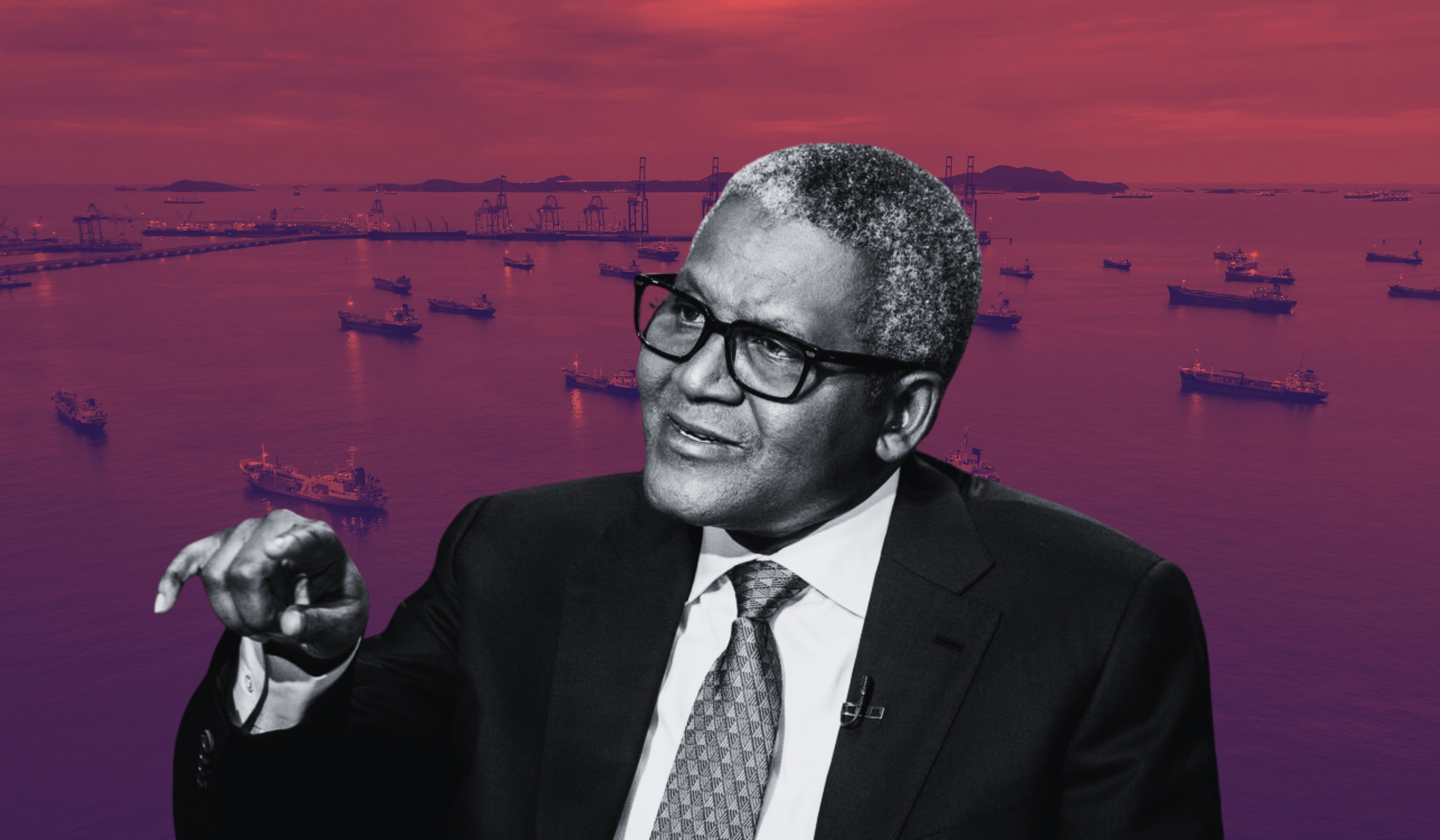
Aliko Dangote, Africa’s richest man, has seen his fortune rise to $51.3 billion, according to Forbes, pushing him into the world’s top 40 richest people as shares in his Dangote Refinery opened to public investors on Monday.
The commencement of the offer on September 14 marks a major milestone for the privately controlled refinery, which is seeking to raise up to $1.6 billion in what is expected to be Africa’s biggest initial public offering. The offer comprises 4.1 billion shares priced at N525 each, with a minimum subscription of 10 shares, or N5,250.
Dangote’s wealth rose by almost $20 billion from $31.5 billion recorded on September 4, according to Forbes’ latest estimate. The increase moves him to 36th place among 3,397 billionaires tracked by the American business magazine, from below the top 70 previously.
Forbes’ real-time billionaire tracker showed Dangote’s wealth at $51.3 billion on Monday, up from $25.6 billion at the end of last year.
Forbes updates billionaire net worth estimates frequently during trading hours, reflecting movements in the value of publicly traded holdings, while privately held assets are reviewed periodically.
“There’s likely more riches coming his way as his refinery, the continent’s largest, begins selling shares to individual investors,” it said in an articule on Monday.
The cement magnate is offering individual investors up to 4.1 billion shares, representing about 3 percent of the company, at N525 per share. The offer will close on October 13.
“We have D-Day on Monday,” Dangote recently told Forbes, referring to the launch of the offer. He said the timing of the IPO meant he would be late to an investment summit in Canada that he had promised to attend with Prime Minister Mark Carney.
Bloomberg’s Billionaires Index, which uses a different methodology, put Dangote’s fortune at $35.3 billion on Monday and projects that his wealth could rise to as much as $58.2 billion following the refinery IPO.
According to Bloomberg calculations, the IPO could add as much as $22.9 billion to Dangote’s personal wealth, potentially moving him above US hedge fund manager Ken Griffin and technology billionaire Eric Schmidt in the global wealth rankings.
The IPO is expected to raise about $1.6 billion and value the refinery at about $47.6 billion based on the offer price, according to the transaction terms.
The offering is also a major test of the depth of Nigeria’s capital market and its ability to mobilise domestic and international capital for large African businesses.
For Dangote, the listing forms part of a broader strategy to build an Africa-wide industrial empire, including plans to double the capacity of his Nigerian refinery and develop a new processing plant in Kenya.
The refinery, which reached full capacity this year, has given Nigeria a major domestic source of refined petroleum products and helped position the country as a net exporter of refined fuel. Reuters reported that the refinery is currently operating at 700,000 barrels per day.
“We, as Nigerians and Africans, must be bold and lead the change to develop our economies,” Dangote said at an IPO signing ceremony in Lagos last week. “Only then will the others take us very seriously, only then we’ll be in a position to negotiate and walk away with terms we deserve, not those terms that are given to us.”
The businessman has positioned the offering as an “IPO for the people”, with a minimum subscription of 10 shares aimed at broadening participation among retail investors alongside institutional investors.
The offering is also Shariah-compliant and could provide dollar-denominated dividends, according to the company.
Chidi Iwuchukwu, executive director of FirstRand’s RMB Nigeria, said the transaction represented a vote of confidence in Nigeria and Africa as investment destinations.
“Large flagship listings deepen liquidity, broaden the investor base, and demonstrate that African capital markets can support world-class businesses at scale,” he said. “Perhaps most importantly, they create a blueprint for other leading African companies to access the public markets, raise growth capital, and accelerate their ambitions.”
From refinery to African industrial expansion
For Dangote Group, the IPO marks a new phase in the development of a project that has taken more than a decade and about $20 billion to build.
The refinery has a capacity of 700,000 barrels per day, making it one of the world’s largest refineries. Dangote plans to double its capacity to 1.4 million barrels per day as part of its next expansion phase.
The facility is central to the group’s ambition to increase revenue fivefold to $100 billion by the end of the decade, according to Fatima Dangote, one of the billionaire’s daughters and the group’s executive director for oil and gas.
She said the group’s cement and fertiliser businesses would also drive growth.
Dangote Group already has three listed companies — Dangote Sugar Refinery, Dangote Cement and NASCON Allied Industries — as well as a majority stake in Dangote Peugeot Automobile Nigeria and interests spanning shipping, power and real estate.
The expansion comes alongside a generational transition, with Dangote increasing the roles of his three daughters in the business.
Fatima oversees the oil and gas business, while Mariya Dangote heads food-business operations and leads commercial strategy at the cement unit. Halima Dangote is group executive director of the family office.
Dangote built his business empire from a trading operation started in the 1970s, when he traded commodities including cotton, cashew nuts, cocoa and sesame seeds with a loan from his uncle.
He established the company that became Dangote Group in 1981 before expanding into sugar, flour, cement and other industries.
Chibuike Uche, chair for the governance of finance and integrity in Africa at Leiden University in the Netherlands, said Dangote had followed a strategy of building local processing capacity for products that were expensive to import.
The model has similarities with the expansion strategies of Indian billionaires Gautam Adani and Mukesh Ambani and Mexican businessman Carlos Slim, who built large businesses in sectors where infrastructure was limited.
The scale of Dangote’s businesses, however, has also raised questions about market concentration and competition.
Uche said the development of large industries had to precede the application of monopoly rules.
Taking the model beyond Nigeria
Dangote’s ambitions now extend beyond Nigeria, with plans to replicate his refinery model in Kenya and expand his industrial footprint from West Africa to East Africa.
The proposed 700,000-barrel-a-day refinery in Lamu is expected to break ground this month, although the project faces environmental concerns because of the area’s marine ecosystems, including mangroves and coral reefs.
Greenpeace Africa has called for approvals for the estimated $16 billion project to be halted pending an independent environmental and social impact assessment and public consultation.
Dangote has offered East African governments a 30 percent equity stake in the refinery in an effort to secure regional backing.


