

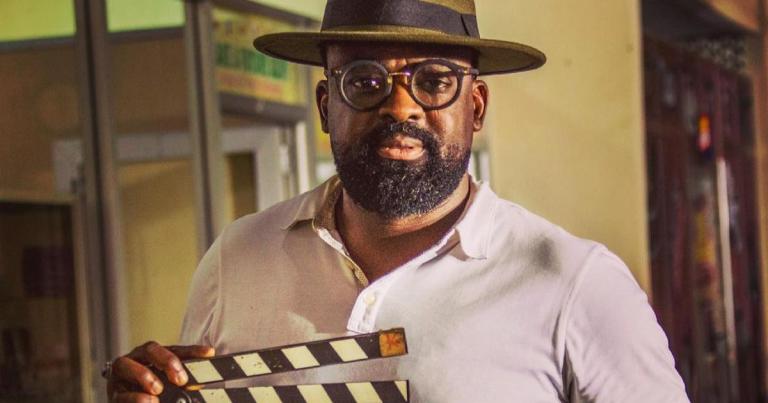
Nigerian filmmaker and producer Kunle Afolayan has questioned the growing perception that YouTube is more financially rewarding for Nigerian filmmakers than major streaming platforms such as Netflix and Prime Video.
Afolayan said YouTube’s growing attraction in Nollywood is partly driven by its accessibility and the advantage of earning in foreign currency while production expenses are largely incurred in naira.
Speaking during an interview with former Minister of Finance Kemi Adeosun on the Nidacity podcast, released on YouTube on Tuesday, the filmmaker argued that YouTube could not offer filmmakers the same financial opportunities as Netflix and Prime Video.
“YouTube can never give you what Netflix and Prime Video give you, never. But it is the most flexible. It is for everyone. It is like the starting point,” he said.
Afolayan said YouTube’s accessibility distinguishes it from major streaming platforms because filmmakers can distribute their work directly without having to negotiate deals with streaming companies.

He also reflected on his journey into filmmaking, saying he studied Business Administration and spent seven years working in banking before venturing into film production in 2004.
YouTube’s growing influence
Afolayan said technology had significantly transformed Nollywood over the years, with streaming platforms such as Netflix and Prime Video playing an instrumental role in that evolution.
However, he argued that the current rush towards YouTube among Nigerian filmmakers is closely connected to the country’s exchange rate.
Because creators earn advertising revenue in foreign currency while much of their production expenditure is denominated in naira, he said the conversion can make YouTube earnings appear particularly attractive.
“People now would say, ‘I have hit one million views, I get $10,000.’ It is because of the exchange rate. If the dollar drops, what happens? Everybody will run away from YouTube,” he said.
YouTube does not pay a fixed amount for one million views. Revenue varies depending on factors such as the location of viewers, advertising demand, watch time and the type of content being monetised.
Afolayan further argued that a significant strengthening of the naira could change the economics currently drawing filmmakers to the platform.
“If the dollar comes to, let’s say, ₦200 to $1, people will leave YouTube. But for now, the foreign exchange is what is making YouTube look lucrative,” he said.
His ₦200-to-a-dollar example was hypothetical and intended to illustrate the role exchange rates play in determining the value Nigerian creators derive from dollar-denominated earnings.
YouTube has increasingly become an alternative distribution outlet for Nigerian filmmakers, allowing producers to release films directly to audiences without securing conventional cinema, television, or subscription streaming distribution deals.
Afolayan has also made some of his older films available on YouTube after their previous distribution windows have ended.
‘I have invested over ₦8bn in film village’
During the interview, Afolayan also disclosed that he had invested more than ₦8 billion of his personal funds in developing the KAP Film Village and Resort in Igbojaye, in the Itesiwaju Local Government Area of Oyo State.
The filmmaker said the scale of his investment and the infrastructure created at the facility should attract government support.
He argued that some businesses receiving government grants had invested considerably less than what he had committed to the film village.
“If we’ve managed to do that, I think there should be some sort of support, like from government agencies,” he said.
The investment, however, has come with significant operational challenges, particularly with electricity.
Afolayan said the film village had not had access to public electricity since its establishment and had consequently depended heavily on diesel.
He said the rising cost of diesel became so burdensome that he considered shutting down the resort.
According to him, a friend eventually offered to supply diesel on credit, but the arrangement was not sustainable.
The energy crisis, he said, pushed him towards renewable alternatives, with about ₦200 million already spent on a green-energy project that remains insufficient to power the entire facility.
His disclosure comes more than a year after the Oyo State Government promised to provide electricity infrastructure for the facility.
At the official unveiling of the KAP Film Village and Resort on 12 April 2025, Governor Seyi Makinde said his administration had procured a transformer for the facility and would connect it to the national grid.
The governor also promised to provide a solar-hybrid mini-grid, saying at the time that both projects would be completed within six months.
“We made a promise to support this facility with power infrastructure to reduce energy costs,” Mr Makinde said at the unveiling.
“We’ve begun that process by buying the transformer, but it is not yet complete. Let me assure you, we will deliver on that promise. We will ensure that this film village is connected to the national grid. We will also build a solar-hybrid mini-grid as an alternative source of power.”
READ ALSO; ‘Regina Daniels didn’t reconcile with Ned Nwoko’ — Mother clarifies
How ‘Aníkúlápó’ inspired expansion
Afolayan also revealed that the expansion of the KAP Film Village and Resort was partly prompted by accommodation difficulties encountered while shooting his 2022 film, Aníkúlápó.
The historical drama, set in a pre-colonial Yoruba society, was filmed in Igbojaye, where Afolayan had begun developing the purpose-built film village.
He said the remote location initially created significant accommodation problems for the cast and crew, forcing some actors to make unusual arrangements during production.
“When we shot Aníkúlápó, we didn’t have accommodation. We were squatting in people’s houses. Sola Sobowale and Bimbo Ademoye even brought their mattresses and freezers from home,” he said.
Afolayan said the experience convinced him of the need to provide accommodation at the facility.
“So I had to build 100 rooms in the film village to make everyone comfortable,” he said.
The facility has since expanded beyond serving solely as a production location.
The KAP Film Village and Resort was formally unveiled in April 2025, with Mr Makinde and the Minister of Art, Culture and the Creative Economy, Hannatu Musawa, among those present.
The facility has hosted productions including Aníkúlápó, Aníkúlápó: Rise of the Spectre and Ijogbon.
Discover more from Premium Times Nigeria
Subscribe to get the latest posts sent to your email.
