

Unlock the Editor’s Digest for free
Roula Khalaf, Editor of the FT, selects her favourite stories in this weekly newsletter.
Alphabet’s Waymo is exploring options to exit its Uber partnership, with the relationship between the two tech groups souring amid an intense lobbying battle over the future of robotaxis.
The self-driving car company has held internal talks about ending its current deals with the ride-hailing group, which operates services in Austin and Atlanta, according to multiple people familiar with the matter.
Waymo has already notified Uber that it plans to enter these markets independently in January 2028 when their contract allows, the ride-hailing group said in a statement.
The relationship between the two companies, which first partnered in 2023, has deteriorated as they have become increasingly direct competitors in some markets and both lobby for robotaxi legislation that would benefit their own business at the expense of the other.
The two companies were “pursuing diverging objectives”, one person said.
Waymo and Uber have traded complaints, blaming each other for poor service and safety issues in the markets where they work together.
A break-up between the two groups is expected to dent Uber’s autonomous ambitions. It has been racing to make up lost ground after selling its in-house autonomous vehicle arm in 2020, committing more than $10bn over the past year through equity stakes and robotaxi fleet agreements.
Uber’s share price has slid more than 16 per cent in the year to date in part owing to investors’ concerns that the company will be overtaken by AV providers. Its stock fell 4 per cent on the news Waymo might walk away.
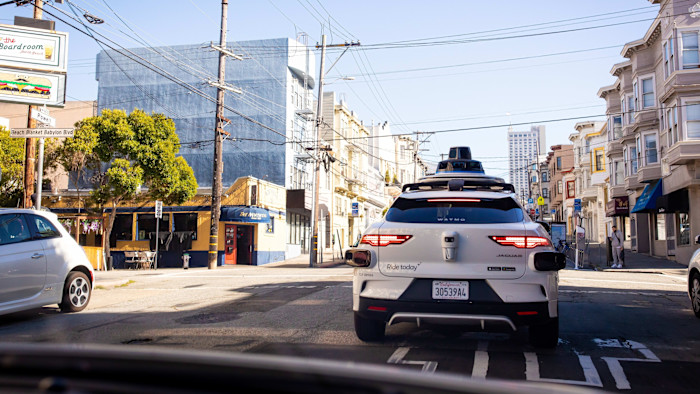
Waymo has already made inroads in some US cities and has been eroding Uber’s market share in locations such as San Francisco.
The company operates more than 3,800 vehicles across ten cities. In February, it raised $16bn at a $126bn valuation to fund its expansion.
Waymo first partnered with Uber in May 2023 to launch robotaxis in Phoenix. This was followed by deals in Austin and Atlanta, where Waymo cars are only available through the Uber app, and Uber manages the vehicle fleet with partner Avomo.
In May, Uber and Waymo parted ways in Phoenix after their current deal lapsed. The two companies have also clashed over the quality of Waymo services operated by Uber in Austin and Atlanta.
The Alphabet division has questioned the cleanliness and routing of their vehicles, the people said, while the ride-hailing group has argued that it has been hamstrung in its deployment.
In May, Waymo drew negative attention after dozens of its vehicles clogged a cul-de-sac in Atlanta. Uber was responsible for routing vehicles, the people said.
Uber has meanwhile raised concerns that the deal has unsustainable financial terms, and that Waymo’s vehicles suddenly become unavailable during bad weather. In December, Uber wrote to Waymo following a string of incidents in which vehicles passed stopped school buses in Austin.
Waymo has opted to expand into several US markets without Uber, offering bookings via its own app. It initially plans to offer direct bookings in Austin and Atlanta alongside Uber, similar to its deal with Lyft in Nashville.
Waymo has not ruled out a complete split, the people added. “We believe in a vibrant and collaborative AV ecosystem that champions innovation and provides riders with a choice in how they experience this technology,” the company said in a statement.
Uber plans to offer Waymo services in the two markets until May 2028, when its current contract concludes, the company said.
Tensions have worsened as Uber lobbies state and federal policymakers to enforce so-called “hybrid networks” where drivers and autonomous vehicles operate on the same platform.
In New Jersey, Uber lobbyists proposed that any platform offering robotaxi services also have human drivers provide at least 85 per cent of all rides during a three-year pilot programme.
Analysts say this rule would force AV companies with dedicated apps such as Tesla, Waymo and Amazon-owned Zoox to offer their services via third-party ride-hailing apps.
“Uber is trying to buy time through regulatory capture,” said Grayson Brulte, co-founder of Autnmy AI, a data intelligence firm. “They are simply advocating for measures that will preserve their market share.”
Waymo has supported high permitting costs for new AV operators that would create a barrier to smaller operators, many of which partner with Uber.
Uber said it is false that they are “anti-AV or seeking to slow AV deployment”. It said hybrid networks “get the technology to consumers sooner while giving policymakers a practical framework to manage the transition”.
