

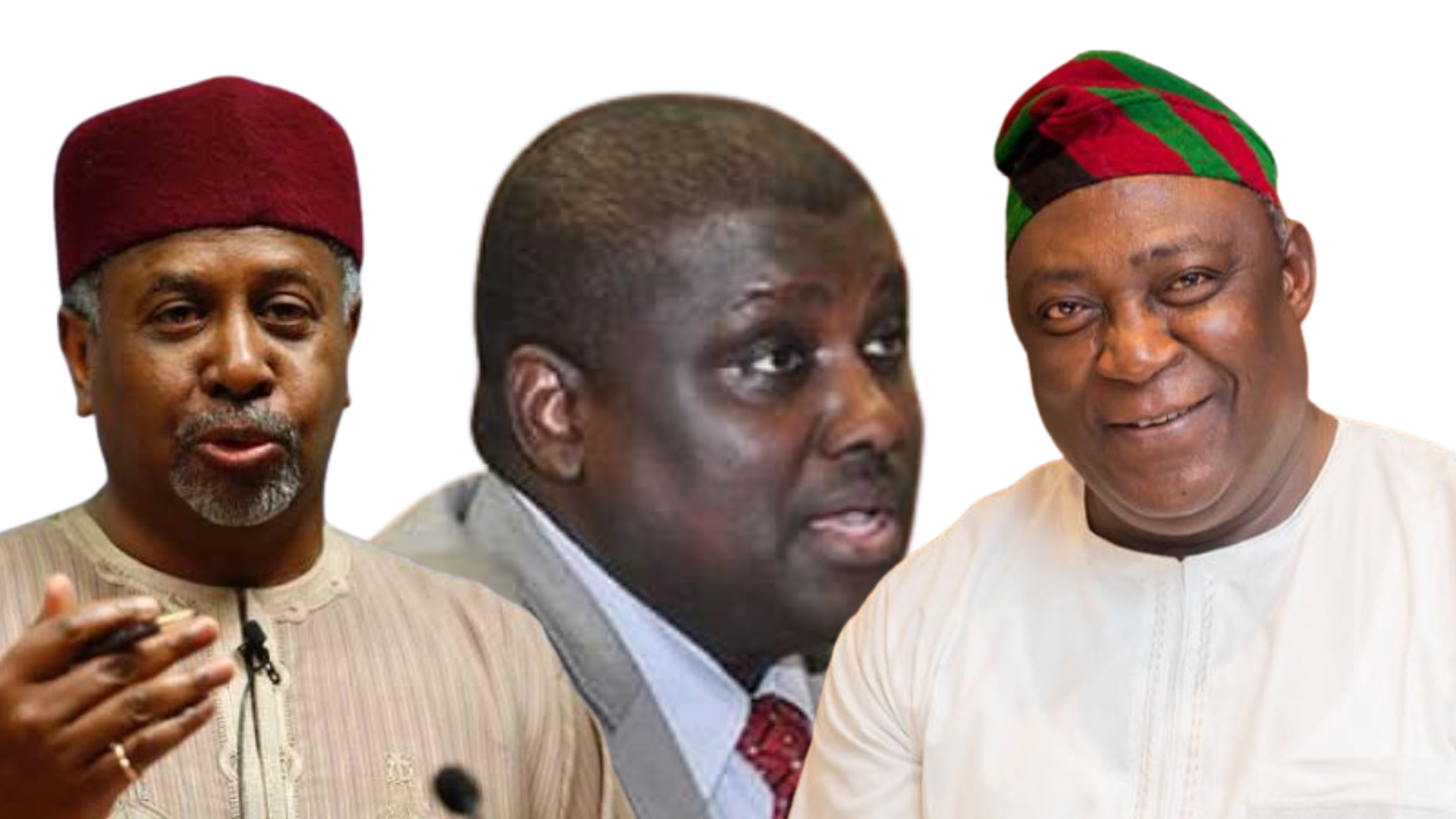
A new investigation has identified 284 properties in the United States, collectively valued at nearly $271 million, linked to 61 current and former high-level Nigerian officials, their families, associates and affiliated companies.
The properties, acquired from 1991 onwards, include 152 worth about $177 million that were purchased while the officials were in office, according to a report by the Platform to Protect Whistleblowers in Africa (PPLAAF), in partnership with the Anti-Corruption Data Collective (ACDC).
The findings were presented in Abuja on Tuesday at the launch of the report, titled “Nigeria: Dirty Deeds — How Top Nigerian Officials Bought a Piece of America.”
The investigation examined how wealth linked to Nigerian political and economic elites moved into the US real estate market, and identified recurring risk factors in the acquisition of the properties.
These included purchases made while officials were in office, transactions without apparent financing, and the use of companies and intermediaries that could obscure ownership.
PPLAAF said 230 of the 284 properties, representing about 81 per cent, were purchased without apparent financing. The properties had a combined value of about $232 million.

It also found that 147 properties worth approximately $111 million were acquired by officials or their spouses in their own names or through legal entities registered in their names.
A further 104 properties, valued at about $140 million, were purchased through companies. In 12 cases, Nigerian officials used US-incorporated entities that appeared to be affiliated with their Nigerian companies to purchase, hold or sell properties.
Corruption links
According to the report, 39 of the 61 individuals examined have been publicly accused, indicted or sentenced for corruption.
Among the 39 individuals named are Sambo Dasuki, a former National Security Adviser (NSA); Abdulrasheed Maina, former chairman of the Presidential Task Force on Pension Reforms; Orji Kalu, a former governor of Abia State and now a senator; Chimaroke Nnamani, a former governor of Enugu State; late Ajibola Ajimobi, a former governor of Oyo State; Stella Oduah, a former minister of Aviation; Dibu Ojerinde, a former registrar of the Joint Admissions and Matriculation Board (JAMB); late Alex Badeh, a former chief of defence staff; Abdulrahman Dambazau, a former minister of Interior and ex-chief of army staff; Chris Ngige, a former governor of Anambra State and later minister of Labour and Employment; Willie Obiano, a former governor of Anambra State; and Ronald (Roland) Ewubare, a former group chief operating officer of the Nigerian National Petroleum Corporation (NNPC).
The politically exposed persons were linked to 232 properties valued at approximately $238 million. Of these, 195 properties, worth about $208 million, were acquired without apparent financing during or after the officials’ tenure.
The investigation found that 94 properties, worth approximately $135 million, were acquired without an apparent source of financing while the officials were still in office.
The report also said 79 properties worth approximately $73 million remain connected to 27 individuals who have been publicly accused of corruption.
It said the properties could provide an opportunity for asset recovery where authorities establish that they were acquired with proceeds of corruption or are otherwise subject to applicable forfeiture laws.
The report said the significance of the findings was not only who acquired the properties, but also when and how they were acquired.
“In numerous cases, substantial real estate was acquired while officials held public office, at precisely the moment when their access to state resources and influence was greatest,” the report said.
Most of the other individuals examined were linked to institutions with a documented history of corruption allegations since Nigeria returned to civilian rule in 1999.
Some of the individuals were also implicated in the Pandora Papers and other investigations into suspicious purchases in the United Arab Emirates, according to the report.
How the properties were acquired
The investigation found that 230 properties, worth about $232 million, were purchased without apparent financing.
The report said overseas property purchases can allow politically exposed persons (PEPs) to convert illicit gains into tangible assets, while the use of companies, trusts and intermediaries can make ownership more difficult to establish.
It said the trend of obscuring ownership appeared to have increased over the past two decades, particularly among PEPs who had encountered legal difficulties or become subject to judicial proceedings.
The report also identified professionals involved in some property transactions who allegedly failed to verify identity documents or accepted transactions conducted in the names of deceased individuals, raising questions about safeguards in the US real estate market.
PPLAAF said the investigation identified dozens of additional suspicious assets that require further scrutiny by relevant authorities and could potentially be subject to recovery or seizure proceedings.
‘Stolen wealth must be investigated’
PPLAAF Executive Director, Jimmy Kande, said the findings showed how public wealth could move from Nigerian institutions and sectors exposed to corruption risks into foreign real estate.
“At an unprecedented scale, these findings expose the failings of individual officials and the structural gaps that allow stolen public wealth to cross borders and settle quietly into foreign real estate,” Mr Kande said.
“The purchases, transfers, and sales documented here could amount to international money laundering and must be investigated as such. Nigerian and American authorities must work together to ensure these assets are returned to the people they were taken from.”
Mr Kande also highlighted PPLAAF’s partnership with PREMIUM TIMES.
PPLAAF previously published six Dirty Deeds investigations and case studies in partnership with The Washington Post, the Organised Crime and Corruption Reporting Project (OCCRP), PREMIUM TIMES, the Charleston Post and Courier, and the Houston Chronicle.
As part of the partnership, PREMIUM TIMES reported how former National Security Adviser Sambo Dasuki approved billions of naira in payments during his tenure under former President Goodluck Jonathan. The investigation traced funds approved through the Office of the NSA to individuals and companies linked to people in Mr Dasuki’s circle, raising questions about the procedures used to approve the payments and the beneficiaries of the funds.
The report found that, over the three years Mr Dasuki served as NSA, his office made multiple transfers involving substantial sums, including payments to associates and entities connected to them. The investigation used financial records and other documents to reconstruct the money trail and examine how public funds moved from the NSA’s office to the beneficiaries, highlighting gaps and questionable transactions in the management of security funds.
In another report, PREMIUM TIMES, OCCRP and PPLAAF found that Abdulrasheed Maina, the former chairman of the Presidential Task Force on Pension Reforms, acquired four properties in the United States and Dubai worth more than $1.3 million between 2010 and 2013, while he was serving in government and was later accused of diverting pension funds. Property records show that Mr Maina paid cash for three Kentucky homes, including a $215,000 house bought in August 2010, and used a company he controlled to acquire two others for $415,000 in 2011. In 2013, he purchased a two-bedroom Dubai hotel apartment for nearly $700,000, which is now registered in the name of his daughter. The purchases coincided with the period in which the EFCC alleged that Mr Maina and his associates diverted millions of dollars from the pension scheme.
The investigation also found that Mr Maina moved ownership of some of the US properties through corporate structures and that his former wife, Laila Maina, received the $215,000 Kentucky property in their 2022 divorce settlement, months after Mr Maina was convicted of laundering N2 billion in pension funds.
The EFCC, which prosecuted Mr Maina, did not seize or publicly identify the US properties during the case, although its spokesperson said the agency could investigate them if it obtained information linking the assets to illicit proceeds. Mr Maina was sentenced to eight years in prison in 2021 and was released in February 2025 after receiving statutory remission for good conduct. The investigation further found that Nigerian courts eventually ordered the forfeiture of 23 properties linked to Mr Maina in Nigeria, while the Kentucky properties and Dubai apartment remained under the control of his former wife and children.
Officials across six categories
The report examined officials across six categories: security, executive, legislature, state government, other public officials and state-owned enterprises.
Security, executive and legislative officials accounted for properties valued at $222 million, representing 82 per cent of the total value identified in the investigation.
The investigation examined about 100 cases involving public officials, their immediate family members and close associates with links to US properties.
PPLAAF said the selection was based on initial indicators, including the surname of a PEP, the name of a family member or the name of a company openly linked to the family.
Methodology
PPLAAF conducted the investigation in partnership with ACDC to identify US real estate assets linked to current and former high-level Nigerian officials, their family members, close associates and affiliated legal entities.
ACDC compiled a database of US real estate information, including official property records, credit-related address data and corporate ownership registries.
PPLAAF and ACDC also compiled a list of relevant individuals and legal entities, including limited liability companies registered across multiple jurisdictions, using Nigerian government records, published lists, expert-generated rosters and publicly available summaries of indictments and corruption proceedings.
The investigators used annual editions of the compendium of major Nigerian corruption cases published by the Human and Environmental Development Agenda (HEDA) Resources Centre as one of their primary guides.
ACDC then cross-referenced the names of individuals and entities against the property databases. PPLAAF reviewed the results and used open-source research and other investigative techniques to identify additional leads.
For each property, PPLAAF obtained documents from the official property registries of the relevant US county or state.
The investigators said each property was assessed independently to avoid assumption-based attribution. Beyond a subject’s family name, at least two independent corroborating links were required before a property was included.
These links included personal identifiers such as dates of birth, residential addresses and matching signatures appearing across deeds, registries and other documents.
Where properties were held through intermediaries, the investigators examined corporate registries, family relationships and open-source information, including social media profiles, geolocation data, travel records and professional backgrounds.
They also considered both incriminating and exculpatory evidence and applied a structured false-positive risk assessment to reduce the risk of wrongly attributing properties to individuals.
The assessment considered factors including the frequency of a name in a particular jurisdiction, geographic consistency and regional naming conventions.
READ ALSO: Mambilla: Malami speaks on $200m settlement, rejects ICC corruption finding
The report said the properties were valued using appraised values from 2025 rather than historical purchase prices, allowing the investigators to apply a standardised valuation approach across the properties.
Call for investigation and asset recovery
The report called on Nigerian and US authorities to investigate the identified assets and transactions, examine their sources of funds and strengthen cooperation between financial-crime and law-enforcement agencies.
It also urged authorities to take legally justified steps to prevent the dissipation of assets pending judicial proceedings and establish mechanisms to recover and repatriate assets proven to have been acquired with stolen public funds.
Speaking at the launch, PREMIUM TIMES’ Head of Investigations, Kabir Yusuf, described the report as an important contribution to accountability, saying its value extended beyond the properties identified.
“This report is an important contribution to accountability. But beyond the numbers, what makes this work significant is the intelligence it provides,” Mr Yusuf said.
He said the investigation demonstrated how property records, corporate registries, official documents and open-source intelligence could be combined to reconstruct complex ownership structures and trace assets across borders.
Mr Yusuf also noted that PREMIUM TIMES’ partnership with PPLAAF had grown over the past three years.
Discover more from Premium Times Nigeria
Subscribe to get the latest posts sent to your email.
