

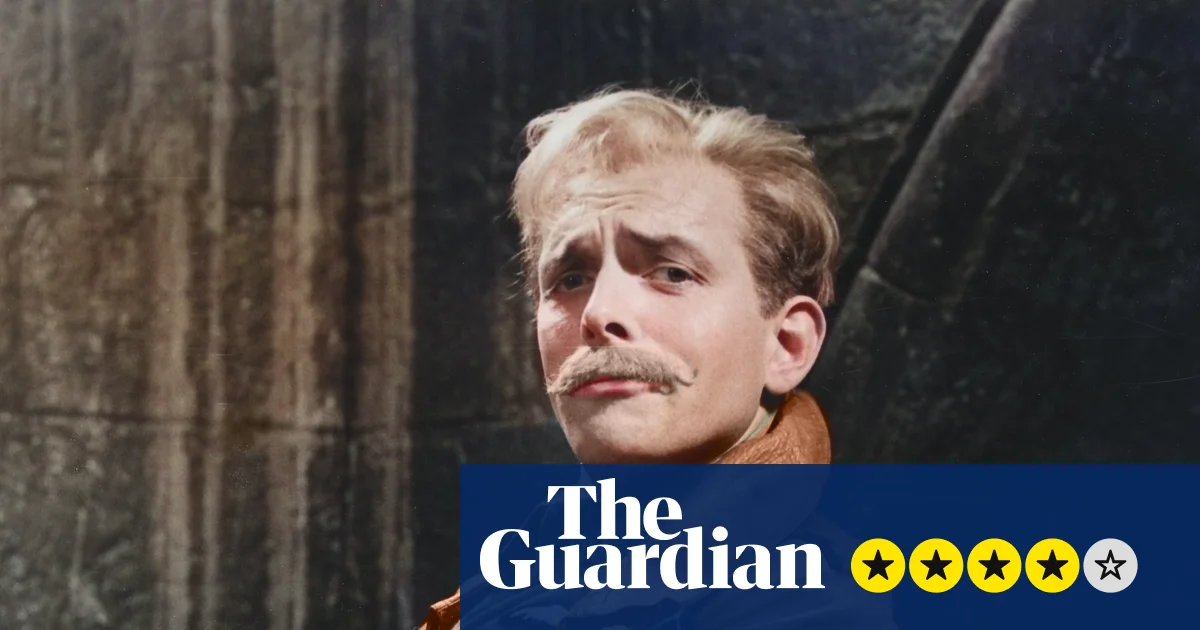
Rik Mayall: Magnificent B’Stard is a homage to the man and an elegy for what you have to presume were the lost youths of most of the viewing audience. I don’t know what the current youth would make of it. I suppose they’re not watching television anyway, so the question’s moot.
Plus, of course, it doesn’t matter. This is 90 minutes of television for us – the generation that grew up with Mayall on screen as Rick the Poet (“This is my angriest poem – Theatre!”), then self-styled investigative reporter from and mostly in Redditch, Kevin Turvey, then in The Young Ones as anarchist sociology student Rick and on through its less wildly popular follow-up Filthy Rich & Catflap. Then there was his unforgettable turn as Lord Flashheart in Blackadder II (and as the horndog lord’s equally priapic descendant Squadron Commander Flashheart in Blackadder Goes Forth); the unexpected pivot towards a more restrained demonstration of his comic talents as oleaginous, ruthless, corrupt, entirely fictional Tory MP Alan B’Stard in Marks and Gran’s brilliant The New Statesman; a Hollywood punt as Drop Dead Fred; then the huge success of Bottom as a sitcom and a live show throughout the 90s until a terrible quad biking accident in 1998 trimmed his sails.
Sky’s documentary covers all the fun and famous bits (“Can you actually kill yourself with laxatives?”) but fills in the other stuff, too. It covers, for example, the debacle that was the 1995 production of Simon Gray’s Cell Mates, starring Stephen Fry and Mayall as the main characters until Fry, in the grip of a crisis induced by his then undiagnosed bipolar disorder, disappeared soon after opening night and the play shuttered. This, like the physical and mental suffering endured privately by Mayall in the wake of his biking accident, is regarded with sorrow and compassion on both sides.
There is footage of his early work on stage with his great friend, writing and performing partner Ade Edmondson in the 20th Century Coyote comedy troupe (Edmondson lights up as he remembers a woman in the audience telling her daughter they were “just strolling players”) and then as The Dangerous Brothers (precursors to Richie and Eddie, Bottom’s degenerate protagonists). We see them working just as nimbly and happily together in Beckett’s Waiting for Godot in 1991 (“Bottom was that with sort of Wile E Coyote violence put into it,” says Edmondson, lighting up again) as they did as Rick and Vyvyan in The Young Ones or anywhere else.
This makes their breakup a decade or so later, and commented upon for the first time by Edmondson here, all the sadder. He does not go into detail but it seems that a combination of Mayall’s worsening drinking, behavioural changes after the accident and the extra responsibilities it heaped on Edmondson during the later Bottom tours (already a stressful time in any relationship) led him to tell Mayall he didn’t want to work with him any more. “And we never really got to an understanding about that,” says Edmondson, visibly stricken now. Mayall collapsed and died of a heart attack on 9 June 2014.
The overall tone, though, is celebratory without being hagiographic, though Mayall’s friend and colleague Ben Elton does his best to push it over that line many cringe-making times. “Everyone knew they were having the best time they’d ever had in a comedy experience,” he says of an early club appearance by Rick the Poet, while Rick the Student was “a performance of instinctive brilliance … one of the truly great comic characters”. It’s a good job Stephen Fry isn’t also in gushing mode – we could all have been swept away on a tide of nausea that, however much Mayall loved attention, would not have suited his punky vibe at all.
If younger people do watch it, they will get a good idea of the performer and his place in the alternative comedy firmament. They will get a pretty good idea of the man, too – perhaps not so much from verbal testimony but from the collective fondness of the contributors and generosity of spirit suffusing their reminiscences, the enduring love emanating from his children, and Edmondson’s equally enduring longing that the pair could have had a little more time to make things right.
