


You have full access to this article via your institution.
Europe must be a beacon for free and open science.Credit: Getty
Ten years ago this week, many people around the world awoke to a shock: the United Kingdom had voted to leave the European Union. Overnight, a gigantic question mark appeared over four decades of research collaborations, access to grants, the right of researchers to move freely between the United Kingdom and EU and more. It also meant that the headquarters of EU institutions, such as the European Medicines Agency, would need to relocate from London.
Europe as science superpower: what it will take to rival the US and China
The United Kingdom has learnt hard lessons from Brexit, which formally took effect in January 2020. Today, its gross domestic product (GDP) is estimated at 4–5% below where it would have been had it stayed in the EU. Opinion polling has consistently found that many who voted to leave are regretting their choice (see go.nature.com/4gvz44d).
Now, efforts are being made to realign UK science with the bloc. And as highlighted in a News feature, the United Kingdom is not alone. Accelerated by turmoil in US science, countries including Australia, India and Japan are also looking to build research collaborations with the EU through Horizon Europe, its research-funding programme.
Europe must seize these opportunities and build on its existing strengths to champion truly free and democratic science that is open to all researchers. By positioning themselves at the heart of a coalition of like-minded countries, Europe’s nations can create benefits that reverberate far beyond the continent.
Silent superpower
Europe is an under-appreciated research powerhouse. Either it or the EU takes first or second spot in the world on several indicators, including the volume of publications, research impact and numbers of PhD graduates. And whereas the United States and China are increasingly decoupling from each other in research, the EU is maintaining or building its collaborations with both, with all three rapidly growing their links with low- and middle-income countries.
The EU also has the world’s largest fund for international research cooperation. Although Horizon Europe represents only around 10% of the EU’s public spending on research and development (R&D), the fund greases the wheels for pan-European and global science cooperation.

Brexit tore apart European science — now the research rifts are healing
The European Commission, the EU’s executive branch, has been particularly committed to establishing research links with Africa. By 2027, it will have spent almost €1.8 billion (US$2.1 billion) on joint research projects through Horizon Europe’s Africa Initiative, which began in 2021. It will also have spent €150 billion on supporting green and digital transitions through a project called the Global Gateway Africa–Europe Investment Package. Overall, the United States and China spend a higher proportion of their GDP on R&D than do European nations. But when it comes to public spending, the countries of the EU are on a par with the United States at around 0.65% of GDP, and ahead of China.
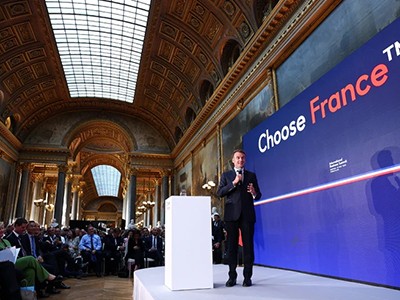
The European Commission has proposed a close to 50% real-terms increase in the next cycle of research funding in 2028–34, to €175 billion. And a nearly €900-million Choose Europe initiative was launched last year. Much of that money is going towards making European Research Council grants more appealing to researchers, and towards attracting top talent to institutions in under-performing EU regions.
Innovation with soul
Europe’s major weakness is its ‘innovation paradox’: cutting-edge research is much less likely to be commercialized at the same scale as that in the United States and China. One factor is a dearth of R&D funding from European companies. Only two European firms — the German car maker Volkswagen, and the Swiss pharmaceutical company Roche — are among the top ten global companies for R&D investment.
The European Commission has identified this issue and some of the reasons behind it in a series of expert reports on boosting competitiveness (see, for example, go.nature.com/4vtjvfh). Unlike those of China and the United States, Europe’s innovation landscape is marked by a cultural fear of failure. It also doesn’t help that start-up companies often have to deal with myriad regulatory, tax, employment and legal frameworks that differ between member states.
Dozens of researchers will move to France from US following high-profile bid to lure talent
The EU has a long-term goal of achieving a seamless European Research Area (ERA) that aims to improve conditions for researchers and help them to navigate careers that cross European borders. The European Commission is set to propose an ERA Act this year, which needs member-state support for legislation to be finalized before the EU’s current seven-year financial cycle ends in 2027.
On innovation, there are measures under way for Europe-wide rules for start-up companies. A €5-billion public–private Scaleup Europe Fund aims to keep the big-tech companies of the future in the continent. Also welcome are efforts to cut red tape. Regulations are necessary to protect people and the environment from harm, and they shape innovation itself. But more work needs to be done to ensure that regulations can support growing companies and help them to stay in Europe. The region also has a chance to pioneer a more responsible approach to innovation — one that doesn’t just make company founders and investors rich, but also creates products and jobs that bring social, economic and environmental benefits to society.
There are of course headwinds to face. Many parts of the world are at war. Sustained US pressure on Europe to increase its defence spending is draining public budgets and encroaching on research funding. There are also moves to increase the militarization of research in Europe, but, as Nature has argued previously, this should not give governments carte blanche to interfere in the inner workings of research (see Nature 646, 260; 2025).
An alternative path is one of science for diplomacy. The rules of the EU’s next funding programme need to make clear that the bloc wants research collaborations that tap into specialisms worldwide and that bring benefits for everyone. Making Europe the anchor of the global science ecosystem could bring attention to a greater range of problems, promote democratic values of open science and academic freedom and encourage innovation that benefits everyone. These are things worth pursuing at any cost.
