

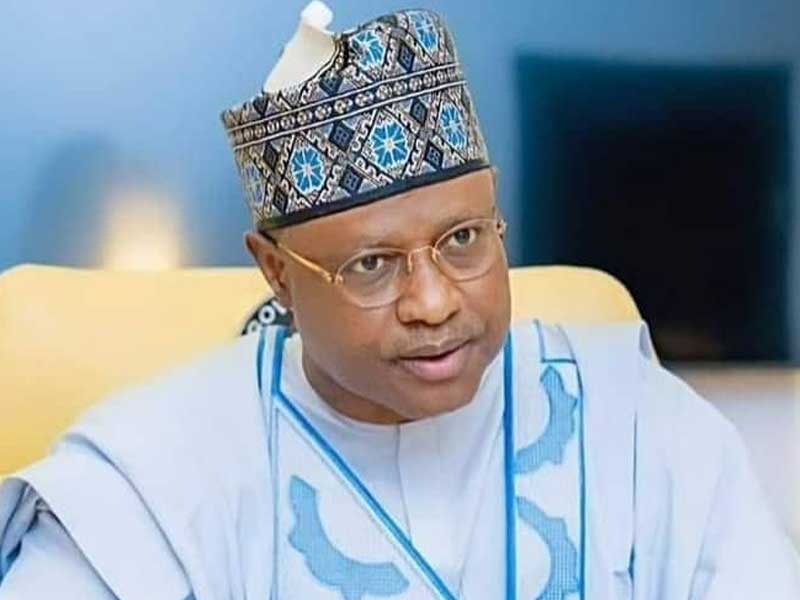
Iyobosa Uwugiaren writes that Governor Uba Sani of Kaduna State and Chairman of the All Progressives Congress Campaign Council for the last Saturday’s governorship election in Ekiti State is progressively emerging as one of the party’s most reliable strategists.
For many political leaders in Nigeria, trust is a currency earned through performance, loyalty, and the ability to deliver results when it matters most. And arguably, few political leaders exemplify those qualities today more than Governor Uba Sani of Kaduna State.
From his stewardship of one of the most politically significant states in the country to his increasing role in shaping the electoral fortunes of the ruling All Progressives Congress (APC), Governor Sani has progressively emerged as one of the party’s most reliable strategists and a key ally of President Bola Tinubu.
His recent appointment as Chairman of the APC Campaign Council for the last Saturday’s governorship election in Ekiti State is widely regarded as more than a routine political assignment.
‘’It is a ‘reflection of the growing confidence the party leadership and President Tinubu have in his capacity to mobilize support, build consensus and deliver victory in high-stakes political contests’’, an insider in the presidency stated. ‘’Within the APC circles, the decision is seen as a strategic move by the President who understands the importance of placing trusted hands on critical electoral battles.’’
Indeed, over the last three years, Governor Sani has distinguished himself not only through governance in Kaduna State but also through his ability to navigate the country’s complex political terrain. His deep understanding of voter behaviour, grassroots mobilization and coalition building has made him an increasingly influential figure within the ruling party. And, time and again, he has demonstrated an uncommon ability to connect political strategy with practical results, earning him a reputation as one of the most effective political operators in the country.
His growing prominence within the governing All Progressives Congress has led many political observers to describe him as a leading figure in a new generation of national political leadership.
Since assuming office as Governor of Kaduna State in May 2023, he has placed considerable emphasis on inclusive governance, rural development, and social investment. It is on record that his administration inherited a state confronted by economic challenges, security concerns, and infrastructure deficits. Yet, within a relatively short period, those close to him said the governor had pursued policies aimed at improving public services while strengthening confidence in government institutions.
The governor has repeatedly said in public fora that one of the defining features of his administration had been a commitment to reaching underserved communities. Through investments in healthcare, education, roads, and agricultural support programmes, the government has sought to ensure that development extends beyond urban centres to rural communities where many citizens have long felt neglected.
Political analysts argue that this grassroots-oriented approach has enhanced Governor Sani’s popularity across different segments of Kaduna society. Rather than governing from a distance, he has cultivated a reputation for engaging stakeholders directly and seeking practical solutions to pressing challenges.
Not many political observers doubt that this style of leadership has helped him maintain broad political support while positioning Kaduna State as an important reference point in discussions about governance and development in northern Nigeria.
Sani’s rise did not begin in the governor’s office. His political journey has been shaped by decades of public engagement, advocacy, and legislative experience. Before becoming governor, he served as Senator representing Kaduna Central Senatorial District, where he earned recognition for his involvement in legislative initiatives and public policy debates.
His background as a pro-democracy activist during Nigeria’s democratic struggles also contributed to the political philosophy that guides his public service. Those experiences may have exposed him to the complexities of governance, social justice, and nation-building, helping to shape a leader who understands both the aspirations and frustrations of ordinary Nigerians.
Today, this blend of activism and practical politics has become one of his defining strengths. Supporters often point to his ability to connect policy discussions with the everyday realities of citizens, a quality that has enabled him to build trust across political, ethnic, and religious lines.
Perhaps one of the most significant indicators of Governor Sani’s growing national relevance is the confidence reposed in him by President Tinubu. Since the beginning of the Tinubu administration, the Kaduna governor has been entrusted with several strategic responsibilities within the APC and the broader political landscape.
In politics, important assignments are rarely given without careful consideration. They are often reserved for individuals regarded as competent, reliable, and capable of delivering results under pressure. By that measure, Governor Sani’s increasing role within the ruling party reflects the trust he has earned among key stakeholders.
Political insiders note that the governor’s calm disposition, strategic thinking, and ability to build consensus have made him a valuable asset to the party. Unlike politicians who thrive on controversy, he has largely focused on negotiation, coalition-building, and problem-solving.
These attributes have strengthened his relationship with the President and reinforced perceptions that he belongs to a select group of governors playing influential roles in shaping the direction of national politics.
To be sure, across the country, political parties depend on trusted leaders to coordinate campaigns, resolve internal disagreements, and mobilize support during elections. Such responsibilities require organizational skill, political intelligence, and an understanding of voter behaviour.
And Governor Sani has demonstrated these qualities repeatedly. His ability to engage stakeholders, harmonize competing interests, and inspire confidence among party members has made him a preferred choice for strategic assignments.
One of the qualities frequently associated with the governor is his deep understanding of Nigerian political behaviour. Nigeria’s political environment is among the most complex, shaped by diverse ethnic identities, religious affiliations, regional interests, and socio-economic realities.
Successful political leadership therefore requires more than charisma. It demands an appreciation of local dynamics and the ability to build coalitions across multiple constituencies.
Observers argue that Sani possesses this rare combination of political sensitivity and strategic foresight. He understands the importance of dialogue, inclusion, and stakeholder engagement. Equally important, he appreciates the need to balance competing interests while maintaining a focus on broader national objectives.
For many, these skills have helped him navigate the challenges of governance in Kaduna State and have contributed significantly to his growing relevance within national politics.
As Nigeria continues to confront economic pressures, security concerns, and demands for institutional reform, there is increasing interest in leaders capable of combining vision with effective implementation.
And many within the APC view Governor Sani as part of a new generation of leaders who are redefining political leadership through performance and service delivery rather than rhetoric alone. His emphasis on inclusion, development, and collaboration resonates with citizens seeking practical solutions to everyday challenges.
His emergence also reflects a broader trend within Nigerian politics, where governors are playing increasingly influential roles in shaping national conversations and party structures. By leveraging governance achievements and political networks, leaders such as Governor Sani are helping to redefine the relationship between state-level administration and national political influence.
Today, his political footprint extends far beyond Kaduna State. His voice carries weight in discussions concerning party strategy, governance, development, and national cohesion. His growing visibility at the national level is not merely the result of political appointments; it is also a reflection of the confidence many stakeholders have in his leadership capacity.
From all indications, as preparations intensify for future electoral contests and policy debates, his influence is expected to continue expanding. Whether through governance initiatives, party assignments, or broader national engagement, Governor Sani appears poised to remain a significant figure in the country’s political evolution.
In politics, leadership is ultimately judged by outcomes. The ability to translate promises into tangible benefits for citizens remains the most enduring measure of success. For Governor Sani, the challenge and opportunity lie in sustaining the momentum that has elevated him from a state leader to a respected national figure.
His record in Kaduna State, coupled with the trust placed in him by President Tinubu and the APC leadership, suggest a politician whose influence is on an upward trajectory. As he continues to take on strategic responsibilities and contribute to the advancement of his party and government, many observers believe he is emerging as one of the defining political figures of his generation.
Whether viewed through the lens of governance, party organization, or national leadership, the governor’s journey reflects the rise of a political force whose impact is increasingly being felt across Nigeria.
