

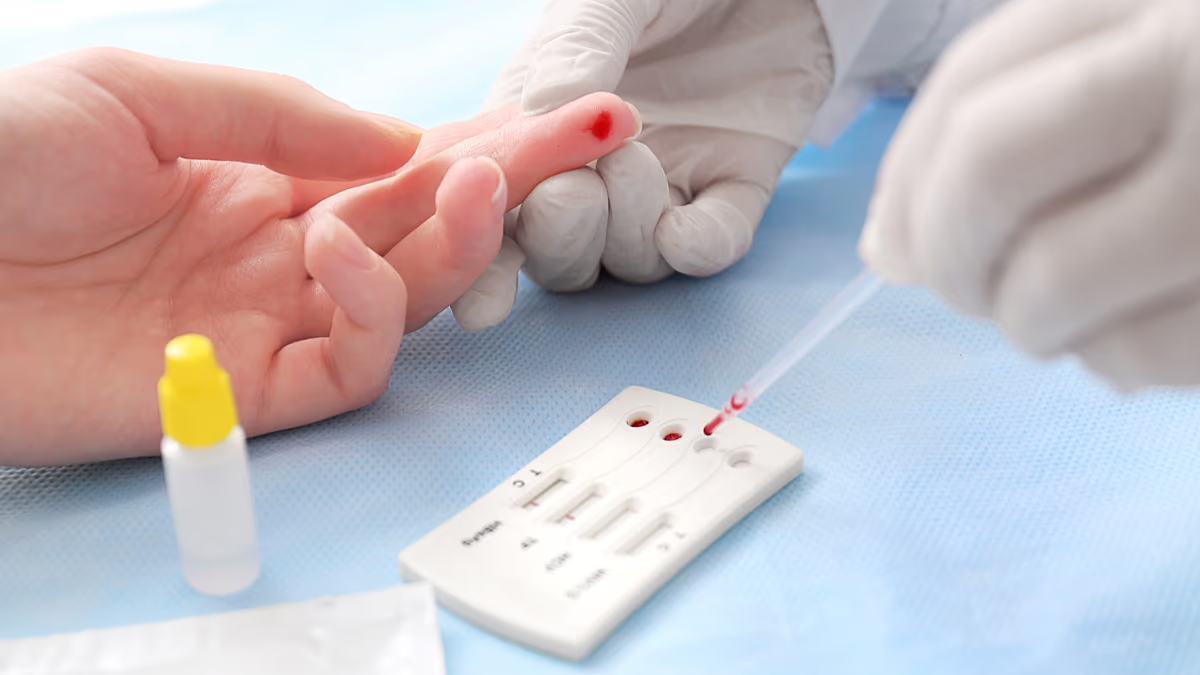
New HIV diagnoses in Greece have fallen year-over-year, but challenges remain, preliminary health data shows.
ADVERTISEMENT

ADVERTISEMENT
As of October, 490 new cases were recorded this year in the National HIV Registry, corresponding to 4.7 diagnoses per 100,000 population.
New diagnoses are at lower levels than in the same period of 2025, according to data from the National Public Health Organisation (EODY).
Despite the decline, there are significant challenges for timely diagnosis and epidemiological surveillance. Roughly half of the cases for which data were available were diagnosed at a late stage, and authorities don’t know how the infection spread in a significant proportion of cases.
According to EODY data, 22,408 HIV infection cases have been recorded through October 2026. Among those cases, 5,200 people developed AIDS and 3,980 died. Meanwhile, 11,891 HIV patients received antiretroviral therapy (ART) to suppress their viral loads.
As for the new diagnoses, 84.1% were among men and 15.9% were among women.
Unprotected sexual contact continues to be the main way HIV spreads in Greece. Among the 490 new diagnoses, 41.6% concerned men who had unprotected sexual contact with men. Another 12.7% were linked to unprotected heterosexual sex, while 10.6% were linked to shared needles and other intravenous drug use.
However, the number of cases for which the transmission route is undefined or has not been filled in remains particularly high. This concerns 169 diagnoses, which represent 34.5% of the total.
One of the most important findings of the epidemiological report concerns late diagnosis of HIV infection. Among 281 new diagnoses that could be assessed, roughly half were made in a later stage.
Among people aged 40-49 the rate of late diagnosis reached 57.3%, while in the 50-and-over age group it rose to 62.5%. By contrast, lower rates were recorded among men who had sexual contact with men (41%) and among people aged 30-39 (34.7%).
The report also records a shift in the age distribution of new cases. While up to 2024 the 30-39 age group predominated, over the past two years people in their 40s have been the most frequent diagnoses. At the same time, in recent years there has been an increase in the proportion of diagnoses among people over 50.
Overall, 30.2% of new diagnoses were made among people in their 40s, followed by people in their 30s at 25.9% and people aged 50 and over at 22.9%.
Among the positive findings of the report is the decrease in new cases linked to the shared use of intravenous drugs.
Specifically, in 2026 a reduction of 22.4% was recorded compared with 2025. However, EODY emphasises that levels have not yet returned to those before the epidemic surge that occurred in the period 2011-2013.
Additional sources • eody
