

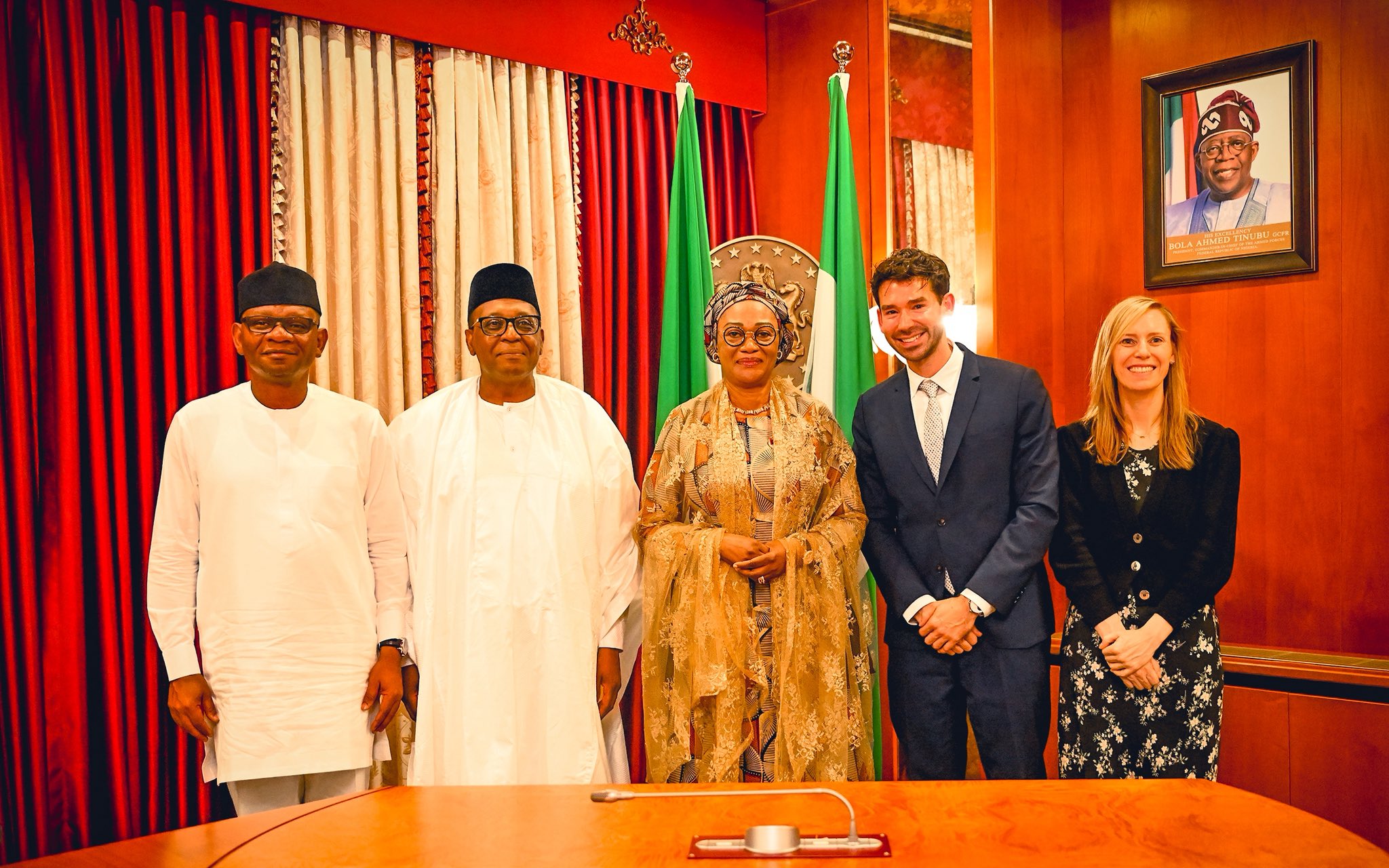
The federal government is partnering with a US-based organisation, Operation End Starvation, to mobilise more than $1 billion to combat child malnutrition and prevent starvation-related deaths across sub-Saharan Africa, with Nigeria as a priority country.
The partnership was announced on Monday when the Coordinating Minister of Health and Social Welfare, Muhammad Pate, led a delegation from the organisation and other agencies under the ministry to meet with the wife of the president, Oluremi Tinubu, to discuss areas of collaboration.
According to a statement issued by Busola Kukoyi, the Senior Special Assistant on Media to Mrs Tinubu, the initiative aims to support Nigeria’s efforts to address hunger and child malnutrition through partnerships with the government.
Operation End Starvation, an initiative of the Eleanor Crook Foundation, is a public-private partnership focused on ending child malnutrition and deaths associated with starvation across sub-Saharan Africa.
Mobilising $1 billion
The Chief Executive Officer of Operation End Starvation, Williams Moore, said the initiative aims to direct more than $1 billion towards preventing child deaths caused by starvation.
He said the programme, supported by a grant from the US government and contributions from global philanthropists, would focus on sub-Saharan Africa over the next two years, with Nigeria among its priority countries.


“We want to move one billion to end starvation in the next two years across Sub Saharan Africa. The burden is high but the capacity is also very high,” Mr Moore said.
He said the US State Department had approved Nigeria’s inclusion in the initiative.
“The foundation is impressed by Nigeria’s focus on combating acute malnutrition and we are seeking partnership for this global ‘Operation End Starvation’ programme,” he said.
“We have met with the Nigeria health team and they are one of the best of many we have met.”
Mr Pate said the partnership would support the government’s existing efforts to combat hunger and malnutrition.
He cited the National Community Food Bank Programme, implemented in partnership with the Office of the First Lady, as one of the initiatives aimed at improving access to food across the country’s six geopolitical zones.
“Nigeria is working hard to scale down its 6.4 million figure of acute child malnutrition, while also attending to the health of pregnant women and lactating mothers,” Mr Pate said.
He added that several interventions were already underway to address the country’s nutritional challenges.
Mrs Tinubu welcomed the proposed partnership, praising the expertise and commitment of government officials working across different sectors.
“It’s been a delight working with Prof. Pate, Dr Muyi and others. I also work with the Ministry of Education and others. The manpower we have now in the ministries are so wonderful,” Mrs Tinubu said.
She said President Bola Tinubu’s administration was working to overhaul the country’s systems, adding that Nigeria deserved better public services and effective use of available resources.
“Nigeria deserves better and there is nothing we give to her that is too much because if the system works, it will ultimately come back to us,” she said.
“I assure you that whatever aid you give us, this health team would put it to good use.”
She also expressed confidence in the capacity of the country’s health team to ensure that assistance provided through the partnership was put to effective use.
Rising malnutrition burden
Nigeria continues to face significant challenges in addressing child malnutrition, particularly among children under five.
According to figures cited by the health minister, the country has an estimated 6.4 million cases of acute child malnutrition. The federal government says it is working to reduce this burden while addressing the nutritional needs of pregnant women and breastfeeding mothers.
Another data by the United Nations Children’s Fund (UNICEF), estimates that about 100 children under five die of malnutrition per hour in Nigeria, approximately 2,400 children daily.
It also explained that an estimated two million children under five in the country suffer from Severe Acute Malnutrition (SAM), but only two out of every 10 children affected receive treatment.
READ ALSO: Over 87,000 children treated for malnutrition in Katsina in eight months – MSF
Research shows that malnutrition in Nigeria is a multifaceted issue with several contributing factors, which include poverty, food insecurity, inadequate infant and young child feeding practices, lack of access to healthcare, and poor sanitation.
Factors like conflict, lack of education, and gender inequality also contribute.
The 2023-2024 Nigeria Demographic and Health Survey (NDHS) shows rising malnutrition across categories: stunting, wasting, and underweight children, with males slightly more affected than females.
According to the data, 50.64 per cent of underweight children in Nigeria are male.
The Eleanor Crook Foundation’s Operation End Starvation initiative aims to use direct partnerships with governments to demonstrate how large-scale investments can help end child malnutrition and prevent starvation-related deaths across sub-Saharan Africa.
Discover more from Premium Times Nigeria
Subscribe to get the latest posts sent to your email.
