

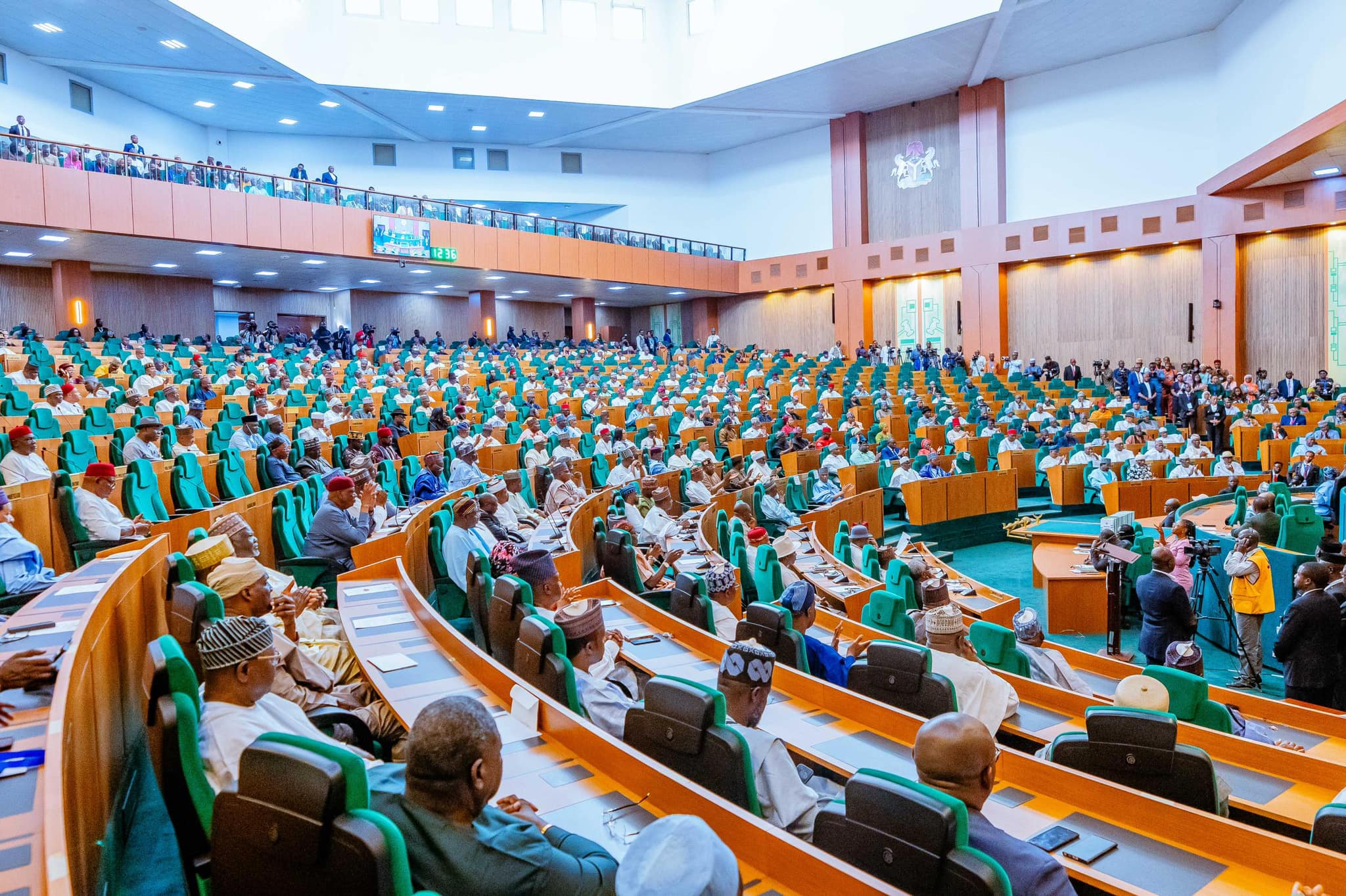
President Bola Tinubu has transmitted two bills to the House of Representatives seeking to strengthen Nigeria’s legal framework for prosecuting genocide, war crimes and crimes against humanity.
The bills, which were forwarded to the House for consideration, seek to domesticate key international legal instruments and establish provisions for punishing serious international crimes under Nigerian law.
The president’s letter, dated 6 October and addressed to the Speaker of the House, Abbas Tajudeen, was read during plenary on Tuesday.
Titled “Transmission of the Geneva Conventions and Additional Protocols Bill, 2026 and the Rome Statute of the International Criminal Court (Enforcement) Bill, 2026 for consideration”, the letter invoked Section 58(2) of the 1999 Constitution, as amended.
“Pursuant to Section 58(2) of the Constitution of the Federal Republic of Nigeria, 1999 (as amended), I forward herewith the Geneva Conventions and Additional Protocols Bill, 2026 and the Rome Statute of the International Criminal Court (Enforcement) Bill, 2026 for the kind consideration of the House of Representatives,” Mr Tinubu said.
According to the president, the Geneva Conventions and Additional Protocols Bill seeks to repeal the existing Geneva Conventions Act, Cap. G3, Laws of the Federation of Nigeria, 2004, and give effect to the four Geneva Conventions of 12 August 1949 and two Additional Protocols adopted on 8 June 1977.

The Geneva Conventions establish rules for the protection of people during armed conflicts, including wounded and sick members of armed forces, prisoners of war and civilians. The Additional Protocols expand these protections and provide further rules governing the conduct of hostilities.
The proposed legislation would update Nigeria’s domestic legal framework for implementing these international humanitarian law obligations.
The second bill, the Rome Statute of the International Criminal Court (Enforcement) Bill, 2026, seeks to give effect to the Rome Statute, which established the International Criminal Court (ICC).
The proposed law would provide for the enforcement and punishment of genocide, crimes against humanity, war crimes and related offences in Nigeria. It would also establish a legal basis for Nigeria to cooperate with the ICC in carrying out its mandate.
Genocide generally involves acts committed with the intent to destroy, in whole or in part, a national, ethnic, racial or religious group. Crimes against humanity involve certain widespread or systematic attacks against civilian populations, while war crimes are serious violations of the laws governing armed conflict.
READ ALSO: Tinubu transmits bills to strengthen drug enforcement, make NSIB independent authority to Senate
The ICC prosecutes individuals accused of these crimes when the conditions for its jurisdiction are met. The proposed Nigerian legislation seeks to strengthen the country’s capacity to address such offences through its domestic legal system while facilitating cooperation with the international court.
Mr Tinubu urged the House to consider the bills expeditiously.
“While I trust that the House of Representatives will consider the request expeditiously, please accept, Rt. Hon. Speaker, the assurances of my highest regards,” the president said.
The bills will now be subject to legislative consideration by the National Assembly.
Discover more from Premium Times Nigeria
Subscribe to get the latest posts sent to your email.
