
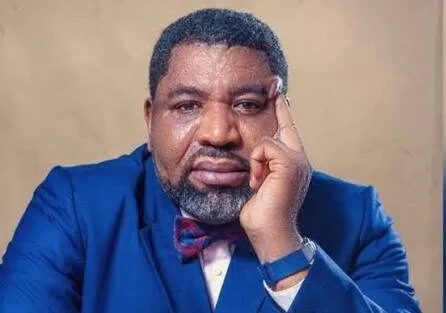
Anthony Kila, the pro-chancellor of Michael and Cecilia Ibru University (MCIU), has long presented himself publicly as a professor and a “Jean Monnet Professor of Strategy and Development”, but PREMIUM TIMES has found that he was never awarded the academic rank.
Mr Kila, appointed pro-chancellor of MCIU in August 2025, has a long list of academic profiles that present him as a well-educated and widely travelled jurist, professor, scholar, accomplished professional, author, and public commentator of repute.
A pro-chancellor chairs the governing council of every Nigerian university. The governing council is in turn charged with the general control and supervision of the administration, policy implementation, finance and assets of the university.
Mr Kila, the MCIU pro-chancellor, has given many interviews to Nigerian newspapers and television stations, where he is frequently addressed as ‘professor’.
Some publications call him a professor of political science, while others refer to him as the Jean Monnet Professor of Strategy and Development. But they are both made up.
This PREMIUM TIMES investigation has now found that no recognised academic institution has ever awarded Mr Kila a professorial title.

This investigation also found that his profile on the MCIU and CIAPS websites contain suspicious academic qualifications and roles used to embellish his academic standing, raising questions about his other academic qualifications.

In his response to our reporter, Mr Kila said the European Centre for Advanced and Professional Studies (ECAPS) awarded him the professorship. But this newspaper found that the institution is non-existent, present only in Mr Kila’s profile.
When presented with our findings, a spokesperson for Michael and Cecilia Ibru University said the institution has no evidence that Mr Kila is not a professor as he claimed.
PREMIUM TIMES had contacted Thomas Kolo, a former Registrar at MCIU, asking to speak with the university spokesperson. He then passed the phone to someone who identified himself as the spokesperson, but failed to provide his name.
“We don’t debate issues. You can go up with whatever you are going up with. If there’s a need to respond, we will respond when we see the article,” the spokesperson said.
‘Fake Professor’
In his profile on the MCIU and CIAPS websites, he was identified as ‘Prof. Anthony Kila’. In several television and newspaper interviews reviewed by this newspaper, he was also regularly addressed as a professor.

The professorial rank is the highest academic rank awarded to top researchers and educators in Nigerian universities and globally.
There is no evidence that Mr Kila ever taught at any university in Nigeria and abroad or that he was ever awarded the title.
Mr Kila told PREMIUM TIMES that the European Centre for Advanced and Professional Studies (ECAPS) based in Cambridge in the United Kingdom awarded him the professorship in 2016.
However, this newspaper found that the institution doesn’t exist anywhere, except in Mr Kila’s profiles.
A search on the UK Companies House and Nigeria’s Corporate Affairs Commission (CAC), as well as a general online search, didn’t provide any leads, including a website, social media handles, an address, or alumni of the said institution.

Mr Kila also claimed the European Centre for Advanced and Professional Studies (ECAPS) made him a ‘Jean Monnet professor of Strategy and Development’.
The title “Jean Monnet Professor” is associated with the European Union’s Jean Monnet Actions, a programme established to promote teaching, research and debate on European Union integration.
PREMIUM TIMES contacted the European Education and Culture Executive Agency (EACEA), which administers the programme, to establish Mr Kila’s status.
In its response, the Jean Monnet team said Mr Kila does not appear as a Jean Monnet project coordinator for any project, based on information accessible in its directory.
“In other words, within the period for which coordinator data are publicly available, Mr Kila has not been listed as holding the role of Jean Monnet project coordinator since 2015,” the agency said.

PREMIUM TIMES also contacted Jean-Marc Trouille, a professor and co-chair of the AfriquEurope Jean Monnet Network. Mr Trouille is also the Director of the Jean Monnet Centre of Excellence on the EU and Regional Integration in the East African Community.
Mr Trouille said Mr Kila’s status regarding the Jean Monnet programme is ‘highly unlikely’.
“First, I think it is highly unlikely that Prof. Kila would hold a Jean Monnet Chair award,” he wrote to our reporter in an email.
Mr Trouille said he searched for Jean Monnet activity involving Mr Kila and found that the only Jean Monnet module in Nigeria that he was aware of was at the University of Lagos, where Mr Kila did not appear on the team.
Mr Kila also confirmed to this newspaper that he was not associated with the Jean Monnet actions. He, however, failed to explain how he began to refer to himself as a “Jean Monnet professor.”
How to become a professor
A professor is the highest academic rank and is attained through promotion within a university.
According to the National Universities Commission (NUC), which regulates Nigerian universities, the minimum standard for attaining the rank of professor considers a candidate’s academic qualifications, teaching and research experience, publications, postgraduate supervision and contribution to knowledge.
“The first level qualification is to have a doctorate in the area of specialisation,” the NUC said.
It added that a candidate must spend at least three years in teaching, research, and community service at each of the ranks of Lecturer II, Lecturer I, Senior Lecturer, and Associate Professor, meaning a candidate would typically have about 12 years of university teaching and research experience before being considered for professorship.

A former Deputy Vice-Chancellor of the Federal University Gusau (FUGUS), Ahmad Galadima, a professor, also explained that the candidates’ academic achievements are first evaluated at the departmental level through the faculty, then by the university promotion committee.
These include publications, teaching load, quality of teaching, administrative experience, community service, and relationships with colleagues.
Afterwards, their CVs are sent to three high-ranking professors in their areas of expertise for “external assessment”.
“When the requirements are fully satisfied, their CVs are sent for external assessment,” Mr Galadima told PREMIUM TIMES. “Two positive responses are required to promote the staff to the rank.”
In some other countries such as the United Kingdom (UK), Mr Galadima said, the procedure is more stringent.
“Additional requirements like research grants acquired and quality of journal papers considered are top,” he added.
However, there is no evidence that Mr Kila taught at any university or authored any peer-reviewed academic journal.

Mr Kila’s Google Scholar page listed 22 works, including books, journal articles, book chapters and other works, but PREMIUM TIMES found that nine of the 22 records were not authored by Mr Kila.
Of the works actually attributed to Mr Kila, none could be independently established from the review as a peer-reviewed article in a reputable academic journal.
Three entries on the Google Scholar profile are listed as published in the Commonwealth Institute of Advanced and Professional Studies (CIAPS) Journal, a publication associated with an organisation he created.
In his ResearchGate profile, where he identified himself as a ‘full professor’, he listed no publications.

Non-existent institutions
In Mr Kila’s public biographies, he is repeatedly described as an international Director of Studies at the non-existent “European Centre of Advanced and Professional Studies”.
The European Centre for Advanced Studies (ECAS), the institution closest in name to Mr Kila’s so-called ECAPS, was established by the University of Glasgow and Leuphana University.
But the institution said it has no connection with Mr Kila.
“The European Centre for Advanced Studies has no knowledge of this person (Mr Kila),” its Academic Director, James Conroy, told PREMIUM TIMES in an email.
Kila’s suspicious academic claims
Although Mr Kila’s profiles did not state exactly which schools he attended, they listed several qualifications, including LLM, MBA, MSc, PhD, and PGCE.
“Anthony studied in Cambridge, London, Perugia, and Suffolk. He graduated with a first-class degree in political economy and later specialised in political anthropology. He has taught in various colleges and universities in Cambridge, Ipswich, Lecce, London, Perugia, and Siena,” his profile reads.

The newspaper sought Mr Kila’s comprehensive Curriculum Vitae, which would have provided details of the institutions he attended, qualifications obtained, his academic career, and where he obtained his professorship.
Mr Kila initially told PREMIUM TIMES that he did not have a CV readily available because he was no longer a young professional who needed one regularly.
“I don’t really have a CV handy,” he said in a message to our reporter. “I will find time to send you something.”
He subsequently provided a list of his academic qualifications.
He said he obtained a Bachelor of Arts (Honours) in Classic Studies from Università per Stranieri, Italy, in 1989, followed by a Master of Arts in European Studies from the same institution in 1991.
He listed a Postgraduate Diploma in Media and Communication from the University of Essex in 1992 and a Master of Science in International Banking and Finance from City University London in 1994.
According to the list, he obtained a Doctor of Philosophy in Political Economy from the University of Perugia in 1997, followed by a Master of Business Administration from Aston University, Birmingham, in 2002.
He also claimed to have obtained a Postgraduate Certificate in Higher Education from Cambridge in 2006 and a Master of Laws from Cambridge in 2009.
But even these claims contradicted his profiles on the website of his Commonwealth Institute of Advanced and Professional Studies (CIAPS), where he portrayed himself as having graduated with a first-class degree in political economy and later specialising in political anthropology. That claim was repeated on the website of the Michael and Cecilia Ibru University.
However, in a brief resume he shared with our reporter, he told a different story, saying his first degree was in Classical Studies from Università per Stranieri, Perugia, Italy. We are still investigating that claim.
The CIAPS website, through which Mr Kila made several suspicious claims about himself and his business, was unreachable in the past few days. That was after our reporter confronted him with our findings.
The website was repeatedly edited, with Mr Kila’s misleading profile initially removed, before it was eventually taken offline.
This newspaper is continuing investigations into the academic qualifications claimed by Mr Kila. The verification process has been slow because we are still awaiting responses from some of the institutions he claimed to have attended.
However, this newspaper clearly established his fake professorship, while its investigation into his claimed educational qualifications continues.
Discover more from Premium Times Nigeria
Subscribe to get the latest posts sent to your email.
