

The Lagos shortlet market was estimated at roughly N281 billion in revenue in 2025 by Edala Development, as reported by Nairametrics. Detty December 2024 alone generated roughly N111.5 billion in Lagos hospitality revenue, according to MO Africa Consulting figures reported by BusinessDay. Occupancy at peak season reached ninety percent. On these numbers, Nigerian short lets are one of the largest and fastest growing consumer categories in the country.
The commercial opportunity, however, is not the room. It is the trust layer sitting on top of the room. The Nigerian companies that end up building the durable business in short lets are the ones that solve verification at scale.
The market as it is
A large share of Nigerian short let bookings still runs through informal channels. Property owners list on Instagram. Agents forward listings on WhatsApp. Deposits move by bank transfer into personal accounts. Bookings are confirmed by voice note. The economics of this arrangement are attractive for individual operators because it minimises fees. The economics for the market as a whole are less attractive because they entrench a persistent trust deficit.
Cloned listings, mismatched apartments, and caution fee ambushes are so well documented that they no longer count as news. What matters commercially is that this trust deficit acts as a ceiling on the market. Consumers who have been burned once tend to consolidate their spending toward operators they already trust, restricting demand for the wider inventory. Foreign visitors and diaspora returnees who cannot easily verify inventory default to a handful of well known international platforms with limited Nigerian coverage.
Why verification is a business?
A market whose growth is capped by trust is a market whose next unit of growth is disproportionately captured by whoever solves trust. This is a familiar shape from other Nigerian consumer categories.
In digital payments, the platforms that built strong compliance and consumer protection standards captured a rising share of transactions as the market moved from cash to digital rails. Interswitch, Flutterwave, Paystack, Moniepoint, and Opay all invested heavily in the trust layer, and were rewarded with volume. In e-commerce, the ability to hold payment until delivery, pioneered by Konga and Jumia and later extended by Chowdeck for on demand delivery, expanded the market beyond what social commerce could reach.
Nigerian short lets are at a similar inflection point. The verification layer is not an add on. It is the product.
The competitive landscape
A cohort of Nigerian companies has begun to build the verification layer. Their models differ, but the common feature is that verification is treated as a core part of the value proposition rather than a marketing claim.
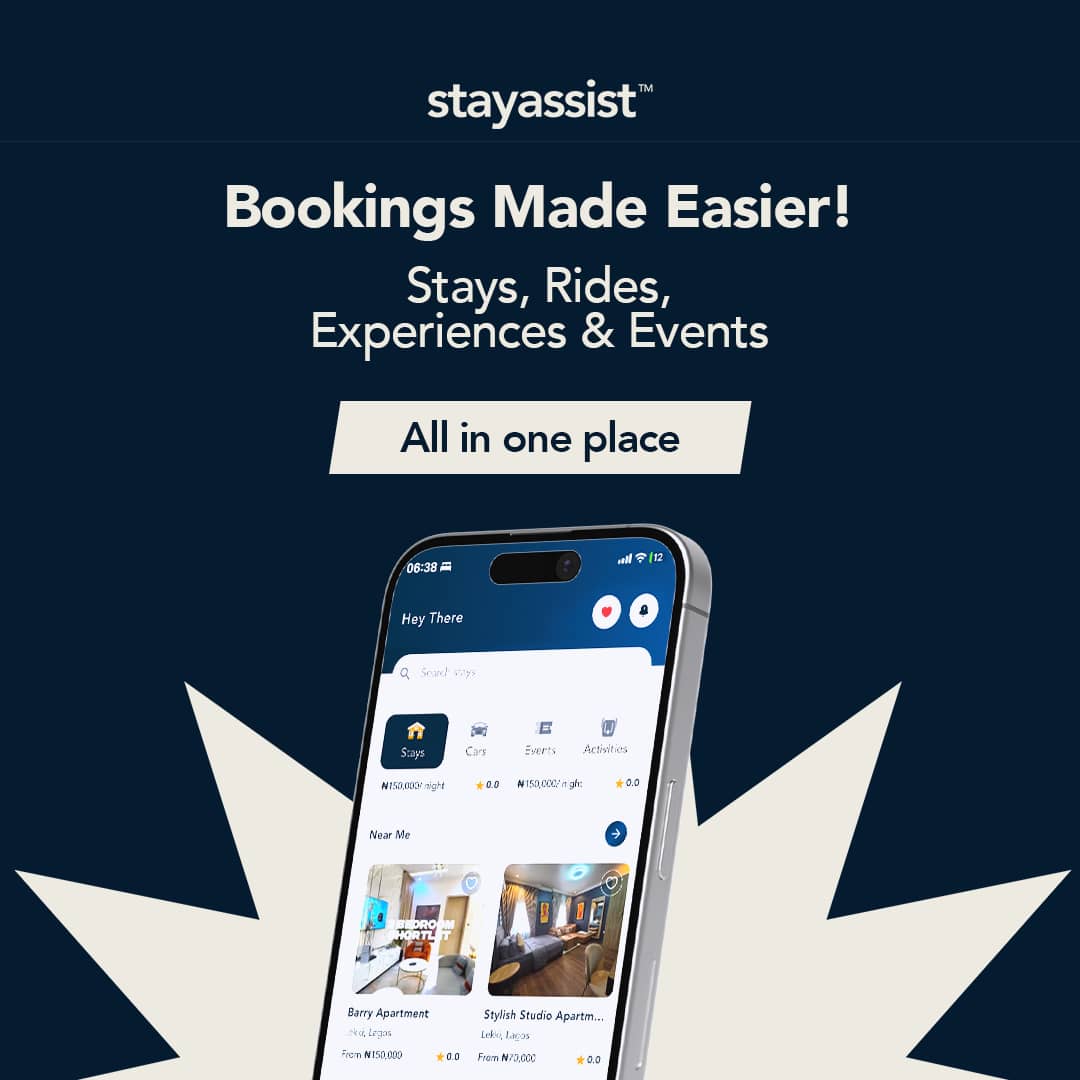
Stay Assist, a Nigerian hospitality tech platform founded in 2025, operates a multi vertical model across Abuja, Lagos, Port Harcourt, and Benin. The company verifies properties before listing and holds payments in app until check in. Its product surface covers verified stays, ride hire, restaurant reservations, event ticketing, and curated experiences, which gives it a broader take rate per user than a single vertical marketplace. A separate property owner portal handles supply side onboarding.
Spleet, which raised 2.6 million dollars in a round led by MaC Venture Capital, targets a related segment with a flexible monthly and short term rental product. Muster positions itself explicitly as the Nigerian answer to Airbnb. NimbleCasa, MyCribb, and Krent operate variants of the shortlet marketplace model with different emphases on verification, host support, and pricing.
Beyond the pure play platforms, adjacent categories are watching closely. Nigerian PropTech companies with holdings in long term rental may extend into short lets. Fintechs handling escrow could licence verification infrastructure to independent operators. Global platforms such as Booking.com and Airbnb continue to expand Nigerian inventory but have not yet solved local verification at scale.
The unit economics
A verified booking commands a modest premium over an unverified booking. The premium is not the whole business. The whole business is the reduction in customer acquisition cost that verification enables.
A platform that has verified its inventory can rely on repeat bookings and word of mouth in a way that an unverified marketplace cannot. This lowers marketing spend per booking, which improves contribution margin, which funds further verification investment, which reinforces the moat. This is a familiar flywheel in consumer tech. It is now beginning to run in Nigerian hospitality.
The cross sell economics are also relevant. A multi vertical platform that sells a stay, a ride, a restaurant reservation, and an experience to the same user in a single trip recovers customer acquisition cost far faster than a single vertical marketplace. This is a structural argument for platforms that build across the hospitality stack rather than owning just one line.
The regulatory tailwind
Regulation is currently more of a promise than a reality. But the direction of travel favours platforms that have already invested in verification.
Lagos state’s partial short let ban in Banana Island and its adjustments to short term rental tax treatment signal a growing state interest in formalising the sector. The Federal Competition and Consumer Protection Commission has broad authority that could, in time, extend to online booking platforms. When regulation arrives, platforms that already verify inventory and hold payments in escrow will bear a lower compliance cost than platforms that do not.
Investors should therefore treat verification investment less as a cost centre and more as a regulatory hedge with a strong option value.
What to watch
Three signals will indicate how quickly the verification layer captures the market. The share of Nigerian short let bookings that move through platforms rather than WhatsApp is the first. Growth in this share above the underlying market growth is the clearest sign that consolidation is under way.
The second is capital allocation. Nigerian venture funding has been thinner in 2025 and 2026 than in 2021 and 2022, but hospitality tech has been one of the more active segments. Sustained rounds at healthy valuations for verification led platforms are a signal that professional investors have priced in the flywheel.
The third is the repeat rate. Platforms that publish verified booking repeat rates, and see them rise, are the ones building durable businesses. Platforms that do not disclose repeat rates are unlikely to have anything worth disclosing.
The bottom line
Nigeria’s short let market is large, growing, and constrained by trust. The Nigerian companies that build the durable business in this category will not be the ones with the largest inventory or the most aggressive discounting. They will be the ones that make verification a product feature, not a marketing claim. That is the business inside the business.


