

A family lawyer’s reflections on Nigeria’s plural matrimonial system
The first time it dawned on me, fully, how complicated marriage is in Nigeria, I was sitting across from a quiet woman in her early forties. She had walked into my office clutching a wedding photograph, an invitation card from the early 1990s, and a bewildered expression. Her husband of twenty-six years had died.
His family, gathered in their village for the funeral, had announced that she was not, in fact, his wife. There had been a customary ceremony, yes, but no bride price had been formally received by the elders. There was no statutory marriage. As far as the family was concerned, she was a long-term companion, nothing more. The house, the cars, the bank accounts everything belonged, by their reckoning, to a nephew who had until that morning been a stranger to her.
I have practised family law in this country for many years, and I can tell you that her story is not rare. It is, if anything, ordinary. The law of marriage in Nigeria is not a single, coherent body of rules but a patchwork stitched together from three traditions that have never quite agreed with one another: the statutory regime imported during colonial rule, the customary laws that long preceded that regime, and the Islamic law that governs the personal lives of millions of Nigerian Muslims. Each system has its own logic, its own purpose, and its own quiet expectations of the men and women who live within it. Where they meet, they often quarrel.
The Three Systems, Briefly
Statutory marriage in Nigeria is regulated principally by the Marriage Act and the Matrimonial Causes Act. It is the marriage that took its present shape from English common law: monogamous, performed before a registrar or in a licensed place of worship, and dissolvable only by a court of competent jurisdiction. When two people decide to marry “in court”, as Nigerians often say, they are choosing this regime. They are also, whether they realise it or not, choosing a particular vision of marriage, one in which the union is between two persons exclusively, in which property is generally held individually, and in which the state has reserved to itself the power to declare them no longer married.
Customary marriage is older than the country. There is no single customary law of marriage; rather, there are as many customary laws as there are communities, and the rules differ from Yorubaland to Igboland to the Niger Delta to the Middle Belt. What unites them, broadly, is the involvement of families rather than mere individuals, the payment or symbolic acknowledgement of a bride price, the central role of consent expressed through both the parties and their kin, and the acceptance of polygamy. A customary marriage is not a private arrangement between two people; it is an alliance between two families, and the rituals that solemnise it are the visible signs of that alliance.
Islamic marriage, governed by Islamic personal law and recognised in the Sharia courts of the northern states, is a contract, a nikah in the strict sense with offer, acceptance, dower (mahr), and witnesses. It permits up to four wives subject to the requirement of equitable treatment, and its rules of divorce, custody, and inheritance follow the classical schools of Islamic jurisprudence, predominantly Maliki in northern Nigeria. Islamic marriage is sometimes treated, in older textbooks, as a species of customary law. This is a tidy fiction that does the system no justice. It is, in truth, its own coherent and ancient regime, with its own jurists, its own remedies, and its own sense of what a marriage is for.
Where the Systems Collide
The trouble begins not when a Nigerian chooses one of these regimes, but when life refuses to stay within the lines the regimes assume.
Consider, first, the question of validity. A man and woman who have performed the customary rites of their community are, in the eyes of customary law, married. If they then walk into a registry and contract a statutory marriage with each other, the law takes the convenient view that the second ceremony perfects the first, and the marriage is treated as monogamous from that point forward. But what happens if that man, having married a woman under customary law, walks into a registry with a different woman? Section 35 of the Marriage Act makes that second marriage void, and section 47 makes him, in addition, a criminal. Yet the registry has no register of customary marriages to consult, and the second wife may have no idea the first one exists. I have sat with women who discovered, in the worst possible circumstances, that the husband they thought was theirs had been married for a decade in a village they had never seen.
Consider, next, divorce. A statutory marriage is dissolved only by a High Court, and only on the ground that the marriage has broken down irretrievably, a ground that, despite its plain English, has been refined by case law into a small set of recognised circumstances. Customary marriages, by contrast, may be dissolved by the parties’ families, by the customary court, or sometimes simply by the return of the bride price.
Islamic marriage admits its own modes of dissolution, including talaq, khul’, and judicial divorce on specified grounds. A party who married under one regime cannot pick another at the moment of dissolution. A wife married under customary law cannot petition the High Court for divorce under the Matrimonial Causes Act; she must go to a customary court. Yet the relief available in that customary court may be far thinner than what the High Court could give her, particularly on questions of property and ongoing maintenance.
Inheritance, perhaps more than any other issue, is where the plural system has caused the most pain. For decades, the customary law of certain communities denied female children any share in their father’s real property, and excluded widows from inheriting from their husbands. The courts have, gradually, set their face against these rules.
In Mojekwu v Mojekwu, the Court of Appeal condemned the Igbo oli-ekpe custom; and in Ukeje v Ukeje (2014), the Supreme Court held that any customary law that disinherits a woman from her father’s estate is repugnant to natural justice, equity, and good conscience, and therefore unconstitutional. This is the right outcome, in my view, but it has not made the underlying tensions disappear. Families still gather. They still calculate. Lawyers still spend long days separating intestate estates, identifying which marriages were statutory, which customary, which Islamic, and which sadly were nothing at all.
There is also the matter of conversion and concurrent regimes. A person validly married under Islamic law cannot, while that marriage subsists, contract a statutory marriage with another person; doing so is bigamy. The same goes for a customary marriage that has not been dissolved. Yet the temptation is real, particularly for those who move between religious communities or who marry across them. I have advised clients whose husbands had two wives in two cities, each woman convinced she was the only one. The resolution of those matters is rarely clean, because the law’s tidy categories cannot, on their own, heal the wounds the parties bring into chambers.
The Children, Always the Children
Where there are children, the conflict of systems becomes acute. Statutory law treats the welfare of the child as the paramount consideration; like one of my favourite judges at the Lagos State High Court will say, it’s ok to fall in love, and thereafter, out of love, the parties are adults; the interest and welfare of the children of the marriage must be guarded and protected. Customary law, in many places, treats children as belonging to the patrilineage; the mother, in a separation, is sometimes left with little more than visitation.
Islamic law allocates custody between mother and father according to the age and sex of the child, with rules that are precise and, on occasion, surprising to those unfamiliar with them. When a marriage fractures across these systems, the child is pulled between courts whose instincts differ sharply. A wise lawyer learns to slow such matters down, to keep the child’s interests visible, and to remind every adult in the room that the child has no interest at all in winning the dispute.
A Quiet Patchwork of Pretensions
Part of the difficulty, I have come to believe, is that the systems pretend to know less about each other than they do. Statutory law treats customary marriage as a kind of folk practice it tolerates rather than embraces. Customary law treats statutory marriage as a paper formality that the elders do not really need to take seriously. Islamic law often proceeds as though the federal apparatus were a distant rumour. In the meantime, ordinary Nigerians live across all three. They marry under custom, register under statute, and mourn under religion. Their lives are interwoven; the law’s responses are not.
This is why so many of my files contain the same handful of recurring questions. Was the bride price properly paid, and to whom? Was there a registrar’s certificate, and where is the original? Did the deceased ever convert, and if so, when? Were the children of the first wife provided for, and on what terms? These are not academic questions. They are the questions on which a widow’s home, a daughter’s schooling, and a son’s standing in his community will turn.
Toward Coherence
Some scholars argue that Nigeria should harmonise its marriage laws into a single uniform code. I am sympathetic to the impulse but cautious about its practicality. The three systems exist because three communities of meaning produced them, and they cannot be erased by a federal statute. What we can do and what I think we must do, is improve the connective tissue between them.
A unified national register of marriages, accessible by registries, customary courts, and Sharia courts, would prevent a great deal of bigamy by accident. Compulsory disclosure of prior marriages at the point of contracting a new one, on pain of meaningful criminal penalty, would do more. Legal education, particularly for women in rural areas, would do more still.
In the meantime, my assignment as a family Lawyer and my colleagues’ is that of the work of translation. We translate the language of customary alliance into the categories of statutory rights. We translate the careful traditions of Islamic personal law into the demanding procedures of the High Court. Above all, we translate the unspoken expectations that two people brought to a marriage at its beginning into the resolution that the law can offer at its end. It is a patient assignment. It is sometimes a thankless task. It is, occasionally, the most important task I do.
The Photograph, in the End
The woman with the wedding photograph and the invitation card, she did, in time, recover much of what she was owed. We proved the customary marriage through witnesses, through a family ledger of payments, and through her presence in the household across decades. The Supreme Court’s recent decisions on widows’ rights helped. The judge, to his credit, listened. But she should never have had to prove that her husband was her husband. No widow should.
That, in the end, is what reform is for: so that fewer people walk into our firm carrying photographs to prove what they ought never to have to prove. Until that day, the Nigerian family lawyer will continue to do what the Nigerian family lawyer has always done, sit across from quiet clients, listen carefully to long stories, and try, system by system, to make the law match the lives the law was meant to serve.
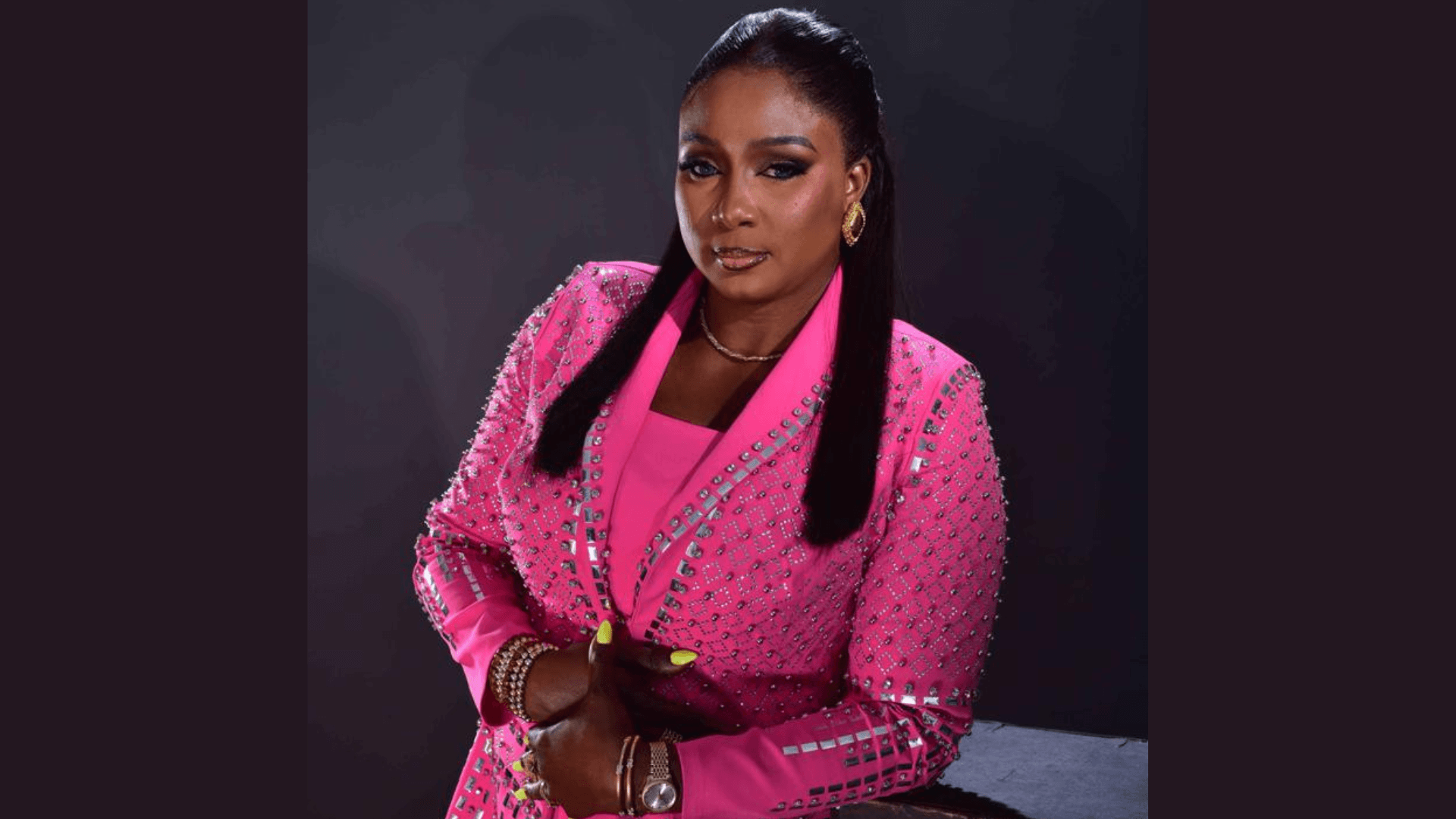
ADETOLA AYOELE-ONI is a managing partner at Karren Walters Attorneys
[email protected]


