

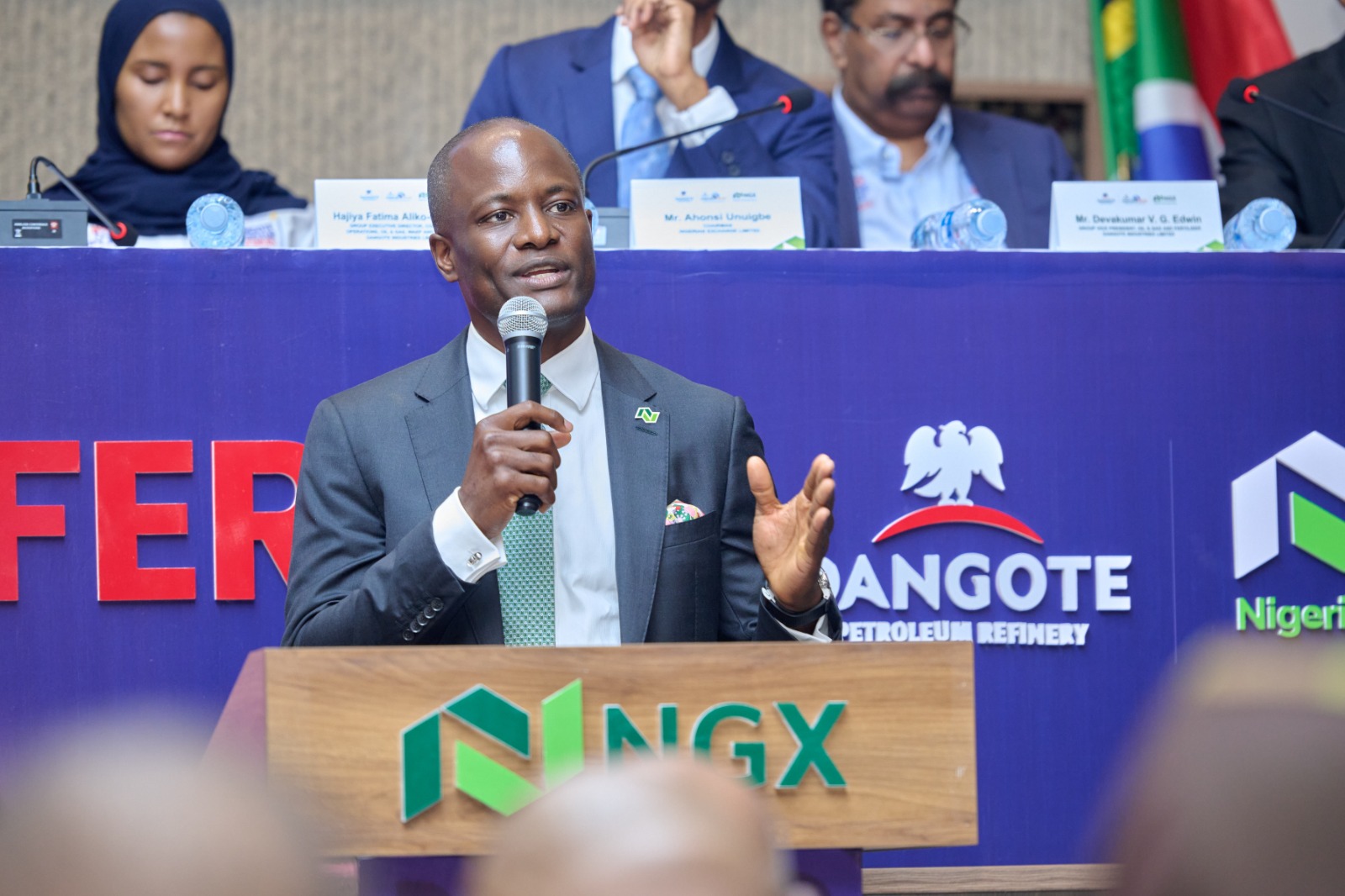
The Dangote IPO highlights the changing role of market infrastructure and the ambition to broaden ownership across Nigeria and Africa
Celestine Uchenna
For decades, Nigerians have participated in economic growth primarily as consumers, employees and savers. The capital market offers another avenue: becoming shareholders in the businesses shaping the country’s economic future.
The launch of the Dangote Petroleum Refinery and Petrochemicals FZE Initial Public Offering (IPO) brings that possibility into sharper focus. Marketed as an ‘IPO for the People,’ the offer comprises 4.1 billion ordinary shares at N525 per share, with a minimum subscription of 10 shares valued at N5,250. Opened on September 14, 2026, and closing on October 13, 2026, it is expected to raise approximately N2.15 trillion.
The offer provides investors with an opportunity to acquire a stake in the refinery, subject to applicable eligibility requirements. Its significance, however, extends beyond the transaction itself. It raises a broader question about how Nigeria’s capital market can make investment opportunities more accessible and connect businesses with a wider pool of capital.
For the Group Managing Director and Chief Executive Officer of Nigerian Exchange Group (NGX), Temi Popoola, the answer lies partly in the infrastructure supporting market participation.
Building the Infrastructure for Broader Ownership
The development of digital distribution capabilities has become an important part of NGX Group’s market-development efforts.
During Nigeria’s banking sector recapitalisation exercise, 33 banks collectively raised N4.65 trillion in fresh capital, with NGX Invest facilitating approximately N2.8 trillion in capital raises. The figures provide a concrete example of the platform’s role in supporting large-scale fundraising through the capital market.
That experience provides context for the Dangote IPO. The digital distribution infrastructure being deployed for the refinery offer builds on capabilities used during a significant period of corporate capital raising.
In a recent CNN interview with Erica Hill, Popoola described the broader transformation behind this work. “We have quietly spent the last three years doing precisely that,” he said, referring to the development of the underlying market infrastructure. He added that NGX Invest now connects the offer to more than 100 distribution channels spanning stockbrokers, banks, fintechs and other financial institutions through API-based connectivity.
He described the Dangote offer as an opportunity to test those systems at significant scale, including what he called the first end-to-end digital offer in the history of Nigeria’s markets. The distribution model seeks to bring the transaction closer to investors through channels such as stockbrokers, traditional banks, financial technology companies, USSD and WhatsApp.
The implication is that participation in public offers can become less dependent on physical access to financial institutions or familiarity with traditional paper-based processes. Digital channels, working alongside authorised market intermediaries, can help expand the ways investors access investment opportunities.
From Participation to Ownership
Popoola’s argument goes beyond technology. During the CNN interview, he described the broader opportunity for Nigerians to move from contributing to economic growth through consumption and employment to participating as owners. “This is how we build an ownership economy: strong Nigerian businesses accessing long-term capital, and more Nigerians having the opportunity to participate in their growth,” he said.
That shift places the capital market within a wider conversation about wealth creation, financial inclusion and the distribution of investment opportunities. The practical impact will depend on how many investors participate, whether they are first-time investors, the quality of information available to them and their continued engagement with the market. An accessible offer does not eliminate investment risk, and broader participation must be accompanied by informed decision-making.
Speaking to the BBC, Popoola emphasised that capital-market investment is a long-term undertaking and that investments can appreciate or depreciate. His comments highlight the importance of balancing wider access with investor education and awareness of market risks.
An African Capital-Market Opportunity
The ambition also extends beyond Nigeria. African businesses require capital to grow, yet investment markets remain affected by national regulatory frameworks and the practical challenges of cross-border participation. Popoola told the BBC that large African companies should be able to mobilise capital from African investors and direct it towards businesses across the continent.
“We need to be able to mobilize capital across the continent and funnel them, frankly, into whatever businesses in whatever countries that they are to drive our collective growth,” he said. The vision raises important questions about how exchanges, regulators and financial institutions can work together to facilitate cross-border investment while maintaining appropriate investor protections and market integrity.
The Dangote offer provides a prominent context for examining that ambition, but its broader continental implications will depend on the development of the necessary regulatory and operational arrangements.
What Comes Next?
The significance of the Dangote IPO will ultimately extend beyond the amount of capital raised. It provides an opportunity to examine whether digital distribution can broaden participation, whether more privately held businesses will consider public ownership and whether investors who enter the market through major offers will continue participating in the capital market.
For NGX Group, these questions connect the Dangote transaction to a longer-term market-development agenda: building infrastructure that supports fundraising, expands access and strengthens the relationship between African businesses and African capital.
For Popoola, the transaction offers an opportunity to articulate that agenda at a moment when the scale of a major IPO has drawn renewed attention to the possibilities of Nigeria’s capital market. The next chapter will depend on whether the infrastructure, participation and investor confidence generated by this moment can translate into sustained market development and broader ownership across the economy.
* Uchenna, a capital market analyst, writes from Lagos
