

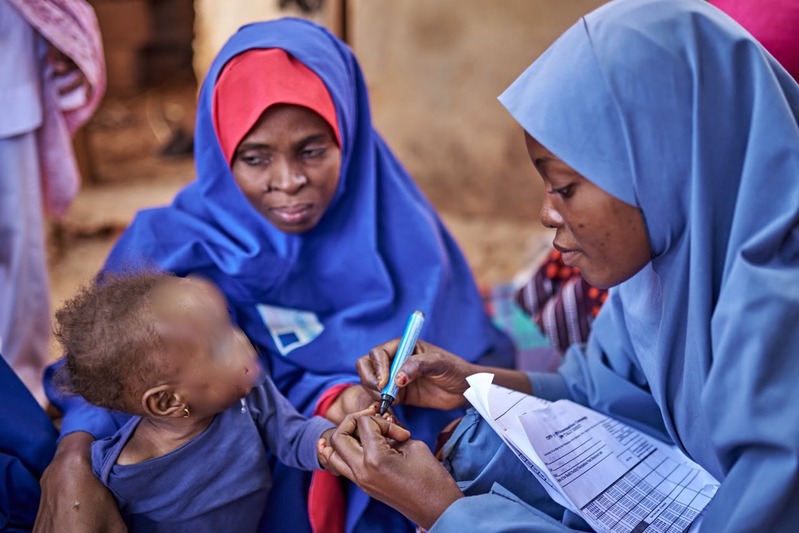
A new report by eHealth Africa has revealed that more than 23 million children were reached and vaccinated against polio and other vaccine-preventable diseases across more than 205,000 settlements in Nigeria between January and June 2026.
The report, titled “Expanding Reach, Readiness and Resilience: Data-Driven Health Systems Across Africa,” indicates that the vaccination figure was part of a broader set of interventions implemented during the first half of 2026.
Digital tools support vaccination campaigns
In partnership with its immunisation partners, eHealth Africa said it expanded the deployment of its in-house PlanFeld digital tool across 253 Local Government Areas (LGAs) in 10 northern states.
Through the tool, 33,837 vaccination teams were provided with digitised microplans and catchment-area maps, the report stated.
The technology was also deployed across four LGAs in Lagos State during the Measles-Rubella vaccination campaign, with 1,980 digitised maps produced and distributed to vaccination teams.

The report further highlighted efforts to strengthen the last-mile vaccine supply chain in Sokoto State.
Through the Vaccine Direct Delivery (VDD) intervention, the number of health facilities served increased from 351 to 407 during the period.
Approximately 3.41 million vaccine antigens were delivered to the facilities to support immunisation services in underserved communities, according to the report.
Solar power for primary healthcare centres
Beyond immunisation, the report documented eHealth Africa’s investment in renewable energy for primary healthcare.
Under the Renewable Energy for Primary Health Care (RE4PHC) intervention, supported by UNICEF, the organisation solarised 238 primary healthcare centres (PHCs) across 12 states.
Of the 238 facilities, 226 were remotely monitored and generated 277,800 kilowatt-hours of solar electricity between January and June, the report stated.
eHealth Africa estimated that the electricity generated saved about N166 million in fuel costs and prevented 240 metric tons of carbon dioxide emissions during the period.
Since the intervention began, estimated fuel savings have exceeded N414 million, according to the report.
Strengthening laboratories and emergency response
The report also highlighted efforts to strengthen diagnostic and disease-surveillance capacity across Africa.
eHealth Africa said it supported 17 laboratories in 13 countries and expanded its Inventory Management System to 18 laboratories.
Upgrades to five laboratories in Ghana, Zambia, Nigeria and Cameroon were also completed and handed over during the period.
The organisation said the upgrades would strengthen infrastructure for diagnosis, surveillance and outbreak response.
Public health
On public health emergency preparedness, eHealth Africa said its 11 Emergency Operations Centres (EOCs) in Nigeria continued to serve as coordination platforms for government agencies, surveillance teams, immunisation officials and development partners.
During the first half of 2026, the centres hosted 546 emergency coordination meetings and supported 102 meetings linked to vaccination campaigns, the report stated.
They also produced 74 public health scorecards to support planning and performance monitoring.
Monitoring medicines at the community level
The report also documented an expansion of community-level surveillance of antibiotic availability and suspected substandard and falsified medicines through the Com-WATCH initiative.
The programme covered Kano, Gombe, Ekiti, Ebonyi, Akwa Ibom and the Federal Capital Territory, with 2,512 surveillance actors enrolled.
A further 2,763 medicine vendors and other actors received training, while more than 20,500 community members were reached with sensitisation messages.
By June, 977 medicine outlets were reporting stock information through the platform, eHealth Africa reported.
Humanitarian support
In humanitarian operations, the organisation stated that it managed the World Food Programme Common Storage facility in Ngala, Borno State, which supported 16 humanitarian partners during the period.
According to the report, the warehouse handled 691 metric tons and 2,527 cubic metres of commodities, while six monthly physical inventories were completed.
READ ALSO: Yobe records 511 diphtheria cases, 13 deaths in 2026
The organisation said no stock losses were reported during the period.
‘Significance goes beyond numbers’
Commenting on the findings, eHealth Africa’s Executive Director, Atef Fawaz, said the results reflected what could be achieved when governments, communities, technology, infrastructure and local expertise worked together to strengthen healthcare delivery.
He said the organisation’s focus was not simply on deploying solutions but on building systems that institutions could own, sustain and continue to improve.
“The significance of these results goes beyond the numbers,” Mr Fawaz said.
Discover more from Premium Times Nigeria
Subscribe to get the latest posts sent to your email.
