

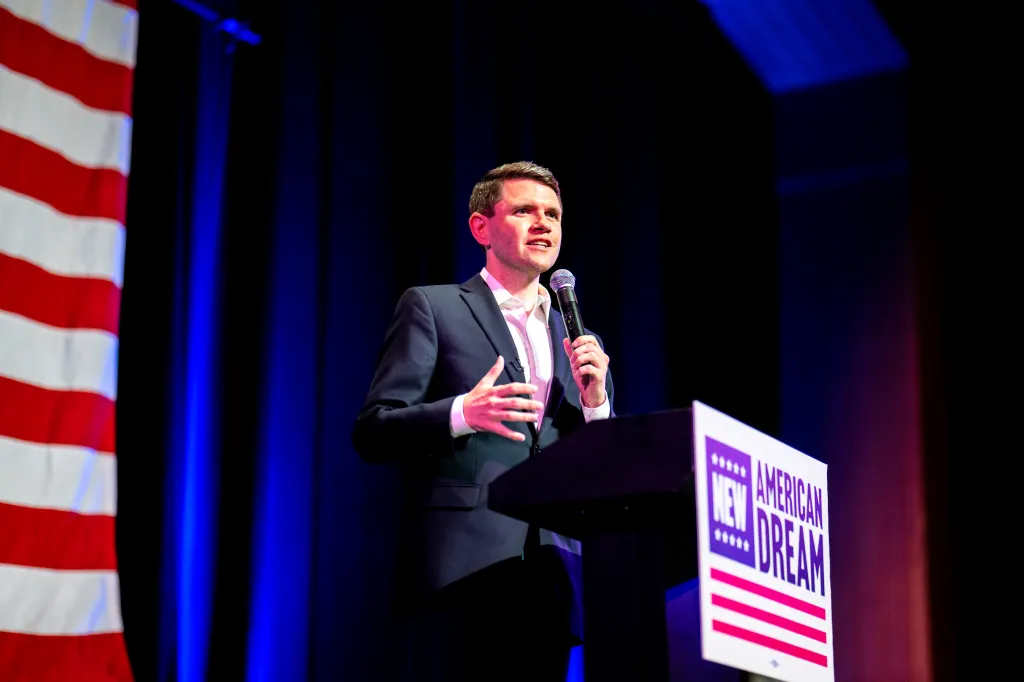
Jimmy Kimmel is interviewing James Talarico today but his interview will only stream on YouTube after the late-night host said pressure from the FCC has prevented Disney from airing it on ABC.
The Texas Democrat, who is running for Senate, responded to the news and called the move the “most dangerous form of cancel culture”.
“Government censorship should be a concern to all of us, regardless of our political party,” Talarico told MS NOW’s Symone Sanders Townsend on The Weeknight. “People at the top, powerful politicians, powerful media executives, censoring what we watch, what we read, what we say. And that, again, should be a concern to everyone who believes in the First Amendment and believes in the freedom of speech.”
Talarico, however, remained optimistic that the interview may well end up on ABC at some point. “I’m still hopeful that we can have this interview on the air. So we’ll see what happens tonight,” he added.
This comes after Kimmel revealed on his show on Wednesday night that the President and the FCC has “threatened” him, the show, the network and local affiliates.
“Out of consideration for our local stations, especially our ABC affiliates in Texas who would have to deal with this nonsense, my interview tomorrow with James Talarico will not air on television. It will be posted on YouTube instead,” Kimmel said.
This was a similar situation that the Democrat faced on The Late Show with Stephen Colbert.
Anna Gomez, the sole Democrat on the FCC, also weighed in on the news.
“This is now the second time in a matter of months that a late-night host has disclosed they had to bury an interview because of FCC intimidation, and there is no way to know how many other editorial decisions across the country have quietly been shaped by this same pressure. No host, local affiliate, or network should have to weigh federal retaliation before booking a guest for a newsworthy interview. Any attempt to pressure broadcasters into self-censorship undermines both press freedom and the public’s right to hear from candidates in their communities seeking public office,” she said.
