

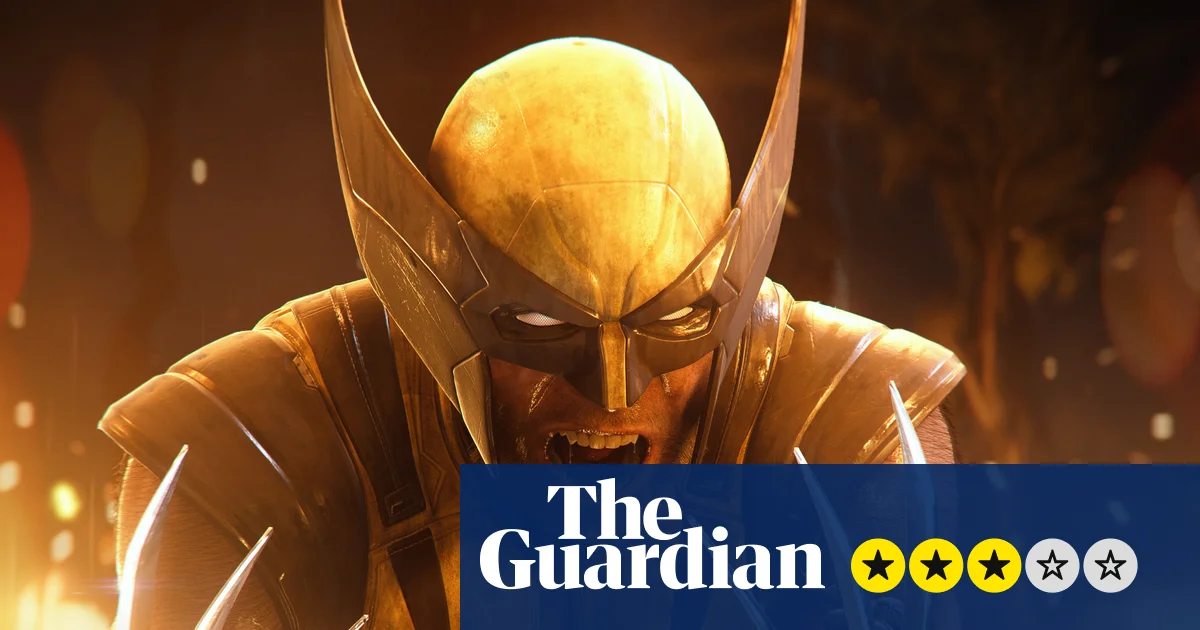
It was always going to be difficult to follow Spider-Man. Insomniac’s three games based around the web-slinger are masterpieces of superhero wish fulfilment, allowing you to swoop above a depiction of Manhattan alive with graffiti artists, roving journalists and gun-toting gangsters. If anyone should be up to the task, it’s Wolverine. A beloved Marvel stalwart, his life much darker and bloodier than Peter Parker’s, he seems the ideal protagonist for a moody action adventure. Yet somehow this well-made game falls short of its potential.
Set years before the founding of the X-Men, Marvel’s Wolverine sees a disenfranchised Logan falling back in with Sabretooth and Mystique when their mentor Nathaniel Essex is kidnapped by mutant-hating billionaire Bolivar Trask. This archetypal tech bro has a disturbing plan for world domination and the X Team are out to stop him – but there is a secret buried in Wolverine’s past that’s about to cause an eruption. It’s a decent setup, filled with the sort of intrigue, violence and Freudian tension we expect from the X-Men.
At its heart, though, Marvel’s Wolverine is, like its hero, an unreconstructed brawler. From the start, you can dodge, parry, shred attack and leap attack with speed and savagery, but as you earn XP, you unlock new techniques and combos as well as powerful special moves such as the tornado spin, which damages enemies all around you in a flurry of blades, or the spiral strike, which lets you drill through an enemy to escape a crowd. Your main combo attack is the barrage, accessed by hitting shred repeatedly, but this can be closed with a leap attack or other unlocked techniques for extra damage, and to stagger opponents. On top of this you can also unlock new DNA strands, which provide buffs to your health and cooldown speeds. The highlight, though, is the three-stage rage meter, which builds as you damage and parry enemies. At each stage you get more powerful attack and defensive stats, and at the final stage you become an almost indestructible machine of carnage, which is immensely liberating.
But while fights feel smooth and empowering, there is rarely any need to be creative or experimental. In the Spider-Man games, the character’s grace, his web-throwing, the three-dimensional nature of his movement, all encourage you to fight beautifully; here I was reminded of 80s beat-’em-ups, or PS3 brawlers – a bludgeoning production line of identical fights against increasingly over-familiar enemy types. Sure, this fits with Wolverine’s character, but similar melee-based brawling adventures such as Devil May Cry and Bayonetta provide deeply layered combat systems and diverse enemy types which reward (and often demand) varied techniques from players. I survived a huge majority of skirmishes in the default difficulty setting by pummelling parry and switching between linked shred attacks and leaps, opening and closing barrage combos in the process, while letting rip with specials whenever they came online. The boss battles, which felt extremely familiar and at times cliched, demanded a similar approach, just with better timing and more patience.
Similarly, the Insomniac team warned us to expect a more tightly structured environment than in the Spider-Man titles, and they were not kidding. Wolverine is mostly linear, thrusting us from set-piece to set-piece in a globe-trotting race against time and plausibility. When we do get to big, inviting cities such as Madripoor or Tokyo, we find roads closed off and invisible walls directing us back to the action. The whole world feels like a theatrical backdrop, untouchable and aloof, and many miles from the bustling metropolis we got to live in and explore as Spidey. Yes, we all know this makes sense – Wolverine is by nature a rootless character, an inveterate drifter, but presenting us with a Tokyo so richly detailed and visually seductive, only to lock most of it off, feels almost cruel.
In contrast, the game’s interpretation of Logan is a triumph. Through exquisite character art and animation, and a brilliant performance from Liam McIntyre, he comes alive as a flawed, often unwilling hero, capable of extreme brutality and touching vulnerability. His rivalry with Sabretooth and his blossoming relationship with Jean Grey are intricate and involving, resulting in some truly moving scenes. But you play no interactive part in the linear story or its relationships, and the few attempts at offering puzzles tied in with the narrative are hurriedly designed and quickly abandoned. We’re told that Wolverine’s past trauma will be explored, but for much of the game this comes via snippets of lore that you unlock by competing in mini-challenges such as timed parkour runs and horde battles against waves of baddies. It feels like a rather insensitive way to portray and process PTSD. The climax of the game, when it comes, is an absolute technical marvel, a Homerian clash of super powers, but sadly its impact is lessened by far too many exposition flashbacks and airy metaphysical deviations.
Marvel’s Wolverine remains a lovingly crafted, beautifully polished hack-’em-up that will no doubt thrill Wolverine fans who want to eviscerate as many enemies as possible while looking out for X-Men easter eggs, and pausing once in a while to have story and subtext thrown at them. But despite the full-bloodied use of Wolverine’s claws and a generous array of moves and combos, combat lacks both the bone-crunching impact of the Batman Arkham games and the balletic joy of Spider-Man. As the game goes on and the enemies line up, it feels increasingly like a chore. Logan becomes what he always dreaded: hired muscle.
There is so much seductive and emancipating rage in this game, in its story, its combat mechanics, its gloriously conflicted protagonist. But the crescendo always feels like it’s just out of reach, like an argument in another room, or a war on the news.
