

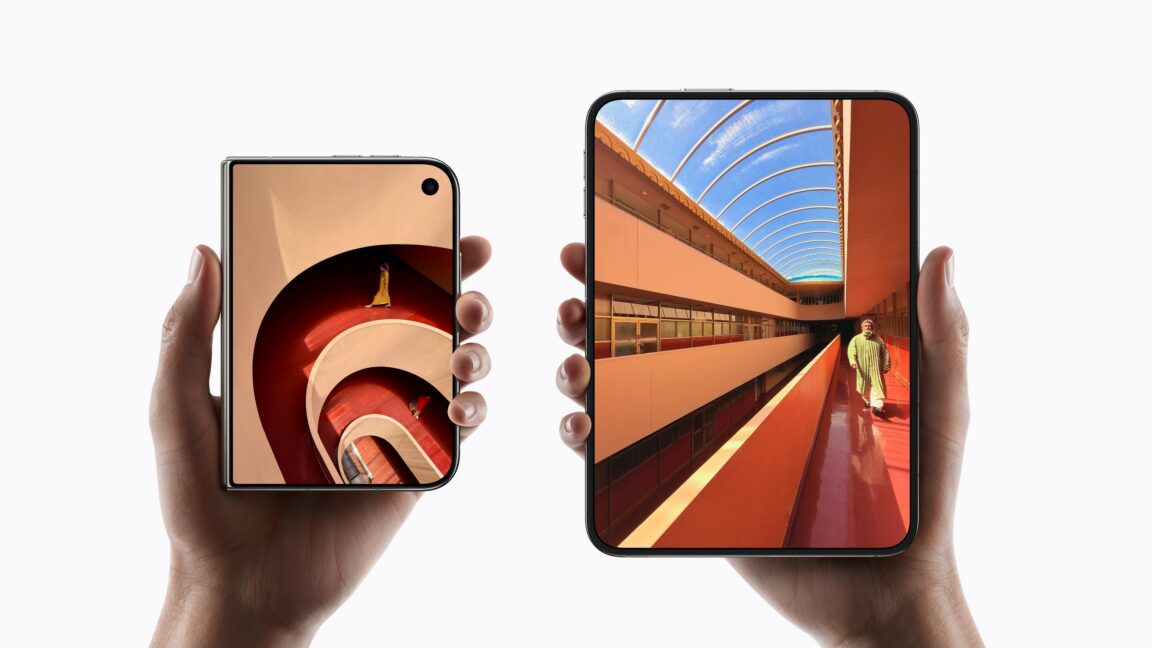
Apple ended today’s hardware event with one of its classic “One more thing” reveals. Some smartphone makers have been offering foldable phones for the better part of a decade, but Apple has now joined the fray with the iPhone Duo after years of speculation.
This device is undeniably the most capable iPhone ever, as well as the most expensive. It’s not as spendy as many expected, though, starting at $1,999. That’s in the same range as foldables from Google and Samsung.
An iPad in your pocket
The iPhone Duo would have looked like a totally fresh take on the foldable form factor a few months ago, but Samsung has made waves with the Galaxy Z Fold 8. Like that phone, the iPhone Duo has a wider, shorter chassis. Apple prefaced its reveal with a denunciation of foldables that open into a square aspect ratio. While that shape can accommodate two portrait apps side by side pretty well, it’s bad at almost everything else, stretching single apps awkwardly and leaving videos with gargantuan black bars.
So the iPhone Duo adopts a passport-like shape when closed. Apple says the device has a 1:1.4 aspect ratio when open and closed. The 5.4-inch outer screen has a quirky asymmetric design, with pointy corners on the hinge side and rounded ones on the other. Apple suggests this “invites you to open” the phone.
Inside, you get the 7.6-inch Super Retina XDR foldable panel, which is slightly wider than a classic 4:3 monitor. Apple also had a thing or two to say about the structural issues with past foldables. The Duo’s screen contains multiple layers of flexible glass and a titanium base, similar to Samsung’s latest foldable screen tech. The top layer is a custom polymer that is stiffer than other materials, featuring a nano-texture finish for added readability.
The result, allegedly, is a foldable screen that looks better in bright light and has no (or very little) visible crease down the middle. Samsung and other OEMs have only recently gotten to the point that display creases are less noticeable, but it’s still there. Apple also claims the multi-layer lamination process used in its display ensures the display won’t develop a crease over time.
