

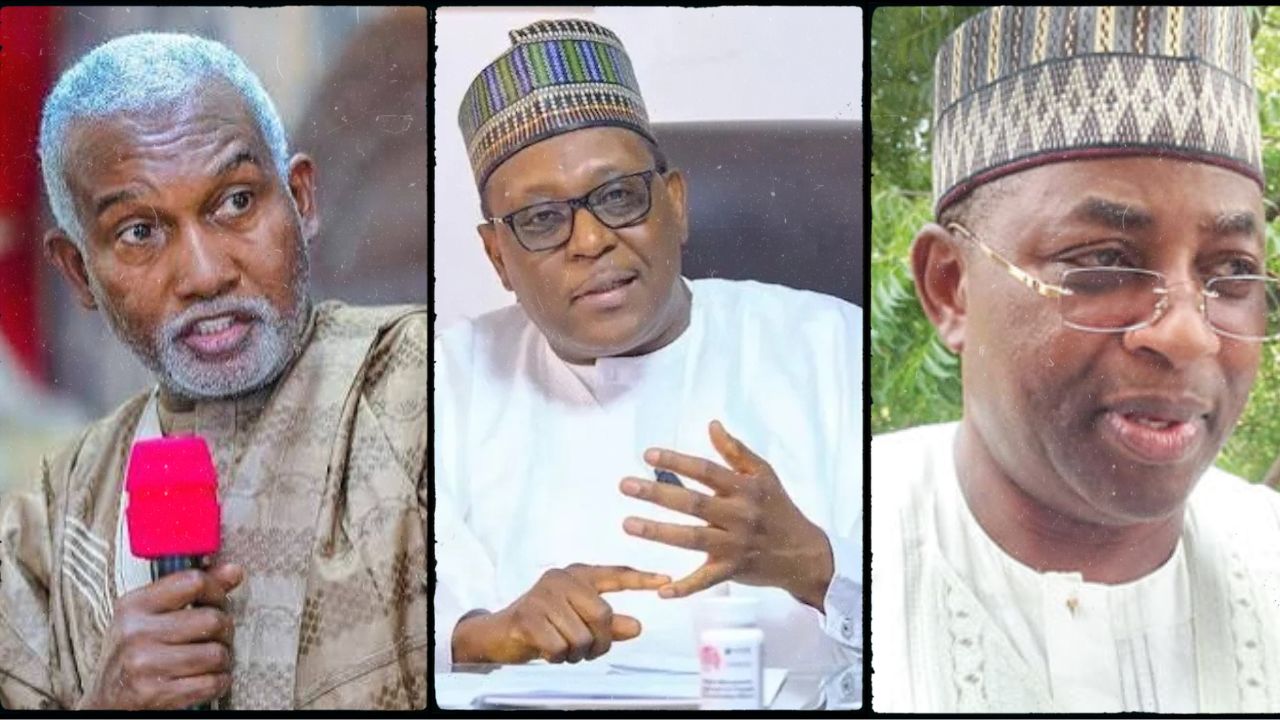
An internal crisis in the All Progressives Congress (APC) in Bauchi State has deepened, with former aspirants for governorship and legislative seats resigning from the party ahead of the 2027 general elections.
The recent resignations have heightened concerns among members and supporters of a party expected to unite to challenge the ruling Allied Peoples Movement (APM).
Reconciliation effort fails
Former Speaker of the House of Representatives, Yakubu Dogara, chaired the APC state reconciliation committee in Bauchi.
The committee was established after a contentious primary produced former governor Muhammed Abubakar as the governorship candidate.
Mr Abubakar, who served as governor from 2015 to 2019, beat former Minister of Foreign Affairs, Yusuf Tuggar, and former top executive of the Nigerian National Petroleum Company (NNPC) Limited, Bala Wunti, among others, to the ticket.

However, Mr Tuggar rejected the outcome, insisting that the APC did not conduct a valid exercise in the state.
In an effort to heal post-primary divisions, Mr Dogara’s committee met with aggrieved aspirants and urged them to bury their differences and support the standard-bearer.
The former speaker cautioned that the APC’s hopes in Bauchi lie in internal cohesion.
Later, the committee expressed confidence that what it saw during the meeting would translate into stronger mobilisation, improved coordination, and ultimately, electoral victory for the party in the state.
However, indications are that the engagements at the APC State Secretariat in Bauchi have yet to quell the discontent.
Mass defections of key members continue to threaten the APC’s prospects in the northeastern state.
Defections
The prominent figures who recently resigned are former Deputy Governor Sagir Saleh, former two-time governorship aspirant Muhammad Jibrin, and Sunusi Kunde, a close associate of Mr Tuggar.
Mr Saleh, who was deputy governor under Governor Isa Yuguda and holds the traditional title of Majidadin Katagum, resigned through a letter dated 19 August.
In the letter, addressed to the APC chairman of Katagum Local Government Area, through the party chairman of Matsango Ward, Azare, Mr Saleh cited personal reasons.
Mr Saleh’s exit is considered a major blow due to his influence within the Katagum political establishment.
Also, Muhammad Jibrin, a former national auditor of the defunct Congress for Progressive Change (CPC) and two-time governorship aspirant, announced his resignation in a letter dated 31 August.
Addressed to the party’s chairman of Nasarawa/Bakin Kasuwa Ward in Azare, Katagum LGA, he attributed his departure to “brazen injustice” and the imposition of a candidate.
“I came to this conclusion due mainly to the brazen injustice and imposition of candidates for elective offices with no regard to party members in Bauchi State. The views of our supporters and constituents are apparently of no consequence.”
He added that his decision to quit the APC followed extensive consultations with his associates.
Mr Jibrin has been a vocal critic of the nomination of Mr Abubakar as the APC 2027 governorship candidate.
Before the primary, he cautioned stakeholders- including former Governor Yuguda and Coordinating Minister of Health and Social Welfare, Muhammad Pate- against “short-changing” the electorate by imposing Mr Abubakar, arguing that the former governor had already been “tried, tested, and rejected” by voters in 2019.
For his part, Mr Kunde, in a letter dated 10 August addressed to the Beti Ward APC Chairman in Misau LGA, stated that he was leaving the party “with a heavy heart”.
Earlier departures and widening discontent
These high-profile exits followed previous departures after the party primaries.
Rabilu Kashuri, the House of Representatives member representing Jama’are/Itas-Gadau Federal Constituency, resigned on 21 May.
Tijjani Aliyu, a Katagum Federal Constituency aspirant, resigned, alleging that the primaries were predetermined and the results were decided through vote allocations and procedural violations.
Abubakar Abdulkadir (Sarkin Yamman Katagum) withdrew after alleging the party failed to conduct planned direct primaries for the Azare/Madangala State Assembly constituency.
Other notable defectors are Sulaiman Lalaye, Sani Muhammad (aka “Night”), Rabi’u Bishi, and Mohammed Maiwada.
Also, a group, the Bauchi Progressives Forum, rejected the primary results. Forum chairman Ibrahim Abdullahi called the figures “fictitious” and claimed aspirants were pressured to step down for former Governor Abubakar.
Even before the primaries, some prominent figures, including former Chief of Air Staff and 2023 governorship candidate Sadique Abubakar and Shehu Buba, a senator for Bauchi South, had dumped the party.
Mr Buba resigned on 20 May, defected to the People’s Redemption Party (PRP), and was nominated as its governorship candidate.
Meanwhile, the former air force chief, Mr Abubakar, announced his exit from partisan politics. Insiders, however, suggested that this was driven by a realisation that the party was unlikely to offer him the governorship ticket a second time.
Counter-claims and party leadership response
Despite the defections, party loyalists insisted the APC remains formidable in the state, citing an event at the Azare Township Stadium where thousands of new members were reportedly received under the leadership of Faruk Mustapha.
READ ALSO: 2027 Push: Akpabio takes Tinubu’s ‘Renewed Hope’ campaign to the North
However, the event raised eyebrows due to the conspicuous absence of prominent stakeholders, including Mr Tuggar, governorship aspirants Nura Manu-Soro and Bala Wunti, former Governor Yuguda, and former Speaker Mr Dogara.
Party insiders attribute their absence to grievances over the primaries.
In response, some members have urged President Bola Tinubu and APC National Chairman Nentawe Yilwatda to intervene before the crisis compromises the party’s 2027 prospects.
However, the APC State Publicity Secretary, Shehu Mohammed, stated that political disagreements are normal.
“If someone is dissatisfied with the proceedings in any political party, they are free to leave and pursue their ambitions elsewhere as they deem fit.”
He added that the party’s reconciliation committee continues to reach out to aggrieved factions.
“Whenever someone pursues an objective, the outcome is either success or failure. In the APC, we had about nine people seeking the governorship ticket… As I speak to you now, with the campaign season about to begin, the only aspirant who has left is Senator Shehu Buba Umar.”
“Among those who left the APC was someone who played a key role in the struggle to establish the party itself. It is hardly wise to abandon a house you helped build with your own hands, leaving it for others, simply because a personal ambition was not realised.”
Analysts view the situation in Bauchi as a double-edged sword. While reported defections into the APC may boost its grassroots footprint, the ongoing departure of influential figures could prove costly.
The leadership’s ability to meaningfully reconcile key stakeholders may determine the APC’s electoral fate in Bauchi State come 2027.
APC lost the state governorship elections in 2019 and 2023 due to internal sabotage and unresolved grievances among party elites.
Observers say that to mount a competitive challenge against the ruling party’s candidate, Mr Abubakar must reconcile with Messrs. Tuggar and Wunti, as well as other defeated aspirants, to prevent a repeat of the anti-party activities that previously proved fatal to the opposition.
Discover more from Premium Times Nigeria
Subscribe to get the latest posts sent to your email.
