
Every rainy season, Lagos residents ask what government is doing about flooding. But the answer cannot rest with government alone. From blocked drains and indiscriminate dumping to buildings on waterways and setbacks, residents also play a role. Keeping Lagos dry will require not just government action, but shared responsibility. Victoria Ojiako writes
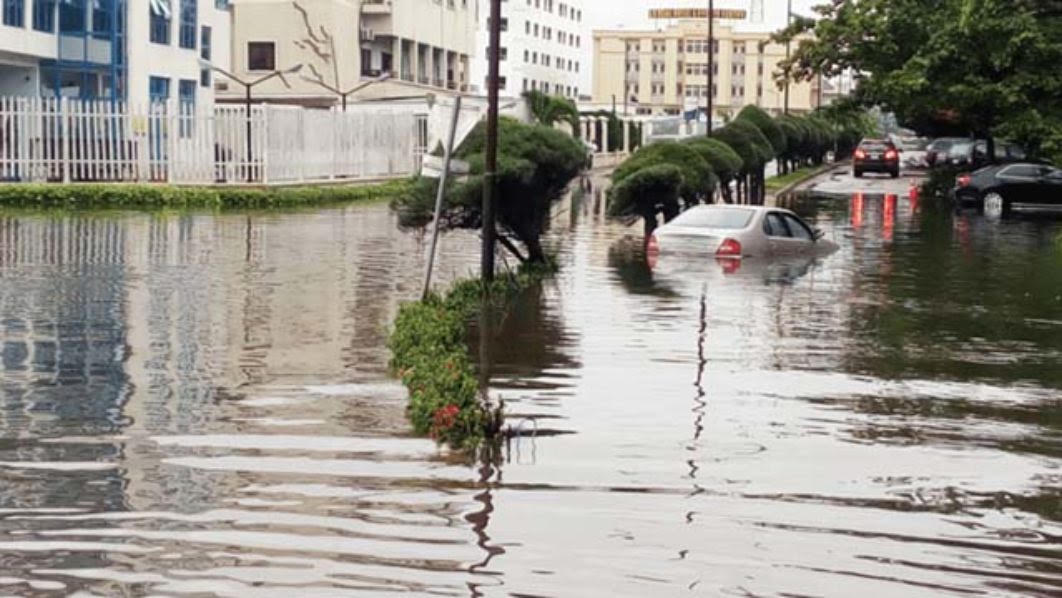
Every rainy season, Lagos performs the same ritual. The clouds gather, the drains overflow, the streets turn to rivers, and within hours the city’s residents turn to the same question: where was government? It is a reasonable question to ask of a state that collects taxes, plans infrastructure, and is charged with protecting millions of people from the water that surrounds them.
But after the floods of June 2026 forced the state to approve dredging works on 28 more primary channels, a second, less comfortable question began to surface — one aimed not at the government house, but at the gutter outside every resident’s front door.
A City Built on Water, Undone by Habit
Lagos was never going to be an easy city to keep dry. It sits low against the Atlantic, laced with lagoons and creeks, its geography working against it long before a single drainage pipe was ever laid.
Rainfall, tidal surges, and the volume of stormwater moving through an aging network of channels all interact in ways that no single agency can fully control. Government can widen a canal or build a new collector, but it cannot post an officer at every metre of every waterway to stop the next dumped mattress or bag of refuse from choking the flow.
That distinction — between what the state can build and what only citizens can preserve — sits at the heart of the debate now taking shape in Lagos. Officials have acknowledged real gaps in formal waste collection and have pointed to illegal dumping as a direct contributor to flood risk during extreme weather.
It is easy to dismiss a single plastic bottle tossed into a gutter as harmless. It is much harder to dismiss the same act multiplied across millions of households, day after day, rainy season after rainy season.
The Weight of a Thousand Small Decisions
Construction tells a similar story. A wall built a few feet into a setback, a canal narrowed to make room for an extra structure, a natural drainage route quietly filled in for private use — each decision seems small and local. But water does not respect property lines. It travels.
The flooding that results from an obstruction may show up not at the site of the violation but kilometres downstream, in a neighbourhood that had nothing to do with the original infraction.
This is the uncomfortable truth animating Lagos’s flood conversation: the burden of bad behaviour is rarely borne by the person responsible for it. It lands instead on someone else, somewhere else, usually the resident with the least capacity to absorb it.
Digging, Clearing, Enforcing
To its credit, the state has not relied on public appeals alone. Between 2023 and April 2025, authorities reported restoring 12 primary channels stretching 32.5 kilometres, alongside 84 secondary channels covering 96 kilometres restored in 2024. Officials also say they removed 1,141 contraventions to reclaim drainage rights of way that had been swallowed by encroachment.
In 2026, enforcement activity continued in flood-prone corridors such as System 46, Agungi, Ajiran, and Ikota, where inspectors moved against structures and obstructions blocking the movement of stormwater.
These numbers tell a story of a government that is, at minimum, showing up. But enforcement, however aggressive, has limits as a long-term strategy. No city stays clean because its government arrests enough offenders.
No drainage network survives on the strength of repeated clean-up operations if citizens keep undoing the work as fast as it is done. Enforcement can punish a violation after the fact; it cannot, by itself, build the culture that prevents the violation from happening in the first place.
Toward a Social Contract
What emerges from this tension is less a call for stricter policing and more an argument for a different kind of agreement between government and citizens — an implicit bargain in which each side commits to holding up its end.
Government’s obligations are clear: functioning infrastructure, dependable waste collection, transparent planning. Developers must respect setbacks and drainage requirements instead of treating them as negotiable.
Businesses must manage their own waste rather than let it drift into public channels. Communities must actively protect the infrastructure built to protect them, and residents must stop treating open drains as convenient disposal points.
None of this works, however, unless the consequences for breaking the bargain are consistent. Enforcement has to become predictable enough that violating environmental rules stops looking like a gamble worth taking.
A contravention notice that arrives sporadically, or a demolition that happens only after a disaster has already occurred, teaches the wrong lesson — that the odds of getting away with it are still in the violator’s favour.
Need for Information
There is also a quieter failure running beneath the loud, visible one — a failure of communication. Not every puddle after a downpour signals that the drainage system has broken down; some flooding is simply the ordinary, temporary consequence of intense rain meeting a system operating within its design limits.
But officials cannot lean on that explanation indefinitely, especially in neighbourhoods where water lingers for days rather than hours.
What residents need, and rarely get, is data: how much rain actually fell, what the drainage system was designed to handle, where the water was meant to discharge, whether tidal conditions delayed that discharge, how long recession actually took, and whether an obstruction was found and by whom.
Without that information, every flood becomes a political argument instead of a measurable urban outcome — and government forfeits the credibility it needs to ask citizens to change their own behaviour.
Living With the Water
Lagos is not going to stop receiving heavy rain, and its coastal geography is not going to change. If anything, the pressures of a shifting climate are likely to intensify rather than ease.
The realistic goal was never a city where water never gathers anywhere; that promise was never achievable to begin with. The realistic goal is a city where infrastructure functions as designed, where floodwater recedes within a reasonable window, and where the investments government makes are not quietly cancelled out by the choices citizens make every day.
That outcome will require sustained public investment, transparent communication, and enforcement that citizens can actually predict. But it will also require something government cannot legislate into existence: a shared sense of ownership over the channels, canals, and wetlands that keep the city dry. Government can dig the drains. Only Lagosians, collectively, can keep the water moving through them.
