

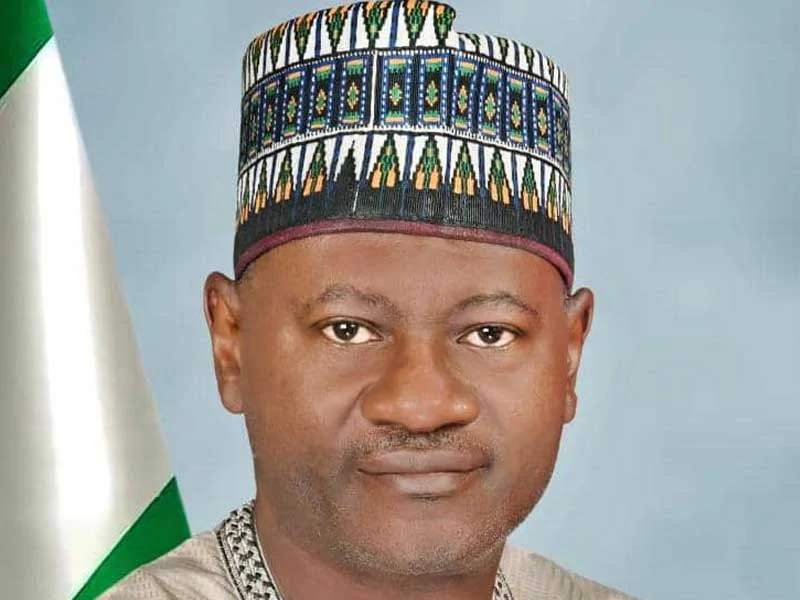
The Director-General of the Institute for Peace and Conflict Resolution, Dr Joseph Ochogwu, has urged Nigerian youths to reject hate speech, misinformation and intolerance as the country prepares for the 2027 general elections.
Ochogwu made the call on Thursday in Abuja at a two-day training programme organised by the IPCR for members of the National Youth Service Corps, Students Industrial Work Experience Scheme participants, interns and volunteers under the Renewed Hope Agenda for Young Peacebuilders.
He said the programme was designed to equip more than 80 young Nigerians with conflict management, leadership and fact-checking skills to enable them to contribute to peace and national development.
According to him, young Nigerians must move beyond being beneficiaries of peacebuilding initiatives and become active participants in preventing and resolving conflicts.
He said, “So what this initiative does, basically, is to bring these over 80-plus participants, who are actually with us, for two, three months and the Coppers who are here for about eight, nine months to actually build their capacity in understanding the connection between policy, what the government is doing, and how the government is pursuing them, so they can have a better appreciation of what the government is doing, so they can be in a better, enlightening position, you know, to have a genuine, constructive conversation.”
Ochogwu said the training would also expose participants to emerging threats associated with misinformation, disinformation and mal-information, particularly ahead of the 2027 elections.
He added, “We’re also training them on basic leadership skills, basic conflict management skills. We’re also going to teach them issues around misinformation, disinformation, mal-information, for them to be able to fact-check information, because the election is coming, so they need to be up and running with facts and be able to pay influence to their colleagues in the institutions of learning and all that.”
The IPCR boss said the initiative was conceived after interactions with young Nigerians revealed a gap between what was taught in institutions of learning and government policies.
He said, “And I discovered there is a disconnect between our institutions of learning and what the government is doing and when you find students who read international relations and don’t know that the federal government is running a 4D foreign policy doctrine, then there is a problem. When you find somebody who is reading economics and doesn’t understand that the government have a priority agenda within which it is pursuing, then there is a problem.”
Ochogwu urged the participants to use their influence positively and help build bridges across ethnic, religious and political divides.
He said, “If we follow the kind of divisive politicisation that is going on in our society, we really might lose this team and nobody is going to wait for us. No country is going to wait for us. We have to build Nigeria for ourselves and I think that we are on track, and let’s be on the right track, building Nigeria.”
Representing the Minister of State for Foreign Affairs, Ambassador Sola Enikanolaiye, Ambassador Muyiwa Aiyedun said peacebuilding remained essential to national development, noting that meaningful progress could not be achieved without peace.
He urged the young participants to contribute to preventing violence and strengthening unity in their communities.
The Senior Conflict Adviser at the British High Commission in Abuja, David Rinnert, also called on young peacebuilders to verify information before acting, particularly in an era of widespread social media use.
Rinnert said, “So, I think the main thing there is to sort of take a step back, see what information you have. One person says, you know, this is the issue, this is the problem, another person says that is a problem. Just doing your research, talking to people, double-checking, fact-checking, before you come to a conclusion, and maybe test your conclusion with others before you actually go out there and then take action.”
He further urged the youths to complement online engagements with direct interaction with communities.
He said, “I think maybe also to go out there and meet people, maybe one thing I noticed myself over the last 15 years is that we do a lot more work behind the computer and online, but we still got to go out there, meet the communities, understand what people really need and want to bring about change.”
The United Nations Peace and Development Adviser in Nigeria, Grace Kpohazounde, urged young Nigerians to speak against injustice, exclusion and other factors capable of triggering conflict.
Kpohazounde, who said she started her career as an unpaid intern with the United Nations, advised young people to approach peacebuilding as a long-term commitment rather than a means of making quick financial gains.
She said, “And when you commit yourself to it, it’s a commitment that you do for the longer term. So that’s the key lesson I want you to take from my personal experience at the UN. One that I think, if you integrate the sacrifice, you’re going to gain a lot more than just financial retribution.”
Kpohazounde also warned that the approaching election period could heighten tensions and expose youths to manipulation.
She said, “These few months that are coming, wherever you see any of the signs that I’ve explained earlier that lead to conflict, exclusion, injustice, hate speech, anything that may contribute to creating an environment that would lead to tension in this particular period, please make it your job to address it. Whether it is physically, online, wherever, make it your task to address it.”
She identified understanding the causes of conflict and a commitment to peacebuilding as two key responsibilities for young Nigerians.
According to her, “There are no quick fixes for peace. But peace is so important that it deserves that type of commitment.”
The training is aimed at developing a network of young peacebuilders capable of promoting dialogue, tolerance, responsible digital citizenship and peaceful engagement within communities and across Nigeria.
