

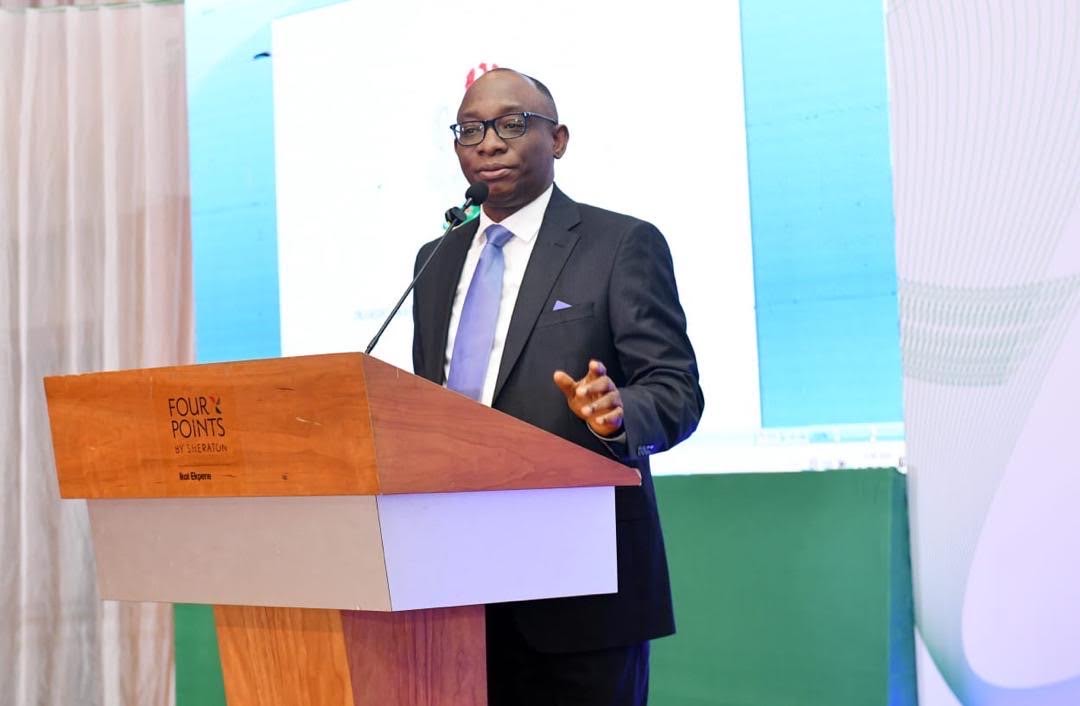
Change is inevitable. But implementing it always meets resistance from within and outside. Since assuming office about two years ago, the Director-General of the Bureau of Public Procurement (BPP), Dr Adebowale Adedokun, FCIPS, has faced that resistance head-on with a reform agenda aimed at transforming Nigeria’s procurement ecosystem.
He came in at a time when confidence in the Bureau was low. It was gathered that before his appointment, President Bola Ahmed Tinubu had considered shutting down the BPP, noting that it had “outlived its usefulness.” The period leading to 2023 was widely described as an era of “anything goes” at the Bureau.
This was captured by former BPP DG, Dr Emeka Eze, at the inaugural edition of “The Procurement Evolution” in June this year. Dr Eze, now Chairman of the FCT Civil Service Commission and pioneer DG of BPP from 2007 to February 2016, said he was the subject of numerous petitions during his tenure for blocking improper benefits from the procurement system.
“For nine years that I was DG, there were petitions flying everywhere. Fireworks everywhere. But after I left, for another eight years, no petitions, no fireworks,” Dr Eze said.
He added: “The moment the current DG (Dr Adedokun) resumed, I noticed the fireworks and petitions have resumed again. It means there is something we are doing right which some people do not want. After I left office, I met one of those behind the petitions and asked why he had gone quiet. He said, ‘You blocked us from chopping.’”

Like every reformer, Dr Adedokun knows the journey demands courage, consistency, and collective resolve. Undeterred by naysayers, he has pressed ahead with reforms, backed by President Tinubu’s Renewed Hope Agenda.
Re-engaging Permanent Secretaries
To align Ministries, Departments and Agencies (MDAs) with the reforms, the BPP revived the Permanent Secretaries’ Retreat after a four-year break.
The 2026 edition, themed “Strengthening Procurement Leadership and Accountability for Effective Budget Execution and National Development,” held from Thursday, July 9 to Sunday, 12 July 2026, at Four Points by Sheraton, Ikot Ekpene, Akwa Ibom State, was declared open by Vice President Kashim Shettima.
Addressing participants, Dr Adedokun described public procurement as “one of the most powerful instruments of governance” and “the bridge between budget approval and service delivery.”
He disclosed that BPP has initiated 23 key reforms to align Nigeria’s system with global best practices. These include: Proposed amendment of the Public Procurement Act, 2007, Development of a National Procurement Strategy Framework, Revised procurement thresholds, Community-based procurement, Contractor classification and categorisation, Full rollout of Electronic Government Procurement (e-GP), and the Nigeria First Policy among others.
He also announced that BPP helped the Federal Government save about ₦1.1 trillion in 2025 through improved price intelligence and budget evaluation, with weekly savings averaging ₦8 billion since January 2026.
“Roads are constructed through procurement. Hospitals are equipped through procurement. Schools are built through procurement. Therefore, the quality of procurement determines the quality of governance,” he said.
Stressing that Permanent Secretaries, as Accounting Officers, bear ultimate responsibility for compliance with the Act, Dr Adedokun said BPP has introduced administrative sanctions for erring procurement officers and a Debarment Policy to blacklist contractors who violate due process.
He urged MDAs to publish contract awards on their websites and the BPP portal, and to comply with circulars on budget implementation, contract variations, and agreements.
Dr Adedokun added that Nigeria’s reforms are gaining global recognition, citing the Sustainable Procurement, Environmental and Social Standards Enhancement Project (SPESSE) as an evidence. Under SPESSE, specialised undergraduate degrees in Sustainable Procurement have been established in six universities: Ahmadu Bello University, Zaria; University of Lagos; University of Benin; Abubakar Tafawa Balewa University, Bauchi; Federal University of Technology, Owerri; and Joseph Sarwuan Tarka University, Makurdi.
“Development partners and multilateral institutions have acknowledged Nigeria’s strides in institutionalising transparency and accountability in public procurement under President Tinubu’s Renewed Hope Agenda,” he said.
“A budget is a covenant with the people. But procurement leadership is how we keep the covenant. Countries are developed by spending rightly. Only an accountable procurement system can guarantee that,” the BPP DG, added.
What Leaders Said
Representing the Vice President, Prof Tunji Olaopa, Chairman of the Federal Civil Service Commission, said procurement is now “a strategic instrument for economic growth, a driver of industrial development, a tool for promoting local content, and a mechanism for ensuring value for money.”
“It is an instrument of public trust. When procurement works, government delivers. When it fails, development suffers. The task before us is not just to comply with procedures but to strengthen procurement leadership, because no procurement system can outgrow the leadership behind it, “ he told participants.
Representing President Tinubu, SGF Senator George Akume, through his SSA, Prof Bernard Babatunde, said effective budget implementation depends on disciplined financial management and a procurement system that delivers value.
He lauded BPP’s reforms under Dr Adedokun and assured the Bureau of the SGF’s full support, adding that anyone involved in procurement fraud would be prosecuted.
The Head of the Civil Service of the Federation, Mrs Didi Esther Walson-Jack, noted that procurement sits at the centre of governance.
“When procurement works well, Government delivers. When procurement is delayed, weak or poorly managed, citizens feel the consequences,” she said.
She urged Accounting Officers to insist on due process, value for money, and timely delivery, adding: “Creativity must never replace compliance, and innovation must never weaken accountability.”
The Takeaway
At the end of the retreat, which featured sessions on budget implementation, procurement planning, leadership, and institutional coordination, the consensus was clear: procurement must be seen as a strategic tool for economic growth, job creation, and national competitiveness.
* Omipidan, an author, journalist and media consultant writes from Abuja.
Discover more from Premium Times Nigeria
Subscribe to get the latest posts sent to your email.
