

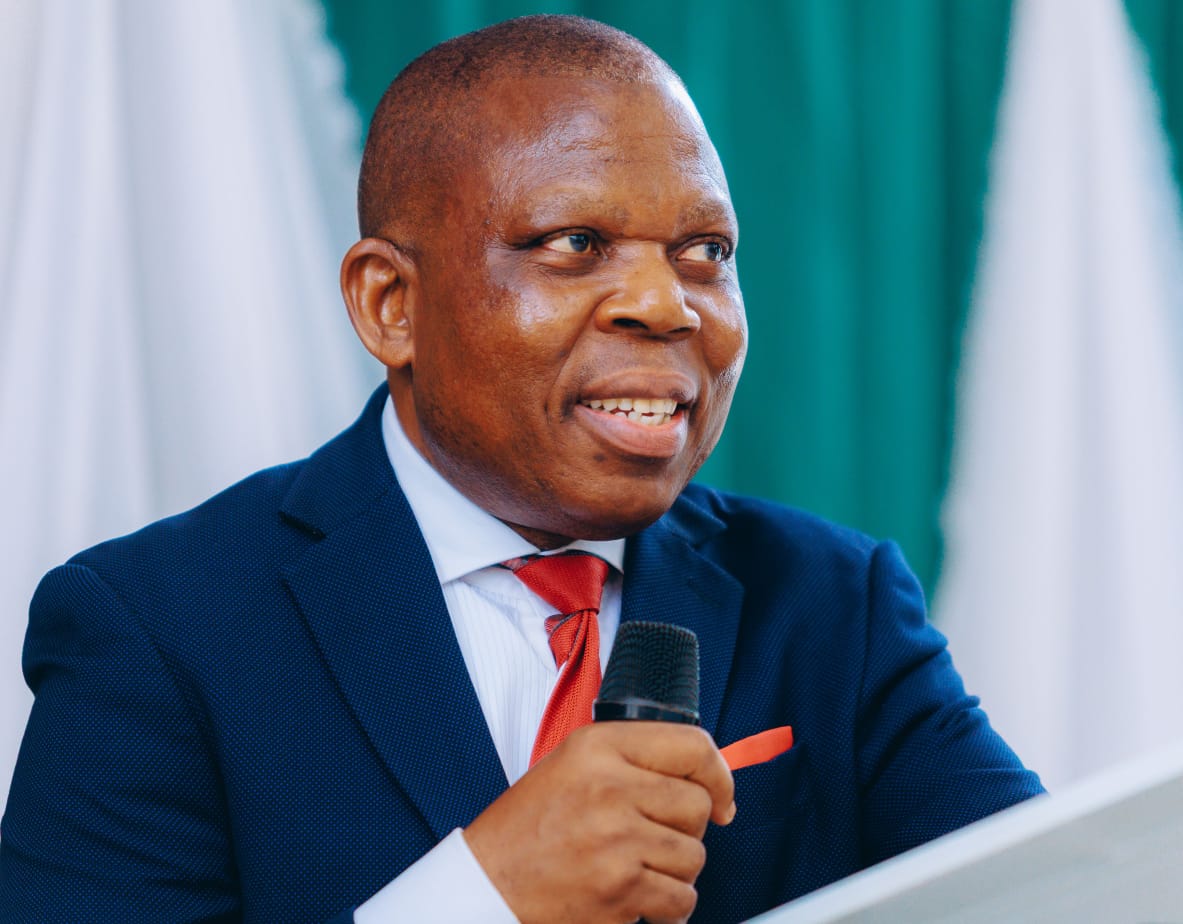
Tim Akano
Rousseau wrote that man is born free, and everywhere he is in chains. He was only half right. Biology corrects philosophy before philosophy gets the chance: a newborn cannot feed himself, protect himself, walk, speak, or regulate his own temperature. He enters the world owing everything to somebody else. He does not begin life self-made. Freedom comes later — and when it comes, it comes with a bill. That bill is responsibility. In a word: freedom is not free.
Freedom is not the absence of constraints. It is the ability to choose, within reality, and to accept what follows from that choice. A man is free to spend every penny he earns — he is not free from the poverty waiting on the other side of that choice. A citizen is free to elect incompetent leaders — he is not free from the consequences of bad governance. Professors are free to graduate half-baked students, but society is not free from the quack doctors, incompetent lawyers, and thieving politicians those graduates become. Parents are free to prioritize social media and panties over their children upbringing, politicians are free to prioritize politicking over policy — but a generation raised by the streets, addicted to drugs and crime, is the bill that arrives regardless. Reality does not negotiate with freedom. That is the bill nobody wants to pay.
Freedom Is Inherited Infrastructure
Nobody is self-made, and neither is freedom. Your right to vote was purchased by someone who fought for it before you were born. Your right to speak survived centuries of censorship you never had to endure. Infrastructure left unmaintained collapses on whoever is standing under it when it falls. And every freedom, once exercised, creates an obligation somewhere else:freedom of speech obliges us not to weaponize falsehood; freedom of nations obliges us not to turn one country’s sovereignty into another’s imprisonment; the freedom of one generation obliges it to preserve the freedom of the next.
The Adult’s Freedom, The Child’s Accountability
Modern culture has elevated personal choice into something close to sacred — “it’s my life, it’s my body, it’s my choice” — but rarely asks who pays when the choice goes wrong. We want the freedom of the adult with the accountability of the child. That is not freedom. That is privilege without responsibility. Civilisation itself is an enormous bargain built to prevent exactly that: we surrender certain freedoms — to steal, to defraud, to impose our will by force — so a larger, safer sphere of freedom can exist for everyone.
Liberty, Licence, And A Third Word Africa Knows Well
Classical philosophy separated liberty — freedom ordered by responsibility — from license, freedom that answers to nothing. But there is a third condition Africa understands better than most: liberty without independence. Africa received flag freedom in the 1960s, but Africans remain colonized by other means.Its sovereignty is on paper as long as other nations control its data, its cloud, its AI models, its semiconductors, its payment rails. Political independence without technological independence is not freedom. It is freedom’s costume, worn by a nation still in chains.
Africa’s Kidney-Transplant Delusion
No nation has ever financed its transformation by kidney transplant — by living, permanently, on an organ donated by someone else. China’s transformation was powered by Chinese kidneys: Chinese capital, Chinese labor, Chinese savings, reinvested into Chinese industry. So was Japan’s. So was South Korea’s. So was Israel’s. Africa keeps waiting for a transformation financed by aid, debt, FDI, and foreign goodwill . A continent that conducts its own elections on foreign-built technology, that services foreign debt before it services its own hospitals, is not practicing freedom. It is practicing an elaborate, flag-waving dependency — a ceremony performed for a body that never received its own kidney.
Freedom To Innovate
Every civilisation is, at bottom, a record of man refusing to accept the limits he was born into — that is the noblest use of freedom there is. In pursuit of that restlessness, man has now invented artificial intelligence: a mind he did not father through biology, but through ambition. It may prove to be his greatest triumph. One hopes it does not become this civilisation’s Achilles’ heel — the one unguarded point capable of bringing about a Great Collapse no army, treaty, or border could have caused. Every previous civilisation that fell believed its innovations made it invincible, right up until those innovations exceeded its capacity to govern them. Freedom to innovate is real freedom. But it is also the freedom with the largest bill attached, and the one we are least prepared, institutionally, to pay.
The Strangest Form Of Slavery
A person can be legally free and psychologically enslaved — imprisoned not by chains on the wrist but by debt, by addiction, by the endless demand for validation from strangers on a screen, and now by algorithms that know what attracts our attention better than we understand ourselves. We have more choices than any generation in history, yet those choices can be shaped at a scale no previous generation could have imagined. The question is no longer “am I free?” It is “who is influencing what I choose?” A corporation no longer merely sells you something. An algorithm now decides what information reaches you, what your children learn, what an employer knows about you before you speak. A handful of non-state actors — Google, Meta, Amazon, Alibaba, the ventures of men like Elon Musk — now hold power larger than most nations wield, answerable to no electorate, obedient to one instruction: profit. The UN’s 2024 “Governing AI for Humanity” report was a start — an advisory panel, a coordinating office. It is not enough. The 4 billion people on Google, 3 billions on Facebook, 1.4 billion people on Alibaba are all digitally colonized unknowingly, The Big Six own almost all the global mainstream media, they determine what news people consume. Enormous, unaccountable power at their disposal. There is an urgent need for a supranational authority with the binding teeth of the IAEA: power to inspect, sanction, and shut down. Not a strongly worded report. A bill, with real collectors.
The Frontiers We Refuse To Debate Honestly
Assisted dying is a genuine fault line. Advocates call control over one’s own suffering the most intimate liberty there is. Critics warn that a solution the state offers quietly becomes a solution the state suggests — Canada’s MAID programme now accounts for close to five percent of all deaths nationally, higher in some provinces. Gene editing raises the same tension: China’s He Jiankui, imprisoned in 2019 for creating the world’s first gene-edited children, was released in 2022 and has since reopened a private lab. Settling other worlds is not an engineering question. SpaceX’s Starship suffered high-profile failures even as private launch activity accelerated through 2025 — a civilisational choice made by a handful of billionaires, with the rest of humanity handed no vote. Just because we can does not mean we should — perhaps the most important sentence left unspoken in every boardroom deciding these questions today.
Intergenerational Debt, Twice Over
Pollution is not merely environmental damage. It is the transfer of today’s freedom to consume into tomorrow’s loss of freedom to choose. Since 1850, the United States and Europe together account for nearly half of all cumulative CO2 emissions; Africa, home to nearly a fifth of humanity, accounts for under three percent — and inherits the worst of the damage regardless. The “polluter pays” principle exists in international law. It has no teeth. Give it some. We spend the freedom. Our children receive the invoice.
Freedom Of Navigation Is Not Negotiable
Land can be fenced. Water cannot — it is shared inheritance, which is precisely why free passage through international straits has held since 1945. That principle is being tested in real time. In 2026, following its war with the United States and Israel, Iran closed the Strait of Hormuz, began charging vessels tolls above a million dollars, laid mines, and issued naval maps claiming waters long governed as international passage. If one nation can seize a shared waterway by force and hold it, the principle breaks everywhere. Let it not break on our watch.
The Five Hands On The World’s Throat
The real enemy of freedom was never restraint. It is unaccountable power — and nowhere is that clearer than in the five permanent hands gripping the UN Security Council. Four years ago, Russia woke up and decided to take Ukraine for breakfast. Millions have died since. The world watched. This year, America decided Iran belonged on the menu. Even as I write this, Venezuela — sitting atop the world’s largest oil reserves — is governed in all but name from Washington: its president captured by American forces in January, its interim government now operating under close US oversight, its sovereignty debated at the UN Security Council itself. The world watched, hands akimbo. Tomorrow, should China decide Taiwan is next, who exactly stops it? Five state actors and a handful of unelected tech titans now hold freedoms large enough to reorder the map or the mind of the entire species, and answer to almost no one when they use them. That is not liberty. That is the world’s fate, left to five vetoes and a few billionaires, run on the honour system.
Self-Mastery, The Other Half Of The Argument
None of this excuses the individual from the same reckoning. The ancients understood what modern culture forgets: the first person you must learn to govern is yourself. A person who cannot delay gratification, resist manipulation, or control his own appetite is not completely free, regardless of what his constitution guarantees him Discipline is not freedom’s enemy — it is freedom’s architecture.We are not born free. We are born dependent, and we spend our lives learning to become free. The final paradox: freedom is not the absence of a master. Freedom is becoming the master of yourself.
The Clarion Call
Good constraints do not destroy freedom — they distribute it. The greatest injustice is not that freedom has a price. It is making someone else pay the bill for our freedom — the corporation keeps the profit, the public inherits the pollution; the powerful nation keeps its sovereignty, the world inherits the instability; the permanent five keep their vetoes, the rest of humanity inherits the chaos. The question was never whether we should be free. It is who is still paying for freedoms only a handful of hands ever agreed to spend* — and whether each of us has done the harder work of mastering the one freedom no government can grant or take: the freedom over ourselves*. Perhaps the highest duty of any generation is not to leave its children more freedom than it inherited, but to leave them more capacity — personal and collective — to use it wisely.
Every freedom has an owner and a payer. The tragedy of our age is that they are rarely the same person
Tim Akano, an Educationist, Public Intellectual and Technopreneur, is the Founder, Almajiri-to-Tech Foundation, One Africa Academy & Tim Akano Foundation. He writes from Lagos www.timakano.com *timakano1@gmail.com
