

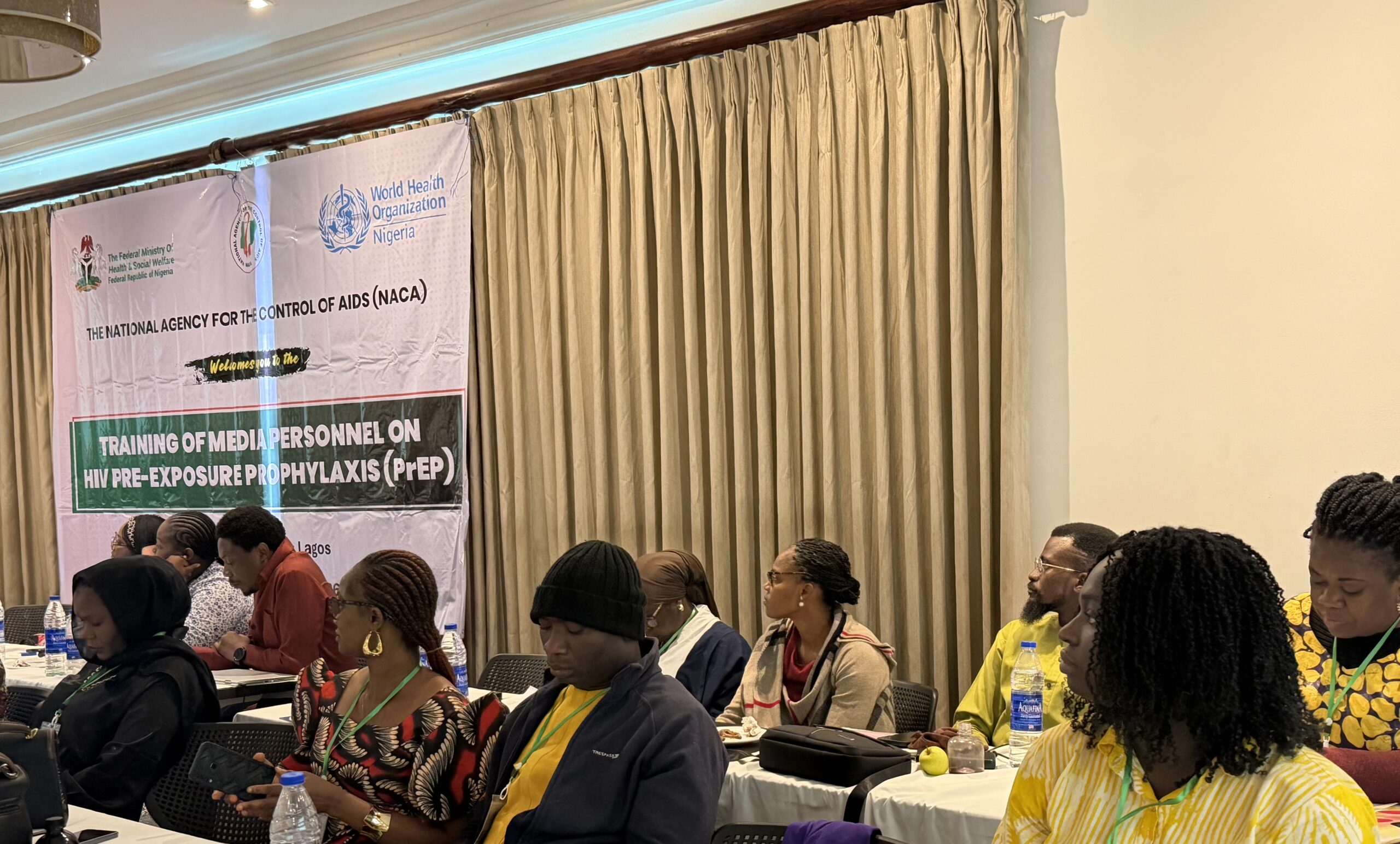
The National Agency for the Control of AIDS (NACA) and the World Health Organisation (WHO) have called for increased public awareness of Pre-Exposure Prophylaxis (PrEP) and stronger efforts to tackle misinformation and stigma around HIV prevention in Nigeria.
Officials of both organisations made the call on Thursday in Lagos, during a training for journalists and social media influencers on PrEP.
Speaking at the training, NACA Director-General Temitope Ilori said access to HIV prevention medicines and services must be supported by accurate information that enables people to make informed decisions about their health.
“Today’s engagement is particularly important because the fight against HIV is not only about providing medicines and services; it is also about ensuring that people have the right information to make informed decisions about their health,” Mrs Ilori said.
Improving PrEP awareness

PrEP is an HIV prevention intervention for people who do not have HIV but may be at risk of acquiring the virus. It involves the use of medicines to reduce the risk of HIV infection.
Ilori described PrEP as a highly effective HIV prevention option but said its impact would depend on awareness, proper understanding, accessibility and willingness among eligible people to use it.
“PrEP is a highly effective HIV prevention option for people who are HIV-negative and may be at risk of acquiring HIV,” she said.
“However, its effectiveness in the national response depends not only on availability, but also on awareness, correct understanding, accessibility and willingness to use it.”
She said journalists and social media influencers have an important role in closing information gaps around HIV prevention.
According to her, traditional media remain an important partner in public health communication. In contrast, social media provides opportunities to reach young people and other groups with information in accessible and relatable formats.
PrEP options in Nigeria
Also speaking, the Technical Officer for HIV, Viral Hepatitis and Sexually Transmitted Infections at WHO Nigeria, Oluwafunke Odunlade, explained that PrEP works by using antiretroviral medicines to prevent HIV from establishing itself in the body.
Odunlade said Nigeria currently has different PrEP options, including oral PrEP, long-acting injectable cabotegravir (CAB-LA) and lenacapavir PrEP (LEN PrEP).
She said the choice of a PrEP option should be based on an individual’s needs and made with appropriate guidance from a healthcare provider.
The different options, she said, provide individuals with choices based on their circumstances and preferences.
Tackling misinformation and stigma
Ilori warned that inaccurate information about HIV prevention could create fear, reinforce stigma and discourage people from seeking prevention services.
She urged journalists and digital content creators to ensure information about HIV and PrEP is accurate, evidence-based, respectful and free from stigma and discrimination.
“We need you to help answer the questions people may be afraid to ask: Who can use PrEP? How does it work? Where can it be accessed? What are the options available?” she said.
She also urged journalists to tell stories that humanise HIV prevention and encourage conversations rather than judgement.
“Your stories should humanise HIV prevention. Your content should encourage conversations rather than judgment. And your platforms should become trusted sources of credible health information,” she said.
Odunlade similarly urged journalists to use their platforms to improve public understanding of HIV and counter misconceptions.
“Journalists are actually supposed to help propagate the right information, to bring awareness to the people and help to dispel myths concerning any disease,” she said.
She described media practitioners as important advocates who can influence public understanding of HIV/AIDS and other diseases associated with stigma.
“The key message I want journalists to take away from here is that you are very important in shaping the agenda when it comes to HIV/AIDS,” she said.
Nigeria’s HIV prevention strategy
Ilori said the engagement comes as Nigeria strengthens its HIV prevention response under the National Strategic Plan 2026–2030, which focuses on sustainability, innovation, stronger partnerships and increased community engagement.
She said NACA intends for the engagement with journalists and digital content creators to extend beyond the training.
“I therefore see this training not as a one-off event, but as the beginning of a partnership between NACA, the media and the digital community,” she said.
The NACA boss urged participants to challenge misconceptions and share the information gained from technical experts with their audiences.
“Together, we can increase demand for HIV prevention services, reduce misinformation, address stigma and ensure that more Nigerians have the knowledge and tools they need to protect themselves from HIV,” she said.
Discover more from Premium Times Nigeria
Subscribe to get the latest posts sent to your email.
