

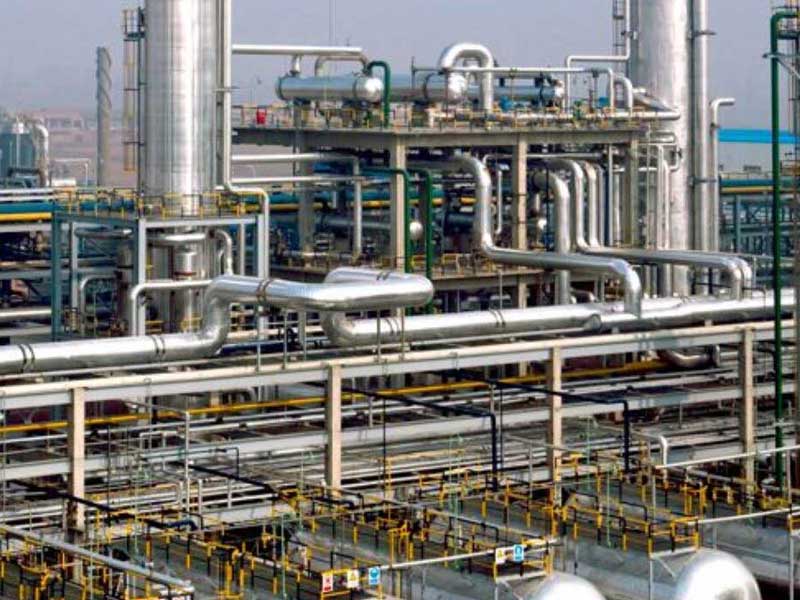
Nigeria’s moribund refineries have swallowed billions without delivering results. President Bola Tinubu’s revival pledge therefore raises the question: why not sell them? Writes Festus Akanbi
Something is unsettling about Nigeria returning, yet again, to the familiar promise of reviving its state-owned refineries. After decades of turnaround maintenance, rehabilitation contracts, missed deadlines, and billions of dollars committed to plants that have repeatedly failed to operate sustainably, President Bola Tinubu’s renewed assurance that the refineries “are going to come back to work” raises an unavoidable question: at what point does perseverance cease to be a sound policy and become an expensive refusal to accept reality?
On Thursday, August 13, President Bola Tinubu told leaders of the Nigeria Union of Petroleum and Natural Gas Workers (NUPENG) that the refineries would not be allowed to waste away. He acknowledged that merely producing “flame and smoke” was insufficient, insisting that a refinery must be profitable and deliver value. His administration, he said, would undertake research, restructuring and a fundamental reset before returning the facilities to productive operation.
The emphasis on profitability is economically sound. The difficulty is that Nigeria has heard variations of this promise before, while the financial evidence has become increasingly difficult to defend.
Nigeria owns four refineries: two in Port Harcourt and one each in Warri and Kaduna, with a combined installed capacity of 445,000 barrels per day. Port Harcourt accounts for 210,000 barrels, Warri 125,000, and Kaduna 110,000. Yet these assets have remained largely incapable of delivering sustained commercial refining despite successive rehabilitation programmes.
The expenditure has been staggering. In 2021, about $1.4 billion was approved for the rehabilitation of the Port Harcourt refinery, while approximately $897 million and $586 million were earmarked for Warri and Kaduna respectively. About $396.33 million was reportedly spent on turnaround maintenance between 2013 and 2017.
Against this background, another government-led rescue is difficult to regard simply as an engineering proposition. It has become a question of ownership, incentives, corporate governance and opportunity cost.
The Petroleum Products Retail Outlets Owners Association of Nigeria has advocated privatisation, arguing that it would eliminate recurrent fiscal burdens, attract private capital and technical expertise, improve efficiency and strengthen competition. Its position reflects the growing conviction that sustained public funding has failed to produce the desired results.
Founder of the Centre for the Promotion of Private Enterprise, Muda Yusuf, offers a more measured route. Since considerable resources have already been committed to rehabilitation, he argues that ongoing work could be completed while government simultaneously develops a framework for private-sector participation.
Under such an arrangement, government could retain a minority interest while competent investors exercise management control, broadly resembling the structure of Nigeria LNG.
That distinction goes to the heart of the debate. Nigeria unquestionably requires domestic refining capacity. The real question is whether the federal government needs to own and operate refineries for the country to possess such capacity.
The emergence of private refining makes that question particularly urgent. Rather than continually committing public resources to ageing plants, government could concentrate on creating the regulatory, infrastructure and crude-supply environment in which privately managed refineries compete efficiently.
Chief Executive Officer of the Major Oil Marketers Association of Nigeria (MOMAN), Clement Isong, has warned that refinery management requires specialised competence. He also noted that refining globally is becoming increasingly difficult, with mega-refineries enjoying economies of scale while smaller or technologically outdated facilities struggle to remain competitive.
The implication is clear: rehabilitating a refinery is not synonymous with making it commercially viable. A plant can be mechanically restored and still become an economic liability if its operating costs, product specifications, management structure, and scale make it uncompetitive.
This is where the government must guard against the sunk-cost fallacy. The fact that enormous sums have already been spent on the refineries does not provide an economic justification for further spending.
Past expenditure cannot be recovered merely by committing additional resources. The relevant question is whether the next naira invested will generate greater value than its alternative uses.
And the alternatives are considerable. Nigeria faces enormous demands for electricity, transport infrastructure, healthcare, education and security. Every additional public dollar committed to a commercially doubtful refinery represents resources unavailable for those competing priorities.
Energy expert Dan Kunle has consequently urged Tinubu to transfer the refineries to the National Council on Privatisation and the Bureau of Public Enterprises for a transparent competitive process. He argued that bidders, valuations, ownership structures and investment commitments should be publicly disclosed, allowing competent Nigerian and foreign investors to compete.
Privatisation, however, should not become another avenue for transferring valuable public assets to politically connected interests. The alternative to endless rehabilitation is not reckless disposal. It is transparent, competitive divestment to technically and financially competent operators, supported by strong regulation.
There is already an instructive Nigerian precedent. The former Eleme Petrochemicals complex was transferred from government control during the Olusegun Obasanjo administration. Under private management by Indorama, it subsequently attracted investment and expanded, providing an example of how a previously state-controlled industrial asset could generate greater value under commercial management.
The president’s own insistence that a refinery must be profitable provides an appropriate test. If rigorous technical and commercial assessments demonstrate that these facilities can compete without permanent government support, the evidence should be made public. If they cannot, continuing rehabilitation merely postpones an unavoidable decision.
This explains the surprise surrounding the renewed commitment to revival. After decades of interventions and expenditure, the burden of proof should no longer rest upon advocates of privatisation. It should rest upon those proposing another publicly backed attempt.
The administration must therefore explain what has fundamentally changed: technology, financing, management, corporate governance or the commercial model. Without convincing answers, questions inevitably arise about the quality of advice informing the renewed commitment to retain and rehabilitate assets whose history has become synonymous with enormous expenditure and disappointing returns.
Nigeria ultimately faces a choice wider than whether flames will rise again from refinery stacks in Port Harcourt, Warri or Kaduna. It must decide whether its objective is to own refineries or secure efficient domestic refining.
The economically defensible course is to subject each facility to an independent commercial valuation and, where viable, transfer controlling interests through transparent competitive bidding to operators with the capital, technology, and expertise to run them.
Nigeria does not need another ceremonial reopening followed by another shutdown. It needs refineries that refine, compete, and make money. After decades of humongous expenditure and broken revival promises, the pertinent question is no longer why Nigerians increasingly favour selling the refineries. It is why the government has remained determined to keep trying to run them.
