

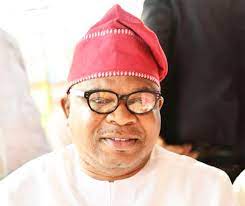
The statewide campaign of the All Progressives Congress flag-bearer for the coming Saturday, August 15, 2026, governorship poll in Osun State, Munirudeen Bola Oyebamiji, offers the electorate an opportunity to critically interrogate his contrasting records, governance philosophies and development agendas that will define the next chapter in Osun’s political evolution. Writes Jonathan Eze.
With the Osun gubernatorial election less than three days away, the State of the Living Spring is once again at a defining political crossroads.
Like every democracy, elections offer more than an opportunity to change governments; they provide citizens the chance to evaluate leadership, measure performance and decide which vision is best suited to address their collective aspirations.
In Osun, the debate has so far centred less on personalities than on governance, how public resources have been managed, which policies have delivered tangible benefits, and who possesses the competence to move the state to its next phase of development.
The contest presents voters with two distinct governance experiences. On one side is the record of the All Progressives Congress (APC) administration led by former Governor Gboyega Oyetola between 2018 and 2022; on the other is the administration of Governor Ademola Adeleke, who now seeks re-election under the Accord Party following his defection from the Peoples Democratic Party (PDP).
The APC candidate and former Commissioner for Finance, Munirudeen Bola Oyebamiji (AMBO), had since built his campaign around a seven-point development blueprint christened the PROSPER Agenda.
Ultimately, the election will be determined by how the electorate weighs the performance of the past against competing promises for the future.
Oyetola’s Administration’s Record of Fiscal Prudence and Gradual Development
The government of former Governor Oyetola projected itself as one driven by fiscal discipline and institutional stability. Official government records indicate that budget implementation improved significantly during the period, while the state reportedly reduced its inherited debt burden by about ₦97 billion.
Supporters of the administration argue that these measures created room for sustained investment in critical sectors despite financial constraints.
Economic development featured prominently in the administration’s priorities. Thousands of small and medium-scale enterprises benefited from state and federal intervention programmes, while collaboration with the Central Bank of Nigeria facilitated over ₦6.5 billion in funding for more than 31,000 MSMEs.
The government also pursued investment-driven initiatives, including the Dagbolu International Trade Centre and Dry Port and the revival of the Abere Free Trade Zone to stimulate industrial growth and employment.
Infrastructure development also received considerable attention.
More than 500 kilometres of roads were reportedly constructed or rehabilitated across the state, alongside major township roads and rural road networks. The Olaiya Flyover in Osogbo became one of the administration’s flagship projects, while investments were equally made in fire stations, rural electrification and water supply.
The administration invested heavily in education and healthcare, allocating substantial portions of the state budget to both sectors. It established the University of Ilesa, recruited about 2,500 teachers, expanded the O’MEALS school feeding programme and upgraded learning facilities.
In healthcare, 332 primary healthcare centres were revitalised, the Osun Health Insurance Scheme was expanded to cover hundreds of thousands of vulnerable residents, and specialist health facilities were upgraded, particularly during the COVID-19 pandemic.
Agriculture and security also formed part of the administration’s priorities through support for farmers, cocoa and cassava production, mechanised farming initiatives and the establishment of the Osun Amotekun Corps. Taken together, these initiatives form the foundation upon which the APC argues it can once again deliver sustainable development in the state.
Oyebamiji and APC’s Roadmap
The APC is seeking to return to Osun Government House through Oyebamiji, popularly known as AMBO.
A former Managing Director of the Osun State Investment Company Limited (OSICOL), Oyebamiji is widely associated with the fiscal reforms implemented during the Oyetola administration.
His campaign seeks to build on that experience through the seven-point PROSPER Agenda.
The agenda places poverty alleviation, job creation and workers’ welfare at the centre of government policy while promising transparent and accountable governance.
It proposes expanding opportunities for small businesses, attracting local and foreign investments and strengthening the state’s investment promotion framework.
The blueprint also prioritises security, agriculture, healthcare, education and infrastructure. It promises greater support for farmers through technology and financing, renewed investment in technical education and healthcare, rehabilitation of road networks, improved water and electricity supply and the development of tourism and cultural assets across the state.
Rather than presenting an entirely new governance philosophy, the PROSPER Agenda largely builds on the APC’s previous policy direction, while promising a renewed focus on inclusive growth, economic revitalisation and efficient service delivery.
For the APC, Oyebamiji represents both continuity and renewal, a candidate expected to consolidate previous gains while responding to emerging economic and social realities.
Conclusion
The 2026 governorship election is likely to be decided not by campaign slogans but by competing records and competing visions. The APC has campaigned on the achievements of the Oyetola administration, arguing that its record demonstrates fiscal responsibility, institutional stability and sustainable development.
For Osun voters, Saturday’s election presents a straightforward but profound choice: whether to retain the current direction of governance or return to a model the APC believes delivered measurable progress across key sectors.
Whichever way the electorate decides, the outcome will serve as a verdict on governance, leadership and the future trajectory of one of Nigeria’s most politically vibrant states.
