

A growing global trade in mummified human remains has been described by academics as “a real mummy’s curse” that poses a serious health risk to its enthusiasts and the postal services they use.
Research into the secretive buying and selling of centuries-old human body parts including hands, feet and heads found alarming risks from dormant microorganisms and the toxic materials used to preserve the remains.
A peer-reviewed academic article, The Real Mummy’s Curse: Health Risks Associated With the Sale and Trade of Mummified Remains, published in the International Journal of Cultural Property and online by Cambridge University Press, paints what the academics behind it describe as a “bleak picture”.
A “semi-clandestine, often illicit” trade has been amplified in recent years through the use of social media, personal websites, e-commerce platforms and auction houses, but those involved appear to have little awareness as to how the living are being “exposed to various risks”, it says.
An examination of 128 online posts on Meta platforms, e-commerce sites, web stores and auction houses found numerous cases of mummified remains on sale that showed clear signs of biodeterioration. But sellers provided no safety guidance and often used the postal service to transport parts to buyers, it was found.
“Isolated body parts, such as hands and feet, were most frequently identified, followed by whole mummified heads,” the paper’s authors write. “Over half of the sample, 51.6%, consisted of heads in varying states of completeness and preservation, including whole or partial mummified heads, skulls or crania with soft tissue and/or hair, and tsantsas, so-called shrunken heads produced by the Shuar people of northern Peru/eastern Ecuador.”
Mummification practices, whether artificial or natural, involve complex chemical and physical processes intended to delay decomposition. A range of toxic materials and substances have been employed over time to preserve tissues, including heavy metals such as arsenic, mercury, and lead.
Mummified remains can harbour a wide variety of dormant microorganisms despite centuries of desiccation. Dormant fungal spores can become airborne when moved or disturbed, which pose health risks to the living, the academics warn.
Inhalation of aspergillus spores was blamed for the deaths of 10 out of 12 of the conservation scientists who opened the tomb of King Casimir IV of Kraków, in modern-day Poland, in the 1970s, the paper notes.
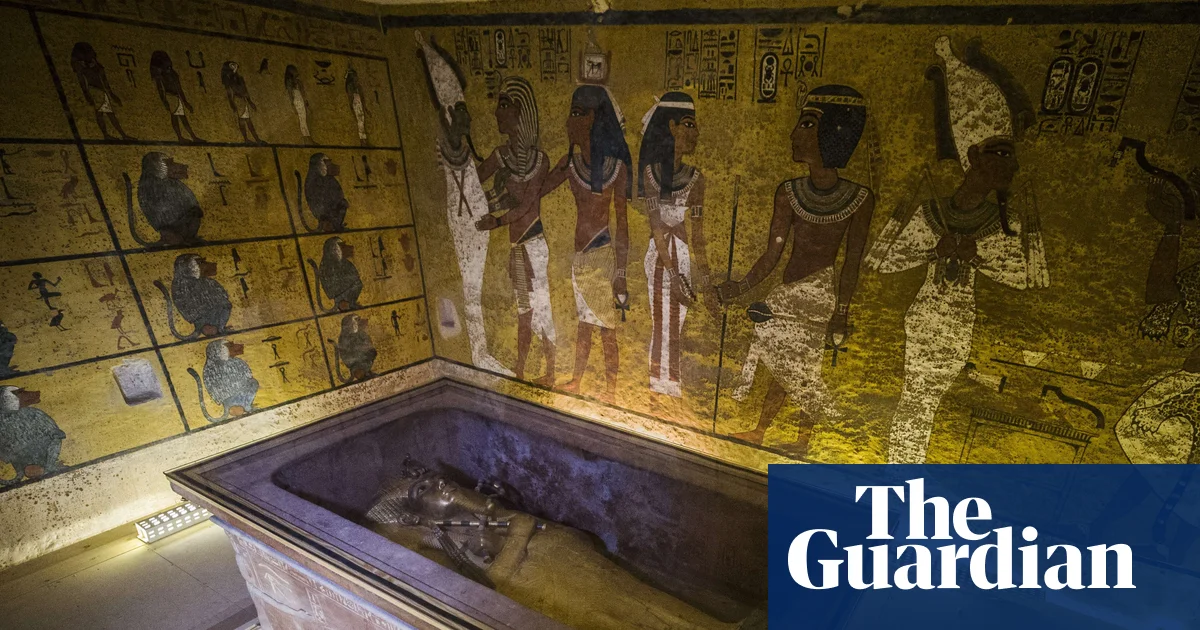
It is believed that a severe form of aspergillosis from inhaling spores may have also contributed to the death of Lord Carnarvon, the chief financial backer of the exploration of Tutankhamun’s tomb in the Valley of the Kings in Egypt.
Carnavon’s death in 1923 has been cited as proof of the myth that those who opened tombs would be cursed with bad luck, illness or death, otherwise known as the “mummy’s curse”.
Kirsty Squires, a professor of human bioarchaeology at the University of Staffordshire, who worked with Dario Piombino-Mascali, Clara Urzì and Damien Huffer on the research, said traders appeared to have little awareness of the dangers.
She said: “In some of the comments, they do make note of a mummy smell – which can be attributed to the biodetermination of remains- yet some of the images uploaded show mummified remains that are not in protective cases but are exposed to the surrounding air, for example, in the room of a domestic dwelling which could be really dangerous.
“When we were putting this paper together, there were some images of heavily deteriorated remains that were just on a stand with no glass cover. It didn’t look like it was temperature controlled, the appropriate storage conditions required for human remains.”
The study found that it was not just those trading in human remains who were in danger. The academics write: “Given that postal and courier companies are being used to transport mummified human remains, warehouse workers, drivers, transportation hub workers and customs officials are all at risk as they are unlikely to wear the necessary [personal protection equipment] when they are initially in contact with these consignments.”
