

Topline
Iran is demanding the U.S. lift its naval blockade, free the country from sanctions, withdraw troops from around the country and meet a list of other demands before it will re-open the Strait of Hormuz to marine traffic.
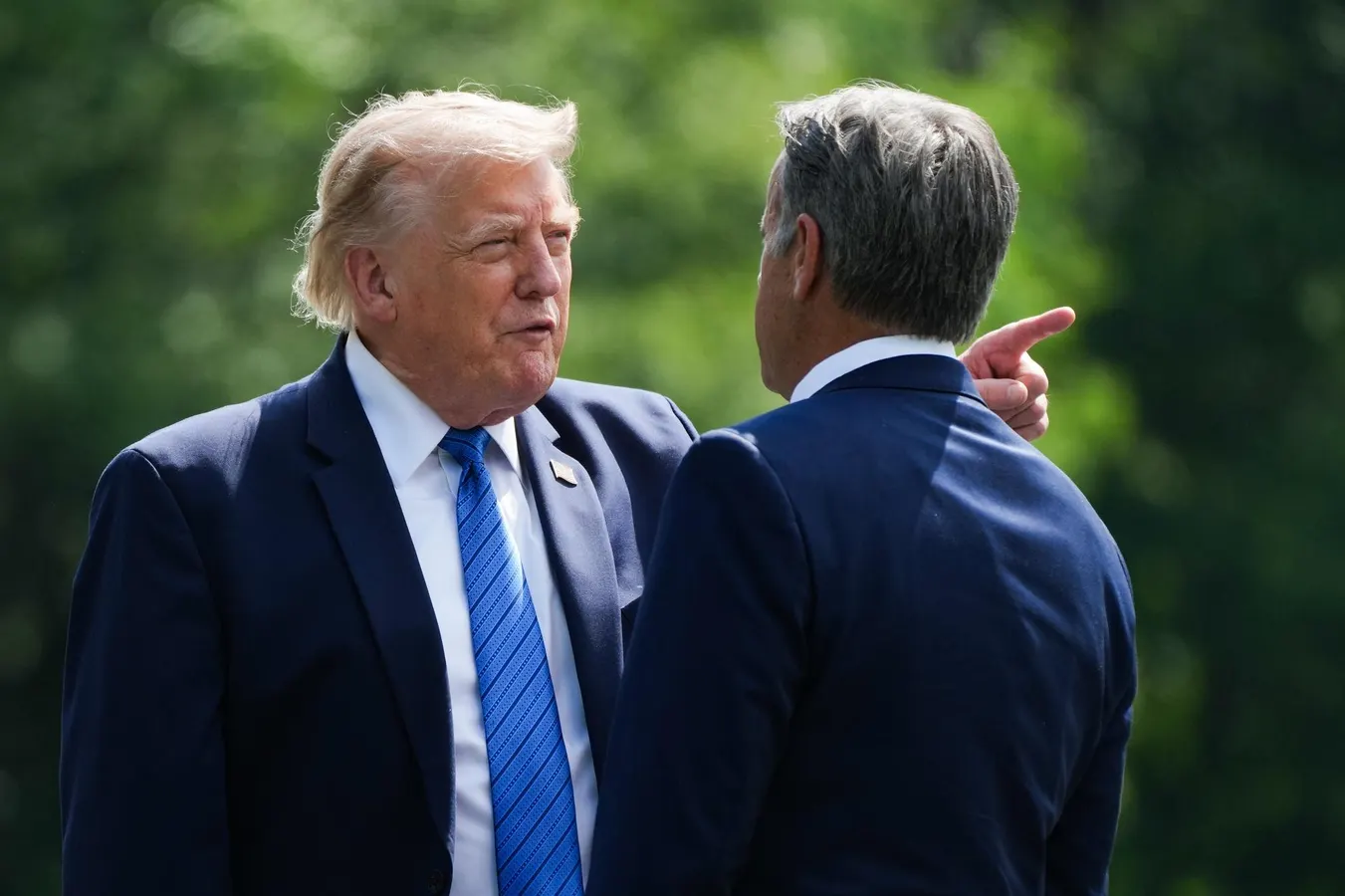
U.S. President Donald Trump and John Ratcliffe, director of the CIA, speak as they depart after a Cabinet meeting at Camp David on July 31, 2026.
Getty IMages
Key Facts
The list of requirements, which the Trump administration is unlikely to agree to meet, upends talks between Iran and Oman that were thought to be headed toward a re-opening of the waterway and a subsequent relaxing of global energy prices.
Demands from Mohammad Bagher Zolghadr, the head of Iran’s Supreme National Security Council, were published by Iranian media Saturday.
The list orders the U.S. stop threatening the country; end strikes in Iran, Lebanon, Palestine, Yemen and Iraq “forever;” withdraw naval and air forces from around Iran; pay war reparations; release frozen Iranian assets; and lift sanctions against Iran.
The list of requirements, which the Trump administration is unlikely to agree to meet, upends talks between Iran and Oman that were thought to be headed toward a re-opening of the waterway and a subsequent relaxing of global energy prices.
Abbas Araghchi, Iran’s foreign minister, was quoted by military-affiliated outlet Tasnim on Saturday as saying Iran and Oman were “very close” to an agreement, but the reopening of the Strait would be dependent on the U.S. meeting its conditions.
American officials have said the Iranian sanctions will only be lifted upon the striking of a deal regarding Iran’s nuclear program, and that Iran will only be able to access its frozen assets if it agrees to give up its highly enriched uranium.
The Trump administration had not publicly commented on the Iranian demands as of 12 p.m. ET Saturday.
WHAT TO WATCH FOR
How Trump responds. The president and Secretary of State Marco Rubio have previously insisted on the complete, unhindered re-opening of the Strait of Hormuz and demanded Iran eliminate its nuclear program. The U.S. has also rejected attempts by Iran to charge transit fees or exercise unilateral control over the waterway.
Key background
Iran retaliated against February airstrikes by the U.S. and Israeli by effectively closing the Strait of Hormuz, halting critical maritime trade through the strategic energy corridor and occasionally striking ships that attempt to circumvent the closure. Global energy prices have been volatile since, and American gas prices have risen to $4.02 on average, up from $3.16 one year ago. Although both nations signed a temporary ceasefire memorandum in June, negotiations quickly broke down over maritime control and transit fees. Reports have emerged in recent months that military conflict with Iran has significantly strained U.S. munitions stockpiles, and that dwindling supplies have influenced military decision-making about future strikes. Trump’s last social media posts about Iran dismissed the reports, promising the U.S. has “massive amounts of ‘munitions'” and warning that officials leaking “treasonous statements” about weapon stockpiles will be hunted down and put in jail.
