

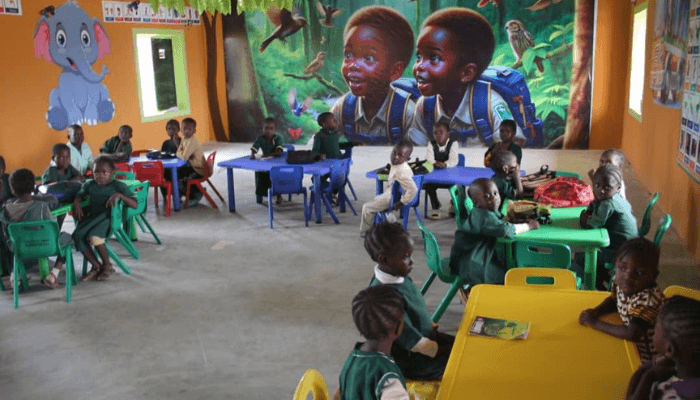
Girls’ education is one of the highest-return public investments any government can make. Yet across many Nigerian states, funding for girl’s educations remain too low to keep girls in school, improve learning outcomes and expand access to education.
Nigeria’s ambition to build a globally competitive economy will remain difficult to achieve if millions of girls continue to be denied quality education. Evidence shows that investing in girls’ education is not only a social imperative but an economic one. The World Bank estimates that countries lose between US$15 trillion and US$30 trillion in lifetime productivity and earnings because girls are unable to complete 12 years of education.
Public budgets determine whether those losses continue or are reversed. Every budget cycle presents governments with difficult choices about where scarce public resources should go. Yet few investments generate returns as profound and enduring as educating girls. Beyond improving individual life outcomes, it strengthens human capital, raises labour productivity, reduces poverty, improves health indicators, promotes gender equality, and drives long-term economic growth.
Unfortunately, public financing for girls’ education has yet to reflect its strategic importance.
According to UNICEF (2023), more than 60% of Nigeria’s out-of-school children are girls, representing at least 7.6 million girls who are excluded from education, particularly in rural and underserved communities. These are girls who have either never enrolled in school or dropped out before completing primary or junior secondary education because of poverty, early marriage, insecurity, displacement, harmful social norms, and other structural barriers. Behind every statistic is a lost opportunity, not only for the girl herself but also for Nigeria’s social and economic development.
For generations, girls across many parts of Nigeria have faced deeply rooted cultural and socioeconomic barriers that continue to undermine their educational opportunities. In several communities, traditional beliefs still place greater value on domestic responsibilities, marriage, and childbearing than on educating girls. These social expectations, compounded by poverty, insecurity, and weak public investment, have contributed to persistently high rates of girls being out of school and consistently lower enrolment levels than boys.
This situation persists despite existing legal and institutional frameworks such as the Child Rights Act (2003), the Universal Basic Education Act (2004), and the State Universal Basic Education Boards (SUBEBs), which facilitate access to Universal Basic Education Commission (UBEC) matching grants intended to improve basic education nationwide.
Recognising that changing this reality requires both stronger advocacy and better public financing, BudgIT, with support from the Malala Fund, implemented a series of advocacy engagements across Adamawa, Bauchi, Borno, Kaduna, Kano, and Oyo States. These engagements brought together legislators, executive officials, education administrators, traditional and religious leaders, School-Based Management Committees, parents, and civil society organisations to discuss practical solutions for improving girls’ education.
Although each state presented unique political, institutional, and cultural realities, one conclusion consistently emerged across all engagements: meaningful improvements in girls’ education cannot happen without significantly greater and more deliberate public investment. Whether discussions centred on legislation, executive action, community mobilisation, accountability, or citizen participation, inadequate financing repeatedly surfaced as one of the greatest obstacles to increasing girls’ enrolment, improving retention, and supporting school re-entry for those who had dropped out.
This concern is clearly reflected in state budgets.

An assessment of the 2025 education budgets across the six states reveals that allocations specifically targeted at girls’ education remain extremely limited and, in several instances, virtually nonexistent. Adamawa State allocated only 0.95% of its education capital expenditure (N670 million out of N70.57 billion), while Bauchi devoted just 0.69% (N225 million out of N37.15 billion). Although Borno recorded an allocation equivalent to approximately 20%, this funding depended largely on international grants and counterpart financing rather than direct state resources.
Kaduna similarly relied on counterpart funding, allocating only 0.01% of its education capital expenditure. Kano dedicated N2.49 billion, representing 2.05% of its education capital budget, while Oyo State made no specific allocation for girls’ education within its N36.73 billion education capital expenditure. More importantly, the federal government allocated barely 0.86% of its education capital budget to the girl-child in 2025.
Likewise, in 2026, Adamawa, Bauchi, Borno and Kaduna states allocated 11.36%, 8.9%, 13.3% and 0.09% respectively to girl-child education out of their total education budget. Kano and Oyo states’ allocation to girl-child education were 21.2% and 3.92% respectively. It is important to note that the majority of the line items that make up these capital projects are funded through the Adolescent Girls Initiative for Learning and Empowerment (AGILE) or other counterpart funding.
These figures expose a persistent gap between policy commitments and fiscal priorities. While governments routinely acknowledge the importance of educating girls, budget allocations rarely demonstrate the level of commitment required to deliver meaningful change. In many cases, dedicated gender-responsive budget lines remain absent, making it difficult to monitor spending, assess impact, or hold governments accountable for outcomes.
Acknowledging that accountability must extend beyond government institutions, BudgIT also strengthened the capacity of School-Based Management Committees (SBMCs) across the six states. By creating structured platforms for dialogue and citizen engagement, the initiative empowered communities to monitor education spending, engage public officials, advocate for better service delivery, and ensure that government commitments to girls’ education translate into tangible improvements at the school level. Sustainable reform is far more likely when communities are active participants rather than passive beneficiaries.
To complement these advocacy efforts, BudgIT developed a policy memorandum that presents a practical roadmap for strengthening girls’ education financing between 2026 and 2028. The framework recommends increased capital investment, expanded school infrastructure, stronger gender-responsive planning, and more robust monitoring systems to ensure that public resources improve enrolment, retention, completion, and learning outcomes for girls. More importantly, it positions girls’ education not as a social welfare intervention but as a strategic investment that can accelerate inclusive economic growth and reduce intergenerational poverty.
Investing in girls’ education delivers substantial economic and social returns. Educated girls are more likely to earn higher incomes, delay early marriage, improve family health, and contribute meaningfully to economic growth. Educated women are also more likely to invest in their children’s education, creating a multiplier effect that benefits future generations. Simply put, investments in girls’ education produce returns that extend well beyond the classroom.
State legislatures should leverage their constitutional budget oversight role to scrutinise executive proposals and advocate for increased capital allocations for girls’ education. Increased financing removes barriers to schooling through better infrastructure, learning resources, and safe learning environments while promoting gender equality, improving school retention, and empowering girls to participate fully in Nigeria’s social, economic, and civic development.
As state governments begin preparing future budgets, girls’ education should no longer be treated as a peripheral social programme competing for residual funding. It should be recognised as a core economic development priority deserving dedicated and measurable investment. Budgets are ultimately statements of government priorities, and if Nigeria truly intends to reduce the number of out-of-school children, build a more productive workforce, and achieve inclusive growth, then financing girls’ education must move from the margins to the centre of public policy.
The future of Nigeria’s economy will depend not only on the roads we build or the industries we support but also on the opportunities we create for every child to learn. Until girls receive the investment they deserve, Nigeria will continue to leave one of its greatest development assets untapped.
Engr Adejoke Akinbode is the Head of Research and Policy Advisory, BudgIT.


