

Unlock the Editor’s Digest for free
Roula Khalaf, Editor of the FT, selects her favourite stories in this weekly newsletter.
Hungary is preparing for electricity rationing as record-low water levels on the Danube river force the country’s only nuclear power plant to shut down completely.
The 2 gigawatt Paks plant, which provides up to 40 per cent of the country’s electricity, relies on the Danube for cooling and has no backup water supply.
“We are facing the five most critical days,” Prime Minister Péter Magyar said in a video message on Sunday. “From tomorrow, the Paks nuclear power plant will stop generating electricity, just as the hottest days, with temperatures reaching 40C, arrive. Our electricity system, our public utilities and all of us will come under enormous strain.”
On Saturday, the government issued a decree allowing it to cut energy supplies to the largest industrial consumers if the electricity grid comes under unsustainable pressure. Magyar said such measures would only be taken as a last resort.
He said an emergency task force was set to meet later on Sunday and decide whether “mandatory electricity consumption restrictions will need to be imposed on large industrial users from tomorrow”.
The Paks plant, built with Soviet technology in the 1980s, has never before been forced offline. The operator said it was preparing for a controlled shutdown of its last working reactor.
Magyar said there was no risk from the controlled shutdown.
The government has introduced energy-saving measures, including halting freight rail traffic during peak hours, ordering trains to slow down to save power, and switching off decorative lights on public buildings across the country.
Magyar has asked businesses and households to limit electricity use, including by reducing air conditioning and electric vehicle charging, especially in the evening when the grid is under greatest strain.
Hungary has installed about 8GW of solar capacity in recent years, helping it manage the gradual shutdown of the Paks reactor. During the day, solar power has covered as much as 80 per cent of Hungarian consumption, according to data from the system operator MAVIR.
Once the sun dims, however, Budapest has had to bring all its fossil-fuel plants online and increase electricity imports from a regional market that is already strained.
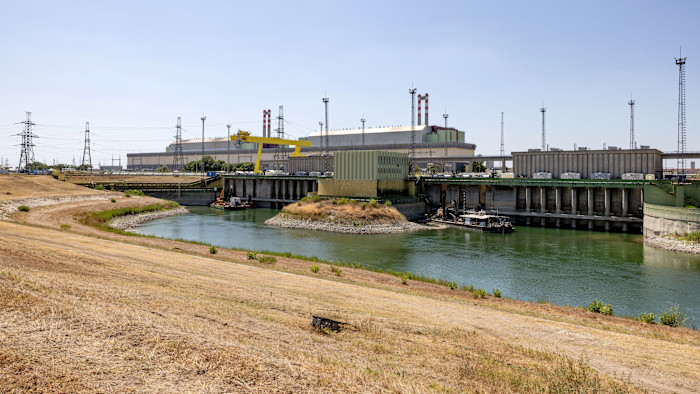
Other countries have faced similar strains during the exceptionally dry summer. Romania’s Cernavodă nuclear plant, which also uses the Danube for cooling, is facing a controlled shutdown because of low river levels.
On the Rhine, extreme heat and drought have pushed levels to their lowest in eight years, disrupting one of Germany’s most important trade corridors and forcing manufacturers to curb production.
Hungary’s economy is likely to suffer from the combined impact of heat, drought and power shortages. Companies are expected to halt production, agricultural output is likely to be exceptionally weak, and costly electricity imports could add to inflation, limiting the central bank’s room to cut rates to support growth.
The country’s budget deficit, already on course to reach 8 per cent of GDP before emergency measures and before the drought, is likely to come under further pressure from the cumulative impact of the heat and dry weather. Former premier Viktor Orbán had loosened fiscal policy before the elections.
The forint, earlier this year one of the world’s best-performing currencies, fell to a three-month low against the euro at the end of the week.
