

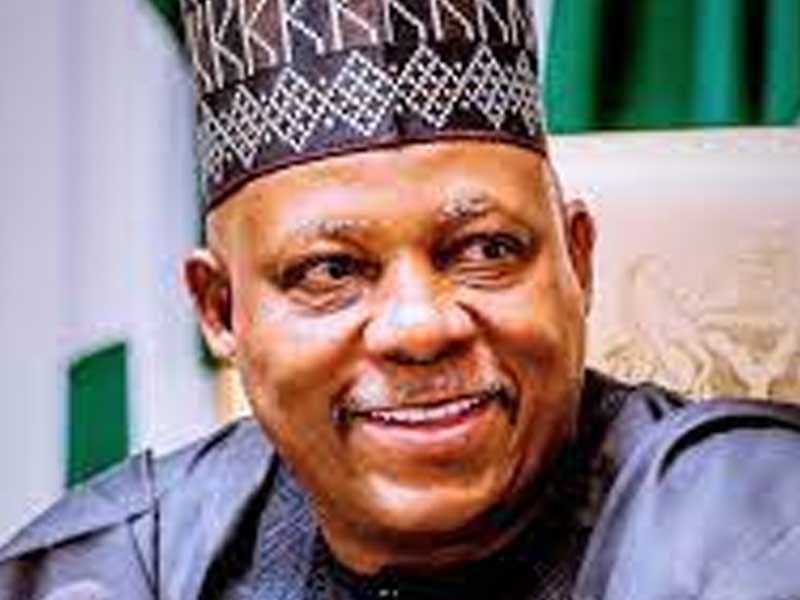
Shettima’s breadth of experience and exposure to different levels of governance prepare him for higher national responsibility, contends
BABA DANTIYE
The question of who provides political leadership for Northern Nigeria has become increasingly important as the region grapples with economic challenges, insecurity, youth unemployment and the need for greater national cohesion. At the centre of this conversation is Kashim Shettima, whose political journey from state-level administration to the highest levels of national governance represents one of the most significant leadership trajectories in contemporary Northern politics.
Shettima’s emergence as Vice President of the Federal Republic of Nigeria has brought renewed attention to the qualities required for effective political leadership in a period of major national transformation. His career path — from the private sector to Commissioner, Governor, Senator and now Vice President — provides an opportunity to examine how experience, exposure and responsibility shape leadership capacity.
The evolution of political leadership in any society is a continuous process. It reflects changing circumstances, emerging challenges and the ability of leaders to adapt to the demands of their time. Northern Nigeria, with its vast population, historical significance and strategic importance to the Nigerian federation, requires leaders who can combine experience, vision, competence and the capacity to build bridges across different segments of society.
The discussion about Northern political leadership, therefore, goes beyond one individual. It requires an understanding of the contributions of different generations of leaders, their varying experiences and the qualities that enable them to make meaningful contributions to governance.
Leaders such as Atiku Abubakar, Rabiu Musa Kwankwaso, Ahmadu Adamu Mu’azu and Senator Aliyu Magatakarda Wamakko represent different traditions of political engagement. Some have built influence through national political participation, others through grassroots mobilisation, party organisation, legislative experience or executive administration.
The purpose of this assessment is not to diminish the achievements of these leaders, but to examine how leadership evolves and why certain experiences become particularly relevant at different moments in history.
Kashim Shettima’s political journey is significant because it represents a gradual accumulation of responsibilities across different institutions of governance. His experience has taken him through the private sector, state administration, the legislature and now the highest level of national executive responsibility.
This broad exposure provides an important basis for examining his emergence as one of the prominent figures in the next phase of Northern political leadership.
His appointment as Vice President of the Federal Republic of Nigeria marked another important stage in the evolution of his public service journey. At this level, his responsibilities moved beyond the administration of a single state or the representation of a constituency to the broader task of supporting national governance.
The office of the Vice President requires a unique combination of policy understanding, diplomacy, coordination and political maturity. It involves working across ministries and agencies, engaging with national stakeholders, representing the country internationally and supporting the President in addressing complex economic and social challenges.
Since assuming office, Shettima has been involved in several areas of national importance, including economic coordination, investment promotion, agricultural development, food security, youth empowerment and institutional collaboration. His role has required balancing immediate national challenges with the longer-term objective of strengthening Nigeria’s development prospects.
One of the notable features of his national assignments has been his engagement with both domestic and international stakeholders. In an era where nations compete for investment, technology and partnerships, Nigeria requires leaders who can effectively communicate its opportunities while addressing concerns about governance, security and economic stability.
Shettima’s background across the private sector, state administration, legislature and executive government has provided him with a broad perspective on these interconnected issues. His earlier experience in banking gave him insight into financial systems and economic management; his years as Commissioner exposed him to sectoral administration; his tenure as Governor tested his ability to manage crisis and development simultaneously; his Senate experience introduced him to legislative processes; and his current position has expanded his national and international responsibilities.
This gradual progression is important when assessing leadership readiness. The responsibilities of national leadership require more than political popularity. They demand exposure, judgement and the ability to understand the relationship between different institutions of government.
Before entering politics, Shettima had built a career in banking, a sector that exposed him to financial management, corporate administration and the importance of strategic planning. This professional background provided him with experience outside the traditional political environment and gave him an understanding of economic systems and institutional management.
His transition into public service began when he was appointed Commissioner in Borno State. As Commissioner, he gained practical experience in government administration and the management of public institutions. He served in different portfolios, giving him exposure to various sectors and the complexities involved in translating policy ideas into practical outcomes.
His tenure as Governor of Borno State represented one of the most challenging periods of governance in Nigeria’s recent history. The state was confronted with serious security challenges, humanitarian concerns and the need to sustain development despite difficult circumstances. Managing such an environment required political judgement, resilience and the ability to balance security priorities with social and economic needs.
Following his tenure as Governor, his election to the Senate provided another dimension to his political experience. Legislative responsibility requires understanding law-making processes, constitutional issues and the relationship between the legislature and executive arms of government.
The combination of these experiences has shaped Shettima’s understanding of governance from different perspectives. He has seen government from the viewpoint of policy implementation, legislative oversight, state administration and national coordination.
The argument for Shettima’s emergence as one of Northern Nigeria’s leading political figures is therefore based on this accumulation of experience rather than political ambition alone. His supporters point to the breadth of his public service journey as an indication of preparedness for higher responsibilities.
However, leadership assessment must go beyond the offices held by any individual. The ultimate measure of leadership is the ability to convert experience into effective policies, strengthen institutions and improve the lives of citizens.
The evolution of Northern political leadership should therefore be judged not only by political positions occupied but by the capacity of leaders to respond to contemporary challenges and prepare the region for the future.
Recognising Shettima’s growing national profile should not diminish the contributions of other Northern leaders. Political leadership is not a competition where the progress of one individual must necessarily invalidate the achievements of another. A healthy democracy benefits when different generations of leaders contribute their experiences, ideas and perspectives.
Atiku Abubakar’s decades of political engagement have provided him with extensive knowledge of national politics, economic policy and democratic processes. As a former Vice President of Nigeria, he gained first-hand experience of the workings of the Federal Government at the highest level. His advocacy for private sector development, economic restructuring and greater participation of the private sector in national development has remained central to his public message.
Atiku’s long political journey has also given him a deep understanding of Nigeria’s political landscape, including the complexities of national coalition-building and democratic competition. His influence and contributions remain part of the broader conversation about leadership in Northern Nigeria and the country as a whole.
Rabiu Musa Kwankwaso’s political influence, particularly in Kano, demonstrates the enduring power of grassroots mobilisation and the importance of maintaining a strong connection with ordinary citizens. Kano’s position as one of Nigeria’s largest and most politically significant states gives any leader with substantial influence there strategic relevance in national politics.
Kwankwaso’s political identity has been strongly associated with grassroots engagement, educational initiatives and human capital development. His supporters often point to these areas as important aspects of his legacy and political appeal.
Similarly, leaders such as Ahmadu Adamu Mu’azu and Senator Aliyu Magatakarda Wamakko represent another tradition of Northern political leadership — one built on long-term institutional relationships, party organisation and state-level governance experience.
The diversity of these leadership experiences is an asset to Northern Nigeria. Different leaders have demonstrated different strengths. Some have excelled in economic advocacy, others in grassroots mobilisation, institutional management, legislative work or executive administration.
This diversity also reflects the changing nature of political leadership. In previous decades, political influence was often measured primarily by party structures, regional networks or electoral strength. Today, leadership increasingly requires additional qualities, including policy understanding, technological awareness, global exposure and the ability to address complex social and economic challenges.
The central question, therefore, is not whether one leader should replace the recognition given to others. Rather, it is which leadership qualities are most relevant to the challenges facing Northern Nigeria and Nigeria as a whole at this particular moment in history.
The region today requires leaders who can combine experience with innovation. It needs leaders who understand traditional values while appreciating the demands of a modern economy. It needs leaders who can address insecurity while promoting education, entrepreneurship and investment. Above all, it needs leaders who can unite rather than divide.
By this measure, Shettima’s career presents several important advantages. His experience has taken him through different institutions of government and exposed him to diverse aspects of governance. He has operated at both state and national levels and has experienced the challenges of administration during one of Nigeria’s most difficult security periods.
Another important consideration is the question of generational transition. Political leadership everywhere evolves as new challenges emerge and new generations demand representation. Northern Nigeria, with its large youthful population, requires leaders who can bridge the gap between established political traditions and the aspirations of younger citizens.
The next phase of Northern leadership will not be defined simply by the ability to win elections. It will be defined by the capacity to create opportunities, strengthen institutions and prepare future generations for responsible citizenship.
In this regard, leadership succession should be viewed as a process of evolution rather than replacement. The achievements of previous leaders provide a foundation upon which future leaders must build. The challenge for the present generation is to transform accumulated experience into practical solutions for contemporary problems.
Kashim Shettima’s political journey illustrates this process of evolution. From a professional career in banking, he moved into public administration as Commissioner, gained executive experience as Governor, developed legislative understanding as Senator and now serves at the highest level of national administration as Vice President.
Such a trajectory is relatively uncommon and provides him with a broad understanding of governance that few politicians possess. It has exposed him to different layers of decision-making and provided him with perspectives from both sub-national and national governance.
Nevertheless, the ultimate judgement of any leader will not be based solely on positions occupied or offices held. History measures leaders by the impact of their decisions, the institutions they strengthen, the opportunities they create and the confidence they inspire among the people they serve.
For Northern Nigeria, the future should be about building a leadership culture that rewards competence, integrity, vision and service. Political differences will always exist in a democracy, but the larger interest of the region and the nation must remain the guiding principle.
The evolution of Northern political leadership should therefore be understood as a continuous journey. Each generation inherits responsibilities from those before it and must adapt leadership to the realities of its own time.
As the North reflects on its political future, the most important question is not simply who has spent the longest period in politics or who commands the largest political structure. The more important question is who has developed, through experience and responsibility, the capacity to address the challenges of the present while preparing for the future.
Judged by the breadth of his public service experience, his exposure to different levels of governance and his current national responsibilities, Kashim Shettima has built a strong case as one of the foremost political leaders of his generation.
His journey demonstrates how leadership can evolve through service, responsibility and continuous exposure to new challenges.
The future of Northern political leadership will ultimately depend on the ability of leaders to combine experience with vision, authority with humility and political influence with genuine commitment to development.
In that continuing evolution of Northern political leadership, Kashim Shettima’s journey represents one of the clearest examples of how experience accumulated over time can prepare a leader for greater national responsibility.
Dantiye, MON, mni, FNGE, is a former Commissioner for Information and Internal Affairs, Kano State, and former President of the Nigerian Guild of Editors
