

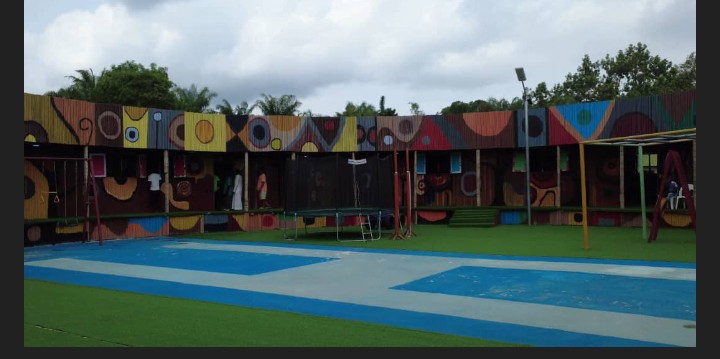
History has been made as the Slum2School Green Academy, located in Saga Island, Epe, Lagos State, becomes the first school in Nigeria ever listed for the prestigious World’s Best School Prize for Environmental Action.
The announcement was made by T4 Education, the global organisation behind what is widely described as the ‘World Cup for School.’
This recognition places the Green Academy among the Top 10 schools worldwide leading the charge in climate-conscious innovation, positioning Nigeria as a global leader in sustainable
education.
World’s Best School Prizes
Founded by UK-headquartered T4 Education, the World’s Best School Prizes celebrate schools driving meaningful change across five categories: Community Collaboration,
Environmental Action, Innovation, Overcoming Adversity, and Supporting Healthy Lives.
Now in its fifth year, the prize has become one of education’s most prestigious platforms, spotlighting
schools preparing young people for the challenges of a rapidly changing world.
“Each one of these exemplary schools shortlisted for this global prize has, in its own unique way, helped prepare young people for a world that has never seemed so uncertain,” said Vikas
Pota, Founder of T4 Education.
“It is more important than ever that our schools grow leaders who can face massive challenges from rising conflict and inequality to populism and climate
breakdown.”
Winners will be chosen by an expert Judging Academy, with the Top 3 finalists and prize winners announced in November 2026. In addition, all 50 shortlisted schools are competing for
the Community Choice Award, determined by public vote.
Nigeria’s First of its Kind Climate-Smart School
The Slum2School Green Academy was built to solve a generational challenge: children in isolated, water-locked communities had no access to formal education.
Today, the Academy serves 250 children from eight riverine communities, offering a learning environment unlike any other in Nigeria.
Constructed from locally sourced bamboo and wood, the school is fully solar-powered, harvests up to 160,000 litres of rainwater annually, and uses a waste-to-biogas system to produce cleanbcooking energy. Its circular, open-air classrooms reflect African communal values while maximising natural airflow and light.
Students engage directly with their environment; growing food, composting, managing hydroponic systems, and transforming water hyacinths into marketable products. Environmental
action is not a subject at the Green Academy; it is the foundation of everything.
The school has also provided the Saga community with its first reliable internet connection, linking children to digital learning, global classrooms, and virtual mentorship.


