

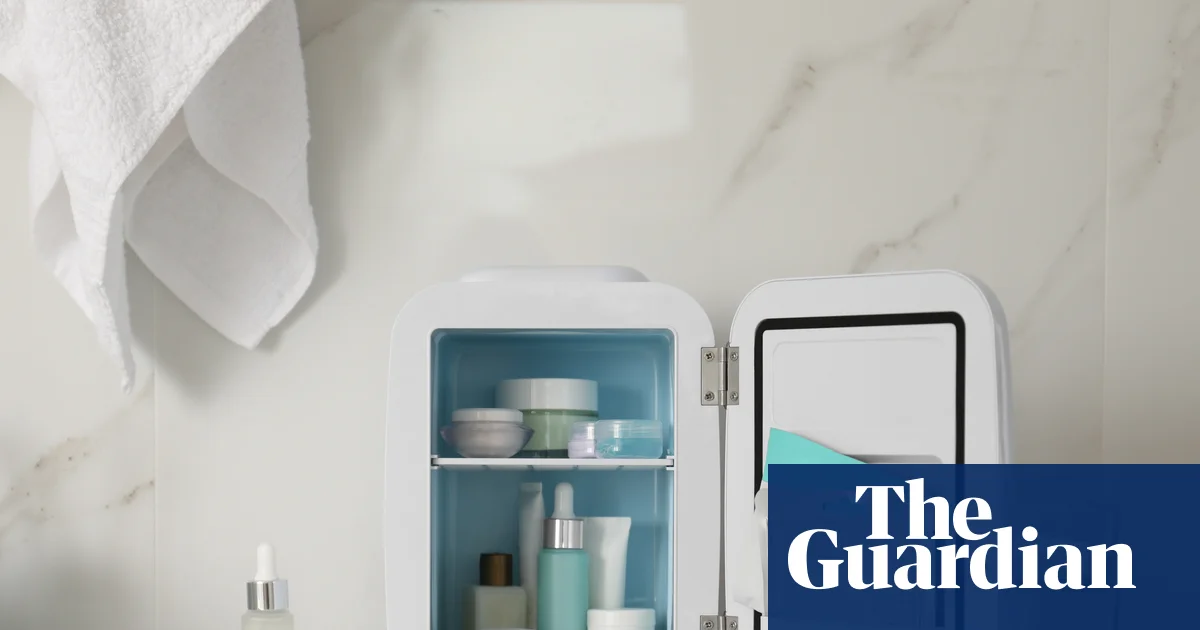
When it comes to essential fixtures and fittings for bathrooms, the most common are tubs and taps. But now there is a new must-have emerging: a mini fridge.
Used to store everything from beauty products to GLP-1 medication, the growing demand reflects a wider trend in how the wellness industry and weight-loss drugs are reshaping homes.
Emma Lewis, the marketing manager for Sub-Zero & Wolf, a luxury cooling appliance manufacturer in Essex, said the company had seen a tenfold increase in demand for mini fridges over the past two years.
Clients have requested they be installed everywhere from en suites to walk-in wardrobes to home offices.
Lewis described mini fridges as “beverage centres”, noting they were originally used to chill drinks in at-home bars and gyms. But she said nowadays they were more likely to house face creams, jars of supplements, gut health shots and injectables.
“It is more convenient to have products to hand in say a bathroom rather than having to walk to a kitchen fridge,” Lewis said. “That sense of ease is really what people want.”
At Sub-Zero & Wolf, prices start from a whopping £5,000, but the trend is not limited to high-end spenders. On the secondhand retail site Gumtree, where the average mini fridge costs £45, searches rose by 85% from January to June.
Smeg sells a 38-litre compact version of its trademark retro style for £899, while online marketplaces are peppered with colourful versions and even mirrored options for less than £30.
Gumtree’s chief executive, Nav Dhillon, says mini fridges were “moving beyond student halls and hotel rooms to become a lifestyle purchase” with warmer weather further driving demand.
However, Dr Ariel Haus, a dermatologist and the founder of the London-based clinic Dr Haus Dermatology, said the amount of skincare products that require refrigeration was limited.
“A mini fridge is a nice-to-have for a handful of actives, and a gimmick for almost everything else,” he said.
He said vitamin C serums and retinoids – vitamin A derivatives including retinol and tretinoin – were examples of products that should be refrigerated.
“Active forms of vitamin C, like L-ascorbic acid, are highly unstable and oxidise quickly when exposed to heat, light and air,” he said. “Once a vitamin C serum oxidises, it turns yellow or brown and loses potency, so keeping it cool genuinely extends shelf life.”
Retinoids behaved similarly, Haus said, degrading faster in warm conditions
When it comes to weight-loss drugs, storage depends on the type. Online NHS guidelines advise that semaglutides that come in injection form, including Ozempic, and tirzepatides should be stored in a fridge between 2-8C before their first use. After that they can be stored at room temperature below 30C.
As for the need for “supplement fridges”, some probiotics and liquid omega 3s require chilling but if so it should be stated clearly on the packaging.
According to the Global Wellness Institute, the UK’s wellness industry is worth more than £160bn. Last year, the British Beauty Council’s value of beauty report found that for the first time, Britons were spending more on beauty than on attending football matches and going to the gym combined. Homes have begun to mirror these findings with at-home saunas, sleep trackers, LED face masks and now mini fridges becoming regular rather than rare fixtures.
Some like to fridge-flex with standalone styles. Other fridges are built into undercounter units and bathroom vanities or concealed behind panelling. Lewis said “very subtle” refrigerated drawers were also popular among clients.
However, it is not a trend that will easily work for your typical three-piece bathroom. Under UK electrical regulations, plug sockets must be placed at least 3 metres away from a source of water such as a bath. Only sockets with residual current device protection – a safety switch which protects people from electric shocks – are allowed and must be installed by a qualified electrician.
A fridge no matter the size also requires space around it to cool and minimise fire risk. As a result, Lewis said fridges were not advisable for “wet room”, but were more suited to much larger bathrooms or dressing rooms.
As for what need not go in the fridge, Haus said eye creams and sheet masks were regularly misunderstood. “A chilled eye cream will temporarily constrict blood vessels and reduce puffiness. That’s a real effect, but it’s cosmetic and short-lived,” he said.
Sheet face masks were “single-use, sealed, and typically formulated with stable ingredients designed to sit on shop shelves at room temperature for months,” Haus said. “Chilling one doesn’t improve what’s in the serum, it just makes it feel nice on the skin for 30 seconds, which is sensation, not skincare.”
