

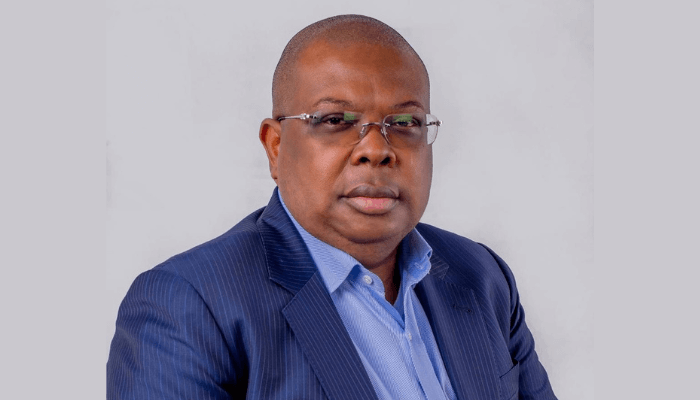
Nigeria’s government has no plans to raise electricity tariffs above their current level, Joseph Tegbe, minister of power said, pushing back against speculation that had unsettled consumers.
“There is no policy by this administration to increase electricity tariffs beyond its current level,” Tegbe said at an event in Nigeria’s commercial capital.
“Our priority is not tariff increase in the immediate term,” he added.
Instead of increasing electricity tariff, the government is betting that fixing the mechanics of electricity delivery, metering, grid stability and revenue collection,can shore up the sector’s finances without touching the tariff line.
“Our priority is service improvement, universal metering and ensuring Nigerians pay only for the electricity they actually consume,” Tegbe said, adding that the government “will continue to examine additional mechanisms for protecting vulnerable consumers whilst simultaneously improving the financial sustainability of the market.”
Nigeria’s power sector has long been squeezed by a mismatch between what it costs to generate and deliver electricity and what distribution companies actually collect from customers, many of whom are billed on estimates rather than metered consumption.
That gap has typically been closed either by tariff increases or by government subsidy, both politically and fiscally sensitive options.
The administration’s alternative, laid out by Tegbe, is the Presidential Metering Initiative, which he said is moving Nigeria “decisively towards universal metering because consumers deserve transparency, fairness and confidence that they only pay for the electricity they actually consume.”
The minister also pointed to what he called encouraging signs on the generation side, saying the country had “consistently generated 5000MW” over the prior two weeks, though he cautioned that generation gains alone would not fix the sector.
“Generation alone does not solve Nigeria’s electricity problem,” he said. “Electricity must be generated, transmitted, distributed and paid for. All these components must function simultaneously.”


